The Nightingale Sings by Mikhail Nesterov
The Nightingale Sings is a late work by Mikhail Nesterov, completed in 1923 and now held at the Metropolitan Museum of Art. Nesterov was one of the first painters to bring Symbolist ideas into Russian art, and even his realist landscapes carry a layer of coded spiritual meaning.
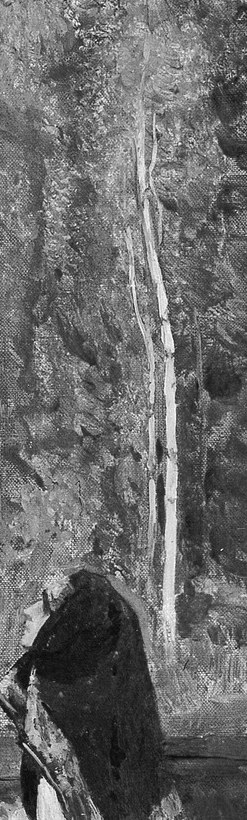
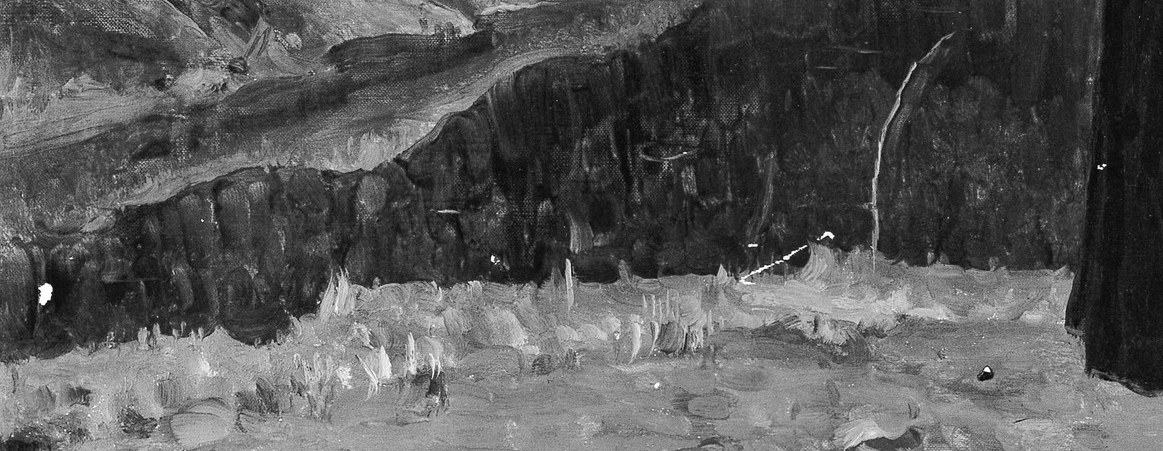
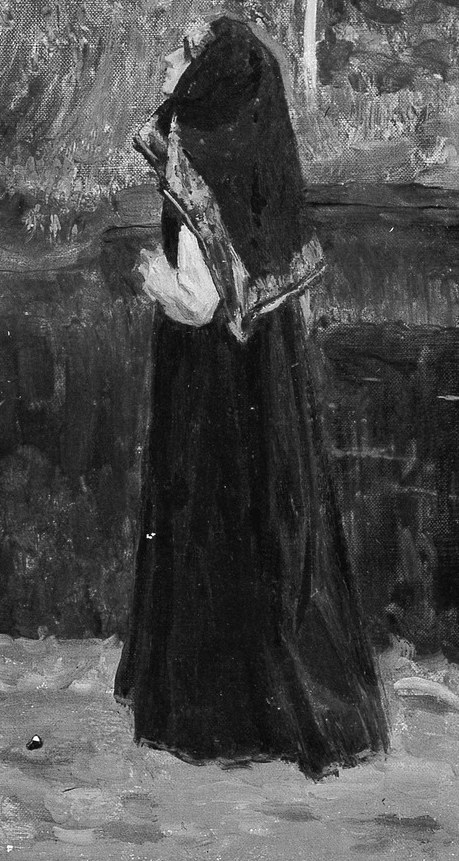
Look first at the birch. In Nesterov's visual language, the birch is a national and spiritual emblem, a signifier of rootedness and Russian identity. The woman's dark robes suggest a nun or a holy pilgrim, and the pale object in her hands, likely prayer beads, glows against the dark fabric. The still water at her feet is another Nesterov signature: reflective water as a symbol of interior contemplation and the threshold between worlds.
The title names the one thing we cannot see. The nightingale is an ancient Russian emblem of the soul's longing. The woman's posture, arrested and listening, asks us to hear what she hears. Nesterov painted this in 1923, after revolution and war had remade Russia, and he gave the world a woman in a forest, listening to something beautiful that remains off screen.
What do you think she hears?
Details
Transcript
She stands utterly still. The white birch beside her is not just a tree. In Russian Symbolism, the birch means spiritual rootedness. Her dark robes signal a nun or pilgrim. And what she holds is luminous. It reads as prayer beads. A life given to devotion. Now look at the water. Still water in Nesterov's work signals interior contemplation.