Adult Funeral Procession by William P. Chappel
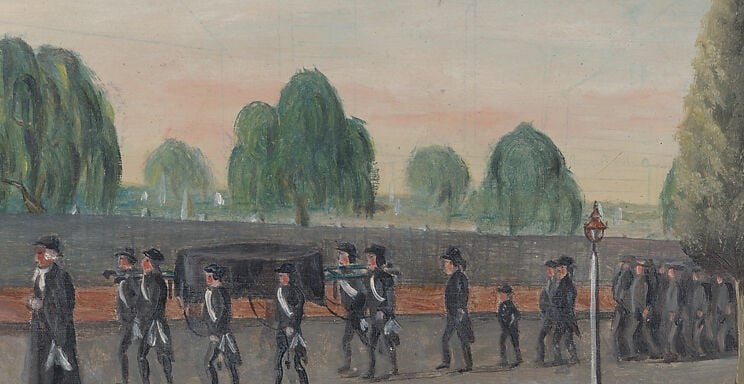
This is William P. Chappel's "Adult Funeral Procession," painted on a small piece of slate paper in New York City around 1874. It is a rare visual record of how ordinary people mourned and buried their dead in the 1870s, before funeral homes moved the ritual indoors.
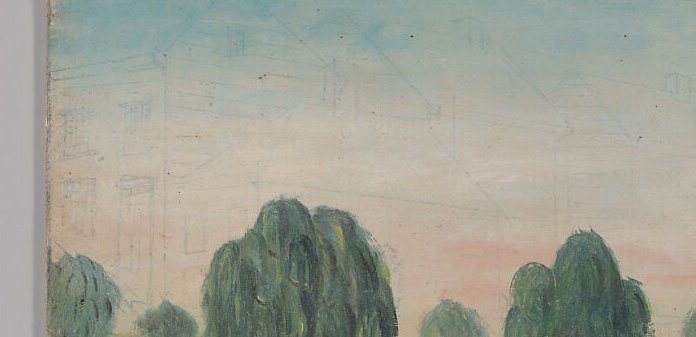
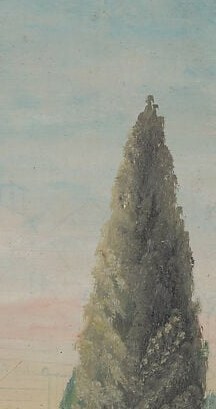
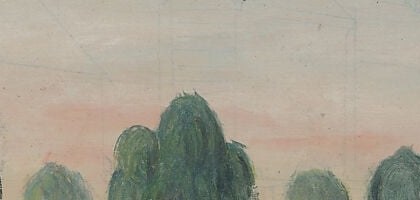
The painting is a decoder ring of Victorian mourning symbols. The long row of weeping willows behind the brick wall is the most overt clue, their drooping branches were planted in cemeteries and painted into mourning scenes as a sign of grief. Beside them, a single dark cypress shoots upward, a classical emblem of death and the hope of eternal life. Even the dirt road is a document: New York streets were largely unpaved in this decade, and the ochre ruts place this procession in a specific, unglamorous reality.
The most deliberate choice is the faces. Chappel rendered every mourner's features as a blur. This was not a lack of skill but a decision, either to shield the identities of real New Yorkers or to make the figures stand for everyone. The anonymous men in their black suits and stovepipe hats carry the coffin past a low brick wall that separates the street from a burial ground, and the procession stretches beyond the frame's margin, as if grief itself cannot be contained by the picture.
Look at the pink sky. It is probably dawn. The day is just beginning, but for this community, the morning is already heavy with ritual. Chappel lived his whole life in New York and died a few years after painting this. He left us a street scene that asks a quiet question: who in your own neighborhood is walking a road like this today?
Details

Transcript
A funeral procession on a dirt road. New York, 1870s. The willow trees are a Victorian symbol of mourning. The cypress tree stands for death and eternal life. The mourners' faces are blurred on purpose. Death, the artist says, comes for everyone.