John Bill Ricketts by Stuart, Gilbert
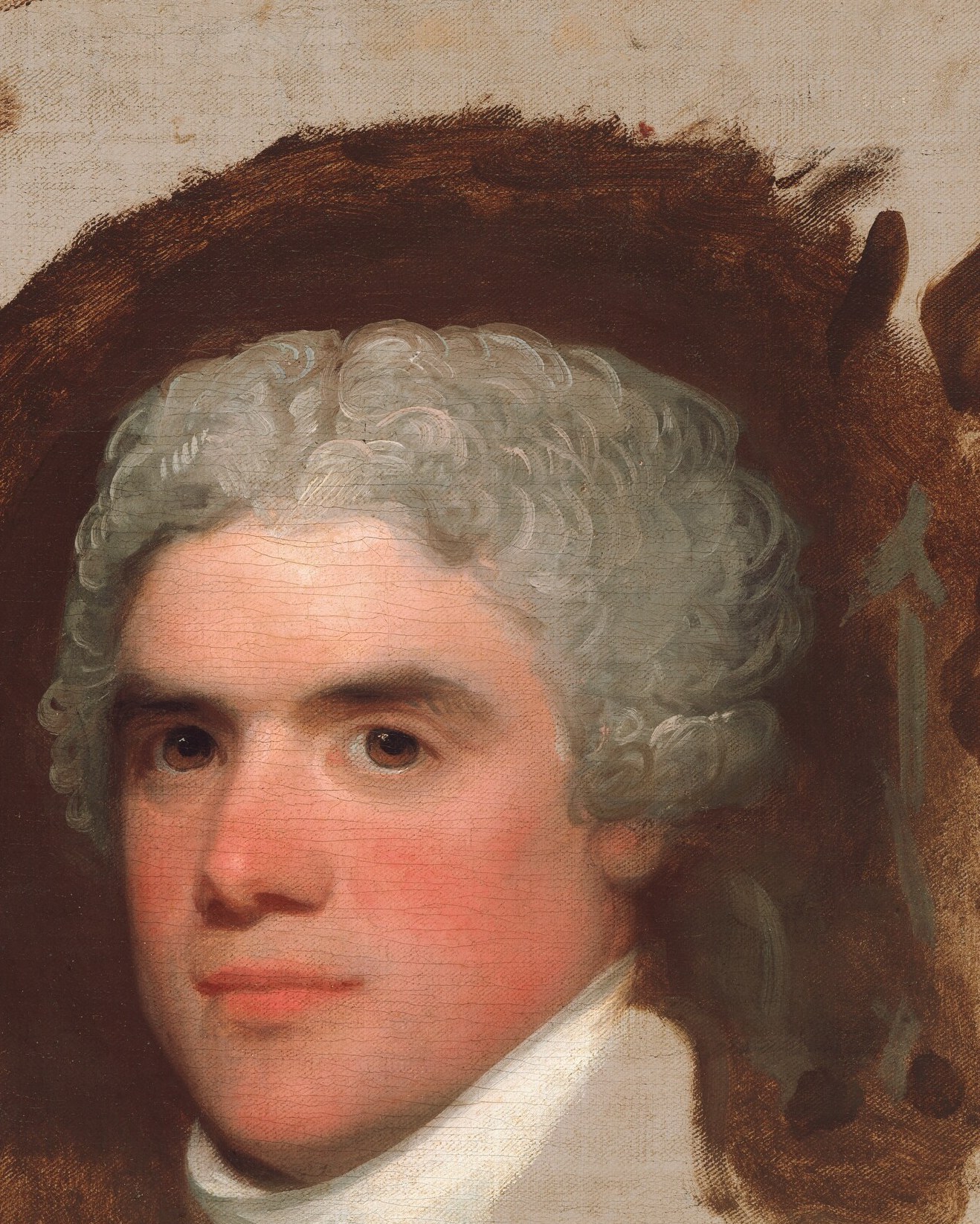
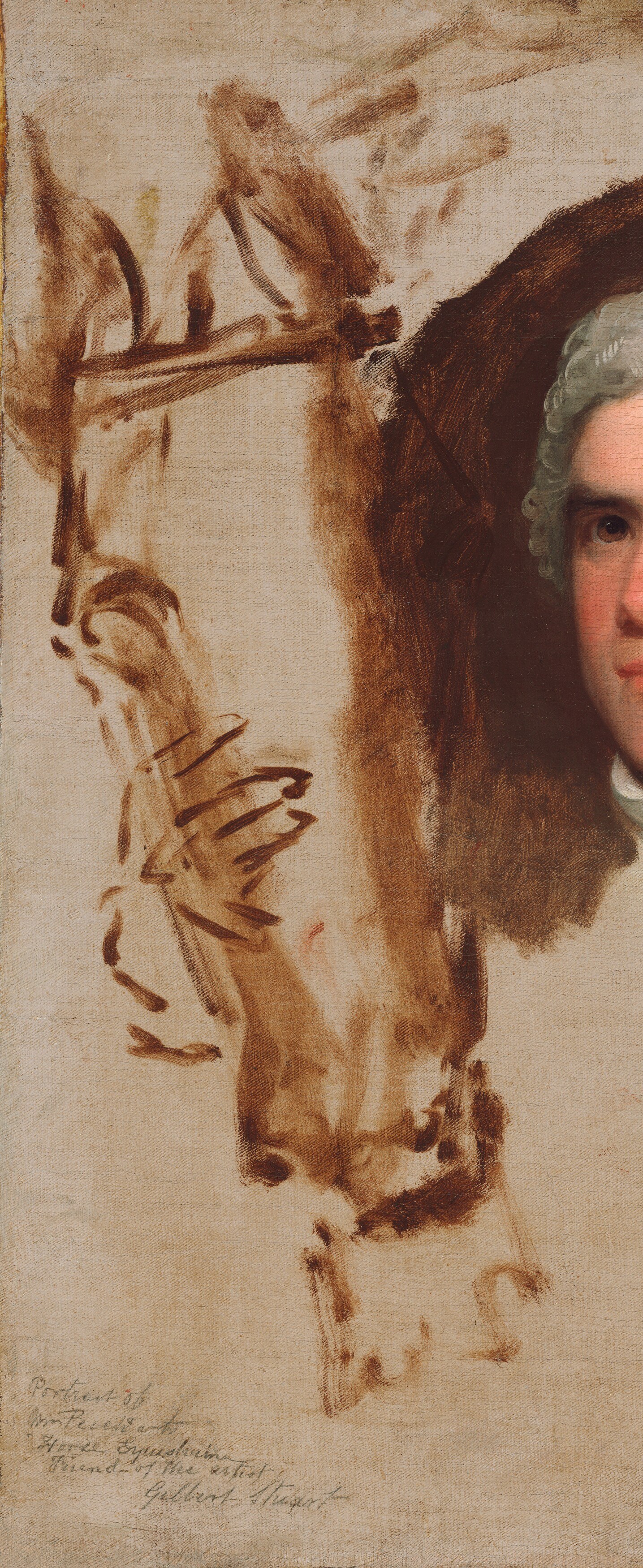
This is Gilbert Stuart's portrait of John Bill Ricketts, the English equestrian who founded the first permanent circus in the United States, painted around 1797. It hangs in the National Gallery of Art. It is also unfinished, and the reason why tells you everything about portrait economics in the early republic.
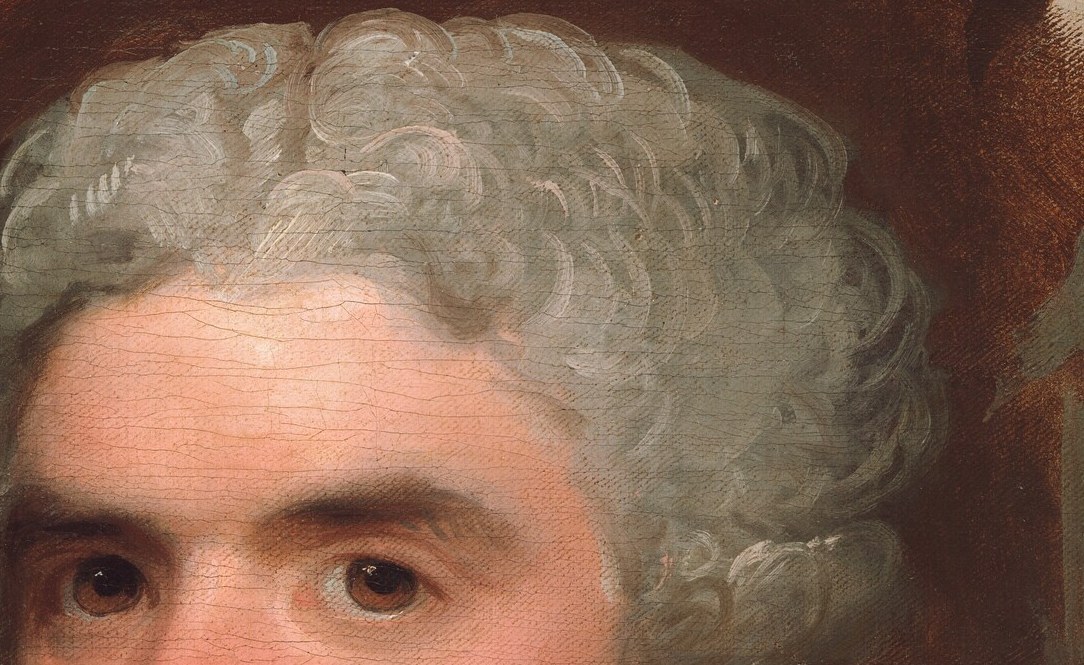
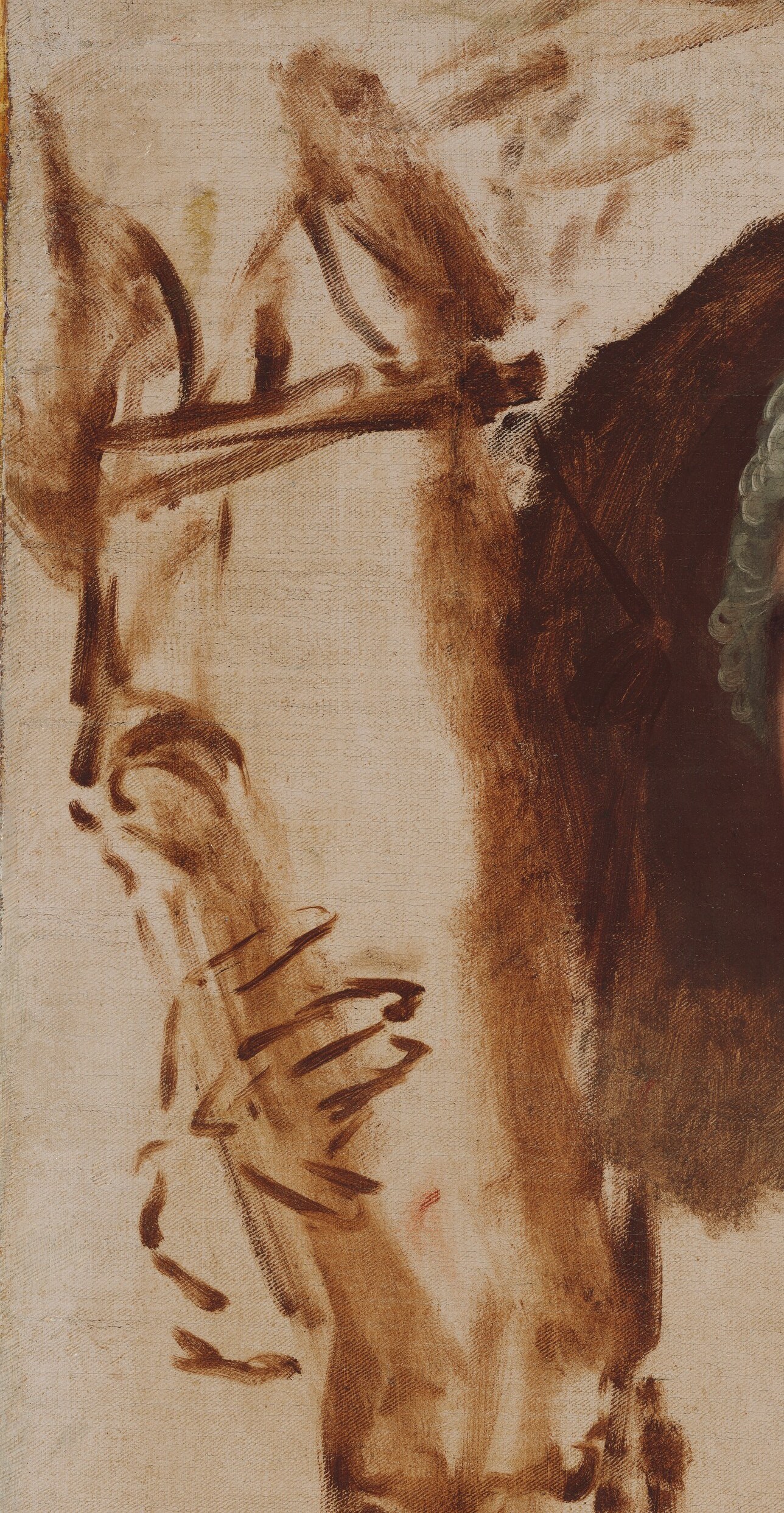
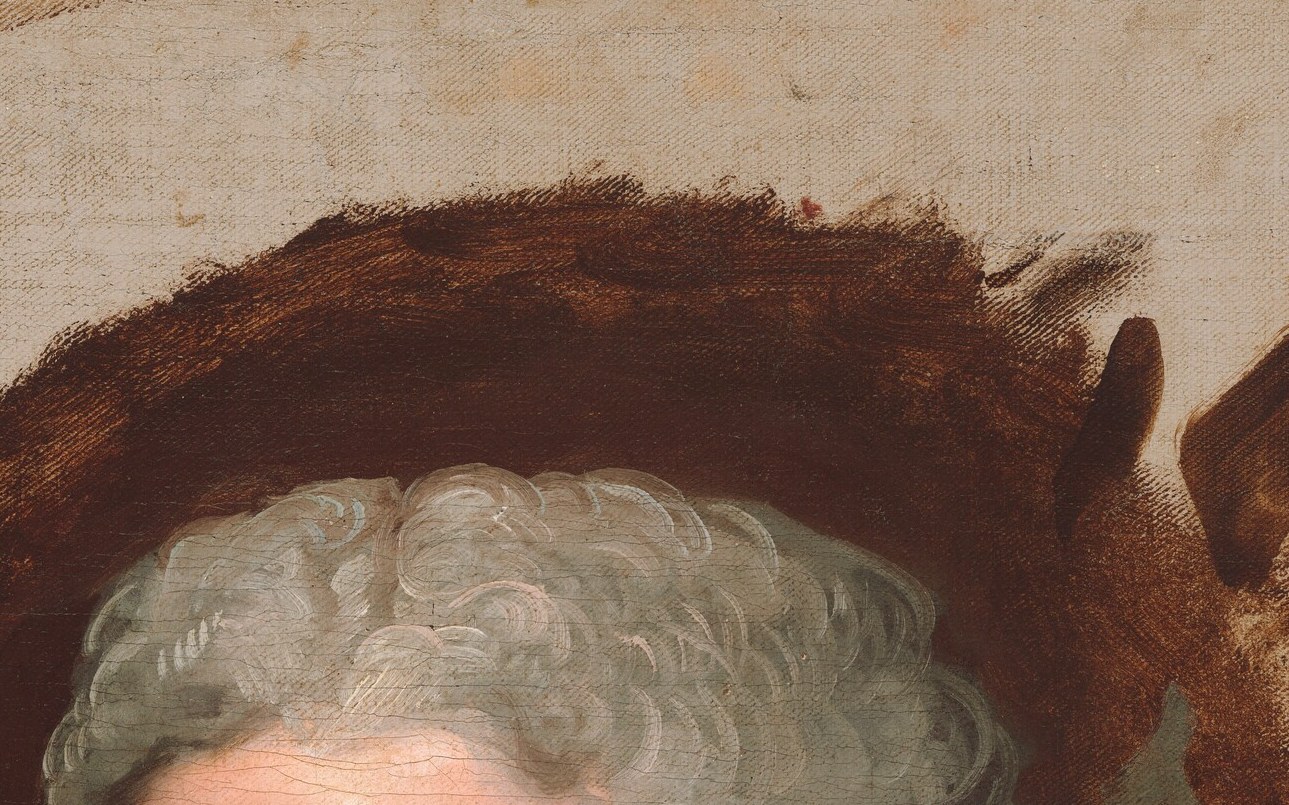
Look at the face first. That luminous cheek, the direct, self-assured gaze, the tiny fleck of white in each eye that animates the whole expression. Stuart brought the head to near-completion with his signature flesh tones and cool reflected shadow beneath the chin. Then look at the rest. Beneath the white cravat, the dark coat dissolves into a void of bare, thinly washed canvas. On the left, loose amber-brown brushwork hovers ambiguously, reading like a compositional sketch Stuart never committed to.
Stuart was notorious for leaving portraits unfinished when the sitter fell behind on payments. Ricketts, for all his celebrity as Philadelphia's circus impresario, apparently did not settle his bill. The unfinished canvas is not an artistic statement; it is a receipt of a transaction that was never completed. What we see is Stuart's working skeleton: the fully modeled face, the bare ground, and the first-pass gestural marks, frozen in time.
It is a strange gift for us. We get to stand in Stuart's studio and watch him think. How far did he get before the money stopped? What did Ricketts owe him?
Details
Transcript
He looks finished. Confident. Complete. Look closer. Most of the canvas is bare. This man founded America's first permanent circus. Gilbert Stuart painted him around 1797. Stuart had a rule: no final payment, no finished painting. Those loose amber strokes are all he got.