The Crucifixion with Donors and Saints Peter and Margaret by Cornelis Engebrechtsz.
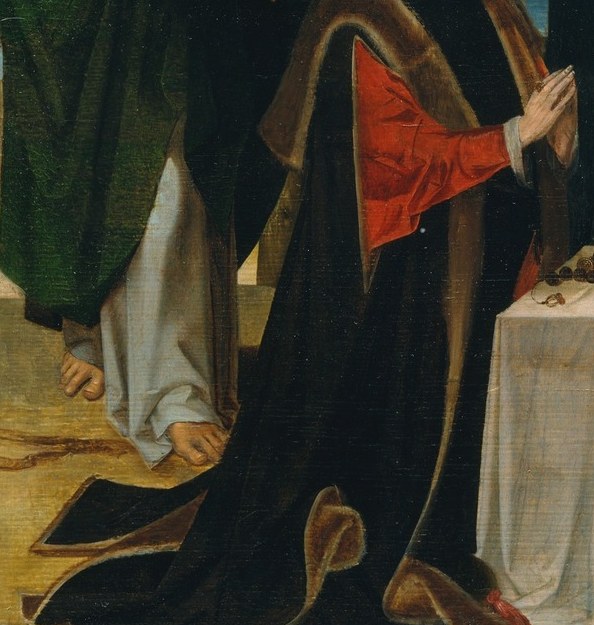
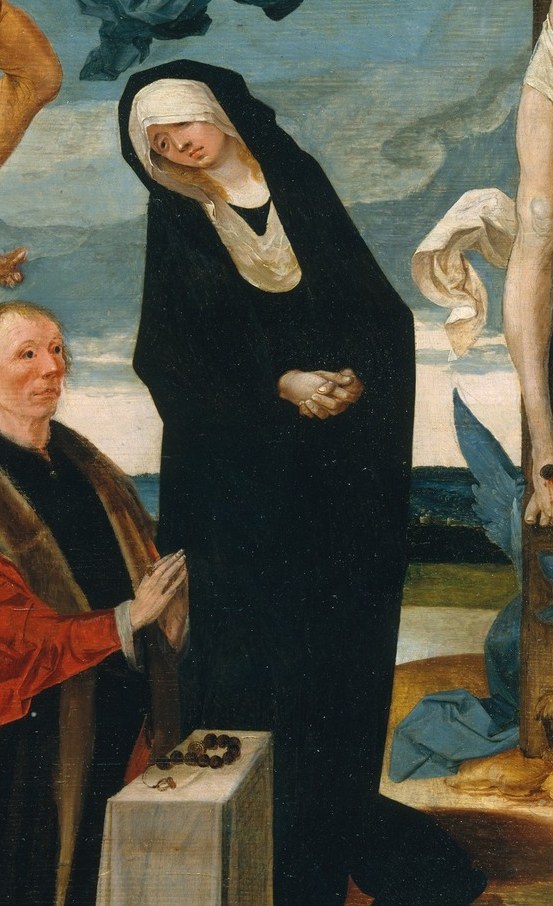
This is Cornelis Engebrechtsz.'s The Crucifixion with Donors and Saints Peter and Margaret, painted around 1525 and now in the Metropolitan Museum of Art. It was commissioned by a married couple who paid to have themselves included in the biblical scene, a Renaissance practice that fused personal devotion with lasting self-promotion.
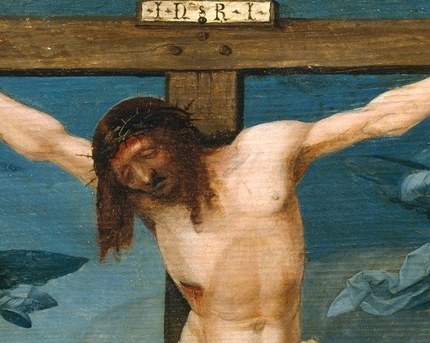
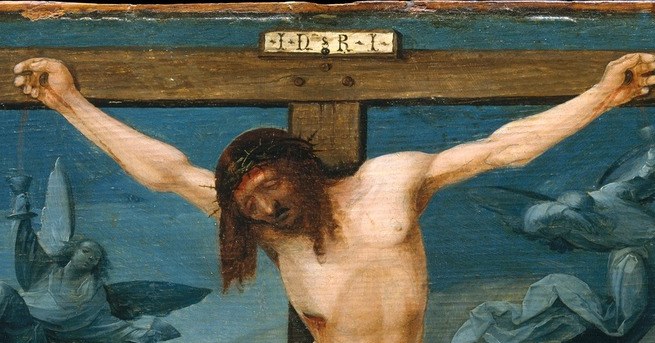
The painting pulls you straight into the foot of the cross. The donors kneel in the foreground, anchored by Saints Peter and Margaret, while John's fiery red robe and Mary's black veil frame the central horror. Look up: tiny angels collect Christ's blood in chalices, foreshadowing the Eucharist. At the base of the cross, Adam's skull waits quietly, a medieval tradition that the blood of the second Adam redeems the first.
Forty years after this was painted, the Beeldenstorm, the great wave of Protestant iconoclasm, swept through the Netherlands. In 1566, mobs destroyed thousands of church paintings they saw as idolatry: Christs were beheaded, Marys smashed, saints defaced. This altarpiece survived only because it was sheltered inside a Catholic hospice in Leiden, hidden or guarded by people whose names we will never know.
The survival of something so deliberately fragile, oil on panel amid upheaval, is a small miracle. Every unharmed face and unbroken chalice in this painting is a record of people who decided it mattered.
Details
Transcript
In 1525, a wealthy Dutch couple paid for this painting. They knelt beside saints, inside the story of the Crucifixion. Forty years later, Protestant iconoclasts swept through Leiden. They smashed images of Christ, Mary, and the saints. This one survived, intact, in a Catholic hospital. The angels above the cross were kept safe. Even Adam's skull, at the foot of the cross, remained. A hidden act of courage kept it whole for five centuries.