清 王翬、王時敏 仿古山水圖 冊|Landscapes after old masters by Wang Hui
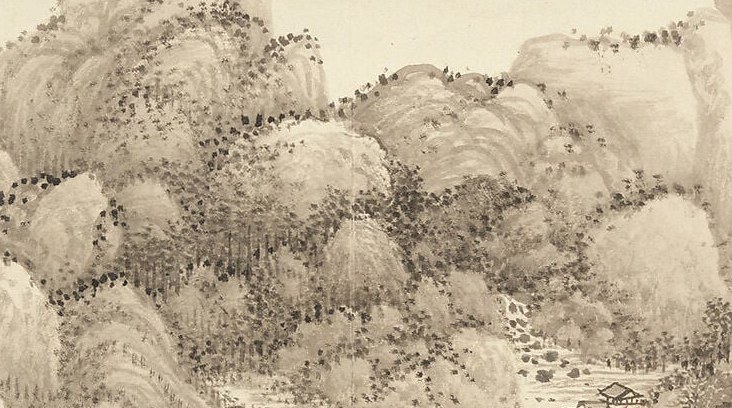
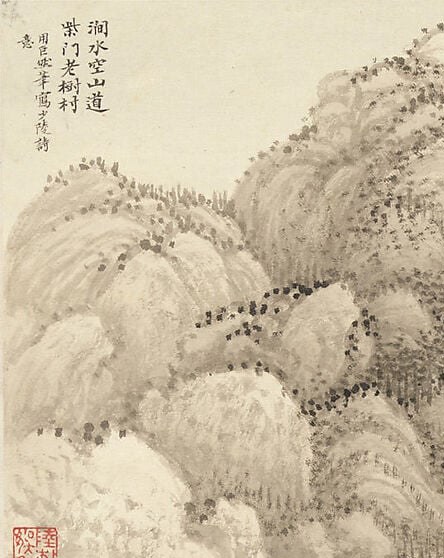
This tranquil leaf from the "Landscapes after Old Masters" album, created by Wang Hui in 1674, offers a serene escape into a meticulously imagined mountain world. Housed at The Metropolitan Museum of Art, it's a testament to the artist's skill in emulating and reinterpreting historical styles.
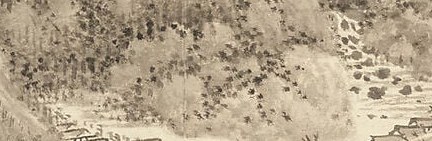
Notice the delicate balance between the immense scale of the mountains and the tiny human presence, like the village houses and the stone bridge. These small details invite us to imagine life unfolding within this grand natural setting.
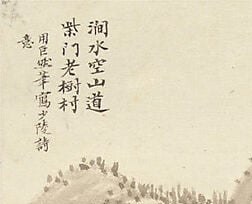
Wang Hui, active during a period of significant political change in China, practiced *fanggu*, or emulating past masters. This wasn't mere copying, but a sophisticated way of paying homage to tradition while subtly infusing his own artistic vision. These album leaves served as a dialogue with art history.
The quiet contemplation these landscapes evoke feels timeless. What do you notice first in this peaceful scene?
Details
Transcript
This painter often copied old masters. But he created his own worlds, too. Tiny villages nestled in huge mountains. This album was painted in 1674, during a turbulent time. Perhaps the quiet scene offered peace. We still find that quiet in these mountains today.