Pacapacurus Village by Catlin, George
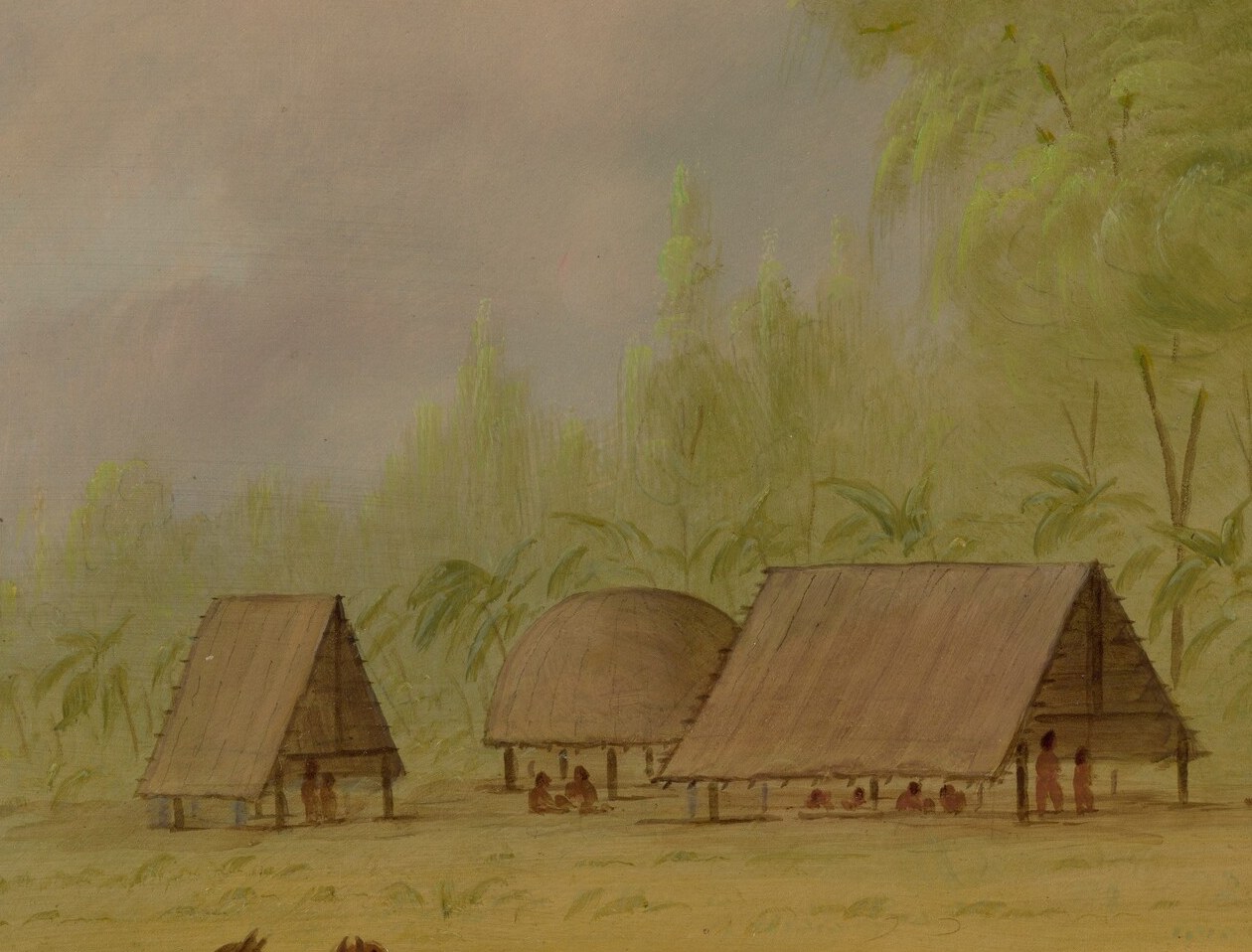
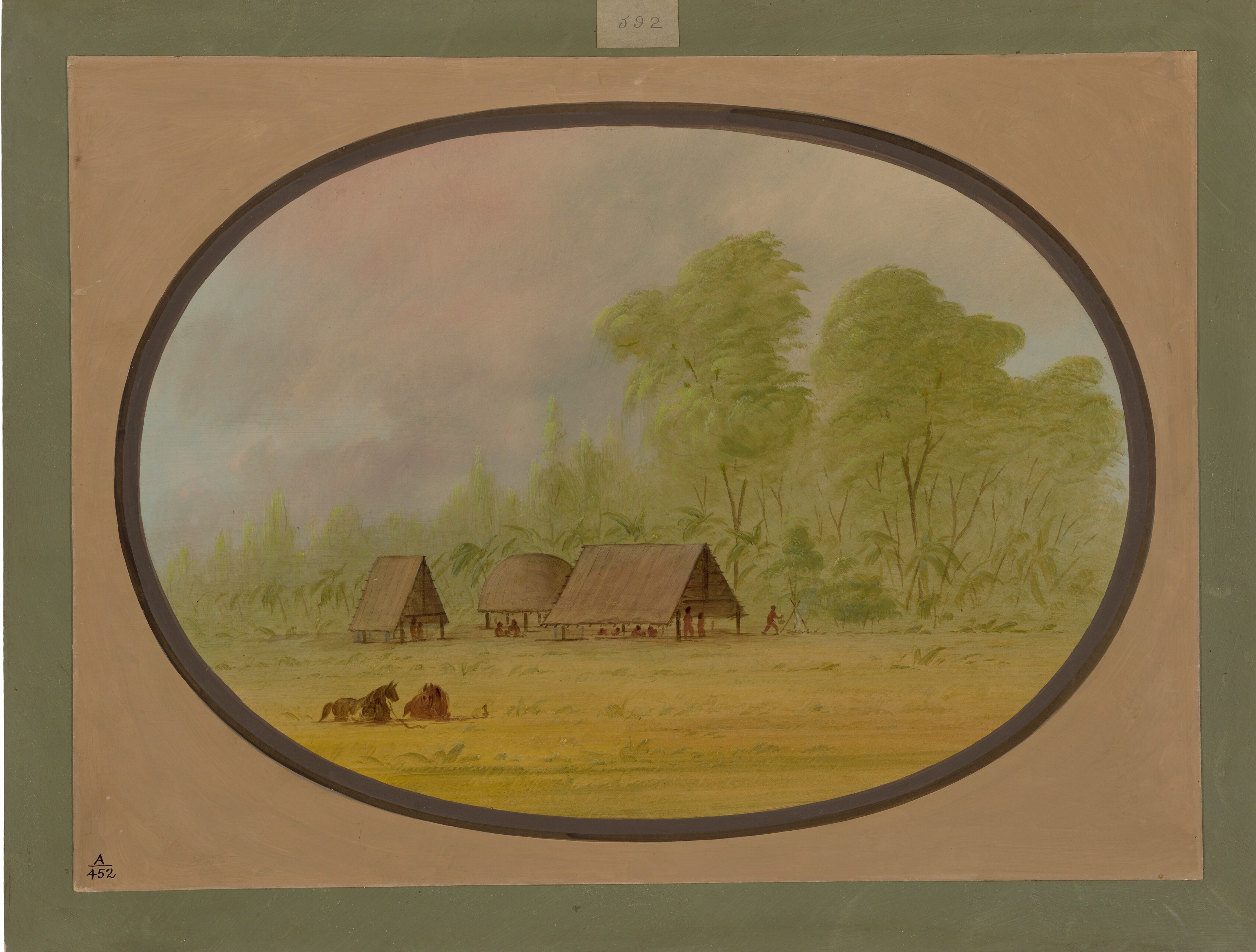
George Catlin, a lawyer-turned-painter, dedicated his life to documenting Native American cultures and landscapes. His oil painting, *Pacapacurus Village* (1854/1869), now at the Smithsonian American Art Museum, captures a scene from South America with the precision of a scientific study.
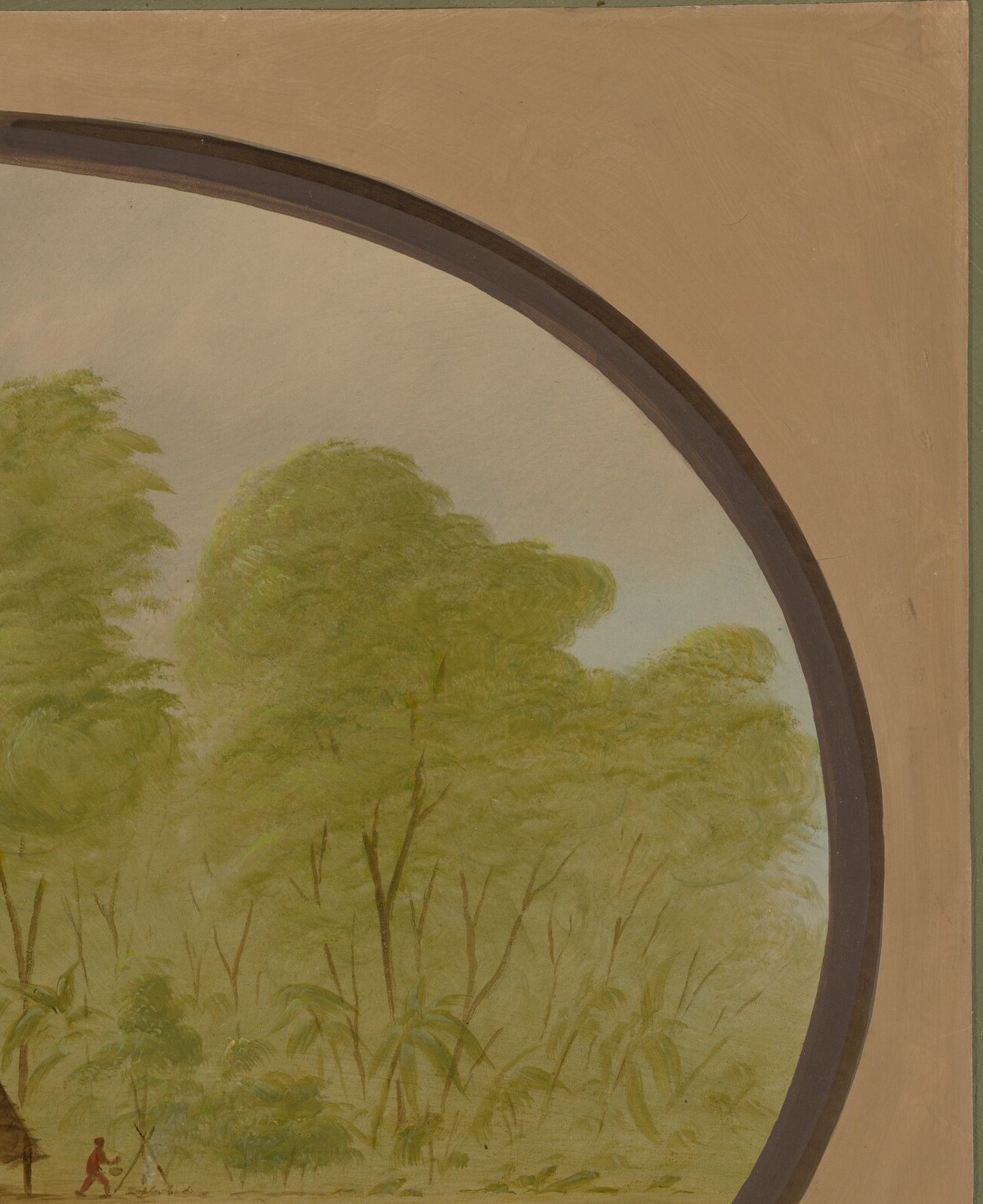
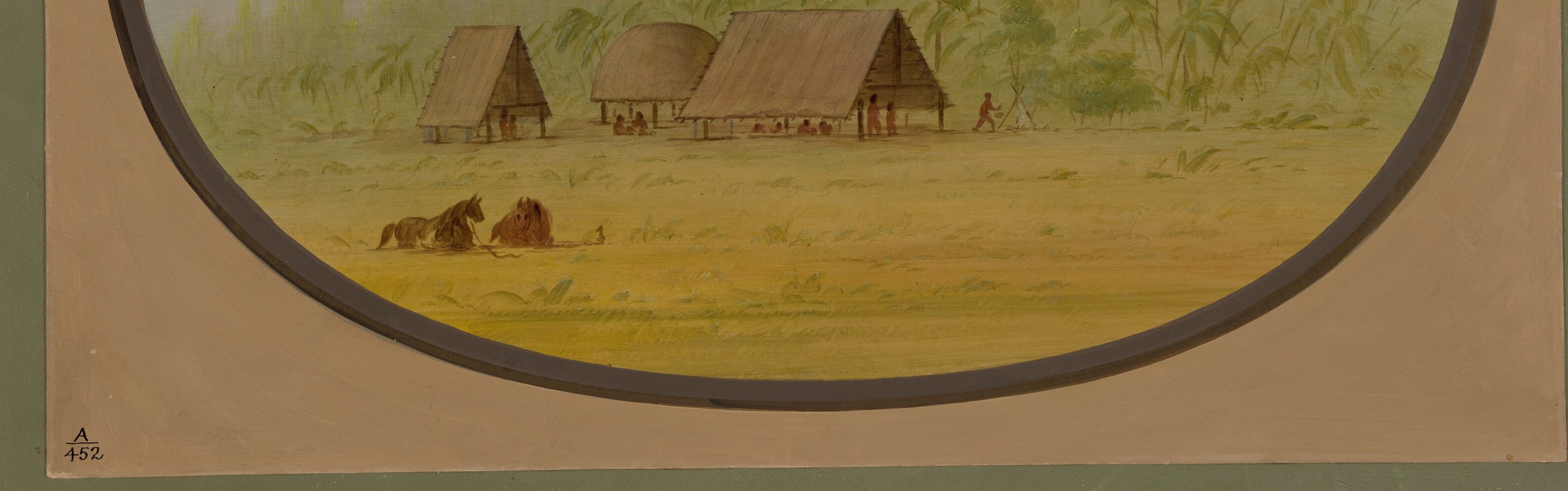
While the painting itself depicts a quiet village nestled under a large tree, Catlin often used an oval frame, treating his subjects like specimens. Here, even the card mount outside the painting holds a clue to its purpose. Look for the small collector's mark, a subtle detail that emphasizes his approach.
Catlin's work aimed to preserve images of indigenous cultures, becoming an invaluable historical and cultural record. His extensive travels and commitment to visual ethnography are evident in the detailed rendering of both the environment and the structures he observed.
What other hidden details do you think might be found in historical works meant for scientific documentation?
Details
Transcript
George Catlin painted Native American life on the American frontier. This is a Pacapacurus village, somewhere in South America. He rendered it with the precise detail of a scientific specimen. The entire scene is framed by this dark oval border. Look closely at the card mount, outside the painting itself. That tiny mark is a collector's stamp, marking it as a specimen.