Tobit and Anna with the Kid by Rembrandt
Rembrandt’s “Tobit and Anna with the Kid,” painted in 1626, is an early and intimate masterpiece now housed in the Rijksmuseum in Amsterdam.
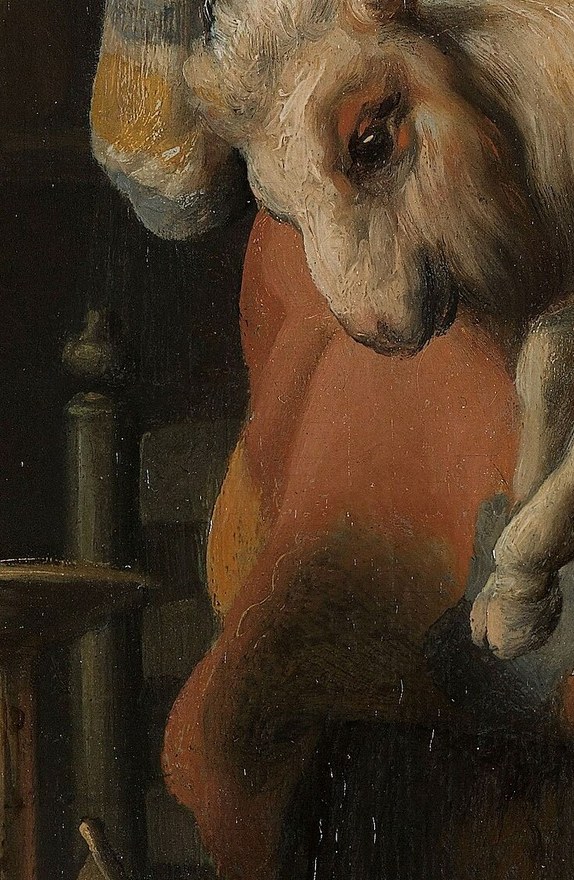
This painting captures a moment of quiet domestic tension from the biblical Book of Tobit. Look closely at Tobit's aged face, full of suspicion, as he confronts his wife, Anna, who holds the small goat at the center of their dispute. The painting uses subtle lighting and a restrained palette to heighten the emotional drama.
Created during Rembrandt’s formative Leiden period when he was only 20, the work showcases his developing mastery of chiaroscuro. It reflects the Dutch Golden Age's fascination with biblical narratives brought to life with everyday realism and a strong moral undertone. The clear signature and date on the canvas anchor it firmly in his early oeuvre.
It’s a powerful testament to the artist's emerging genius, demonstrating his ability to infuse profound human emotion into a humble scene.
Details

Transcript
This painting is one of Rembrandt's earliest dated works. It shows a tense moment from the biblical Book of Tobit. Blind Tobit suspects his wife, Anna, stole a goat. Her hands tightly hold the kid, the source of the argument. The flickering hearth fire suggests the humble, domestic setting. Look closely: his signature and the date 1626 are clear. Rembrandt painted this when he was just 20 years old.