Chimney Sweeps by William P. Chappel
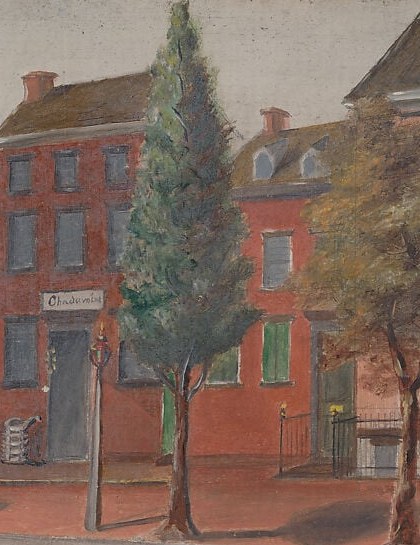
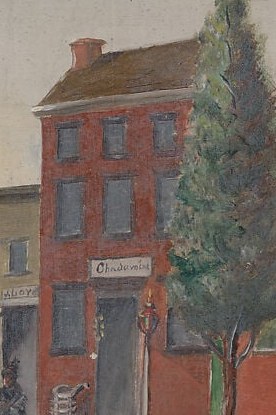
William P. Chappel's "Chimney Sweeps" (1874) is a quiet indictment painted on a piece of rock. Housed at the Metropolitan Museum of Art, this small oil on slate paper captures a fleeting moment of childhood labor in post-Civil War New York.
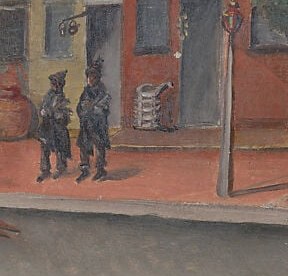
The painting works by what it conceals. The two small figures are visibly soot-stained, yet their faces are deliberately smudged into obscurity. Chappel denies us their identity. Instead, the eye is forced to register only their posture and the labor of their climb up a ladder against a tall brick wall.
Chappel painted this on slate paper, not canvas. The dark, unprimed stone acts as the ground, bleeding through the thin paint to create the atmospheric dusk glow. It's a technical choice that deepens the somber mood, with the slate's natural darkness simulating the encroaching evening shadows.
The scandal is not loud. It's in the matter-of-fact documentation of exhausted children vanishing into the city's infrastructure, a daily sight that New York society accepted as normal.
Details


Transcript
At first glance, a quiet street at dusk. This was 1870s New York. A city built on child labor. Now look low, where the shadow falls. Two small figures. Their faces are smudged into anonymity. They are climbing. The day's labor is not yet over. The painter made their faces illegible on purpose. Now you see the scandal that the city ignored.