A Pastoral Scene by Durand, Asher Brown
View the artwork: A Pastoral Scene →
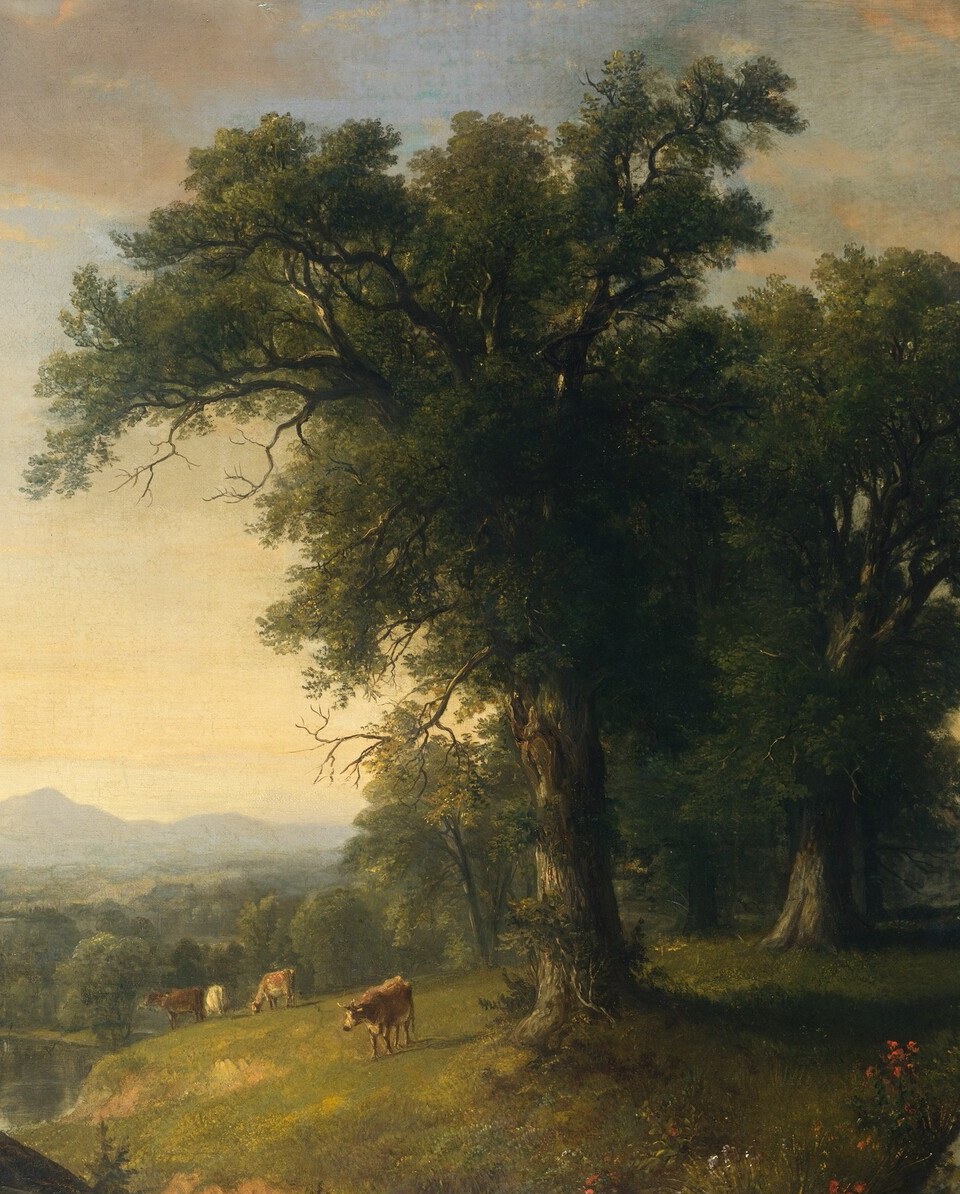
Asher Brown Durand painted 'A Pastoral Scene' in 1858 to prove that a flat canvas could hold miles of breathable American air. He wasn't just making a pretty view; he was demonstrating the central optical trick of the Hudson River School.
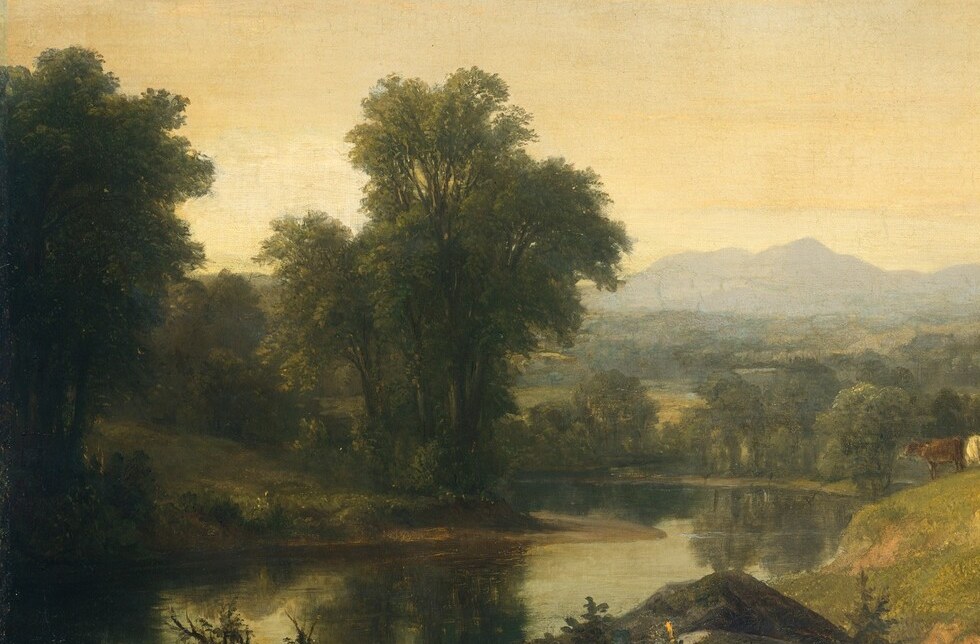
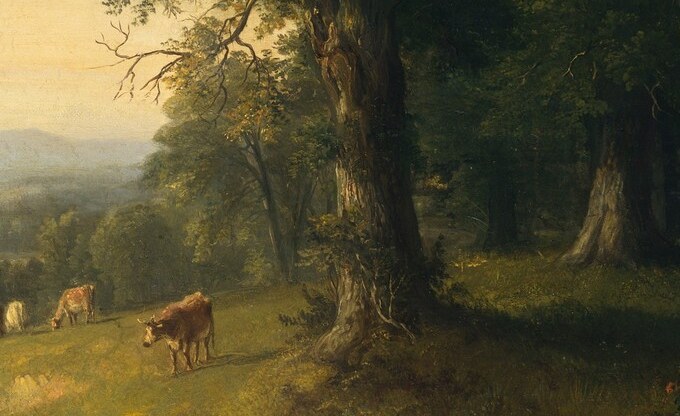
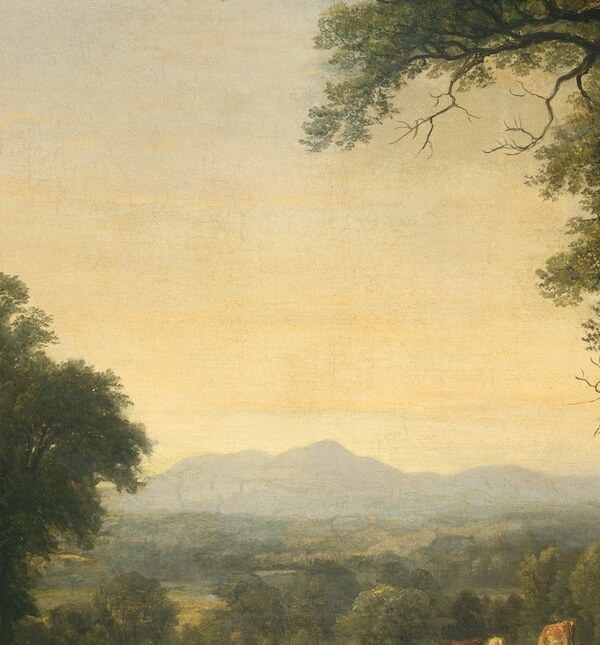
Look first at the oak roots in the lower right. They are painted with very crisp edgework and deep, saturated shadow. Now let your eye drift to the distant mountain ridge. Durand has thinned his paint until it is barely there, and the color has cooled to a pale grey-blue with almost no detail.
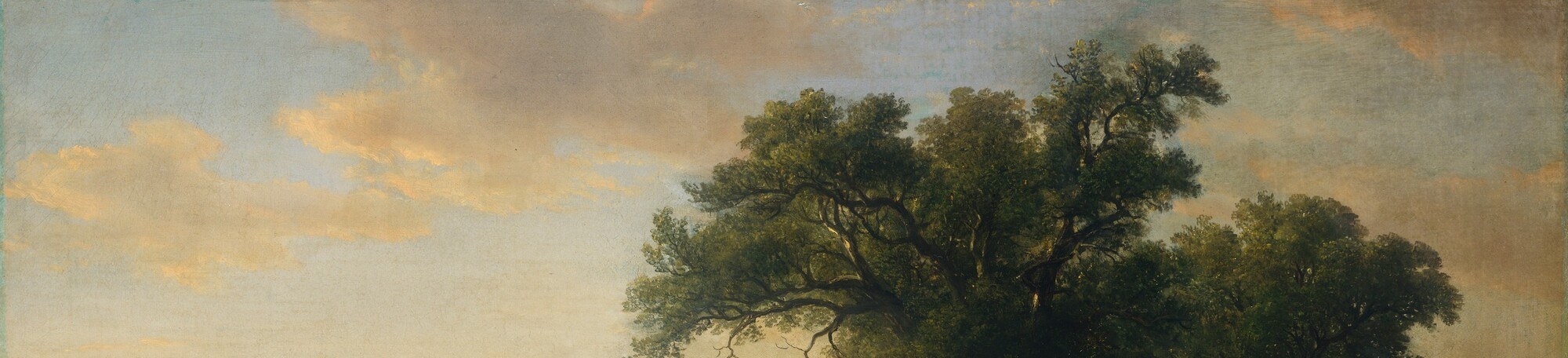
The gap between those two passages is the painting's subject: atmospheric perspective. Warm, sharp, dark things seem to come forward; cool, soft, light things recede. Durand stacks these contrasts in layers, from the rocky foreground bank through the sunlit meadow window and out to the hazy Catskills. The river doubles the whole trick, reflecting the sky's golden warmth on its still surface.
Frederick Sturges, Sr. bought this canvas from Durand in 1858 for roughly $250 to $300. It stayed in his family for 120 years before reaching the National Gallery of Art in 1978. Three years before painting it, Durand had written his 'Letters on Landscape Painting,' urging American artists to study nature with sincerity and build a tradition from what they actually saw, not from European formulas. This field across from the oak tree is what sincerity looked like.
#arthistory #hudsonriverschool #americanart
Details
Transcript
A painting is flat. This one breathes with miles of air. The roots of this oak are painted with almost uncomfortable sharpness. But look at the mountain ridge on the horizon. Durand thinned his paint and drained the color to pure blue-grey haze. He called this 'atmospheric perspective.' Warm gold advances in the sky, cool grey recedes on the ridge. His river reflection doubles that sky logic on the water. Roots to ridge, he stacked crispness against haze to carve depth from pigment.