Artwork
A Pastoral Scene
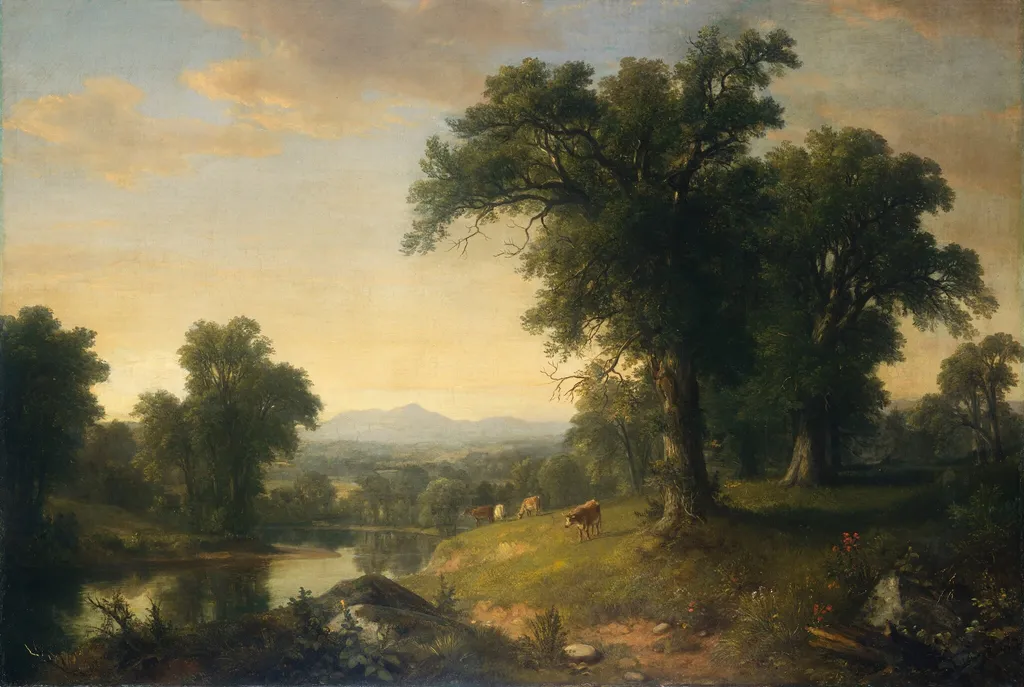
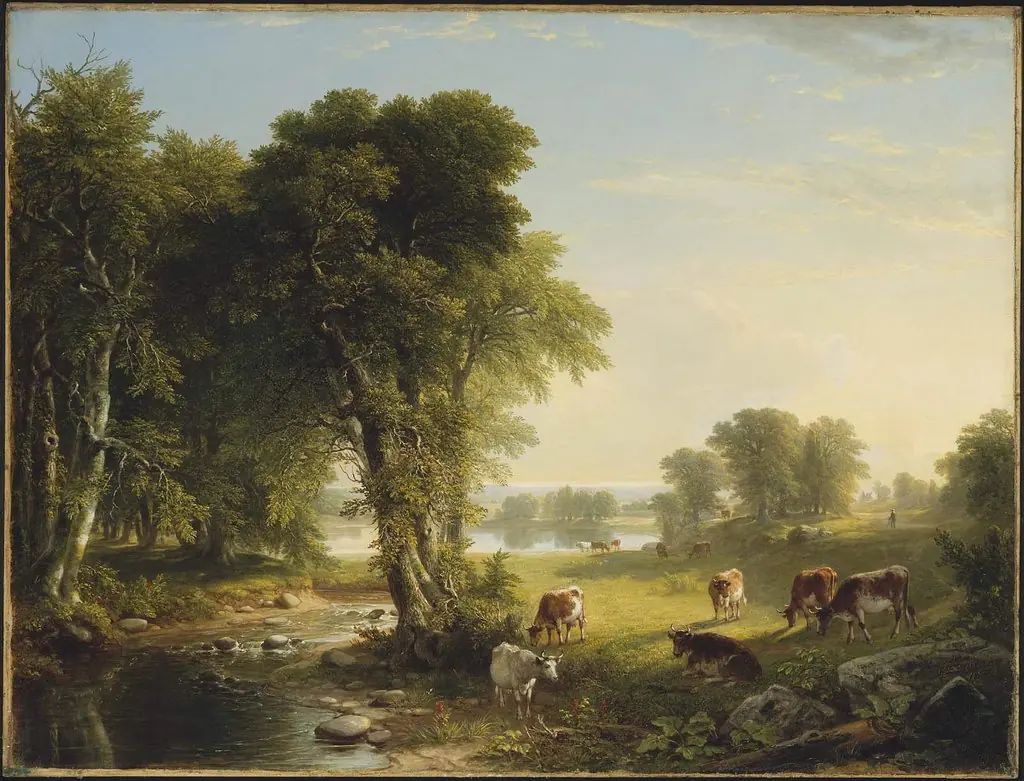
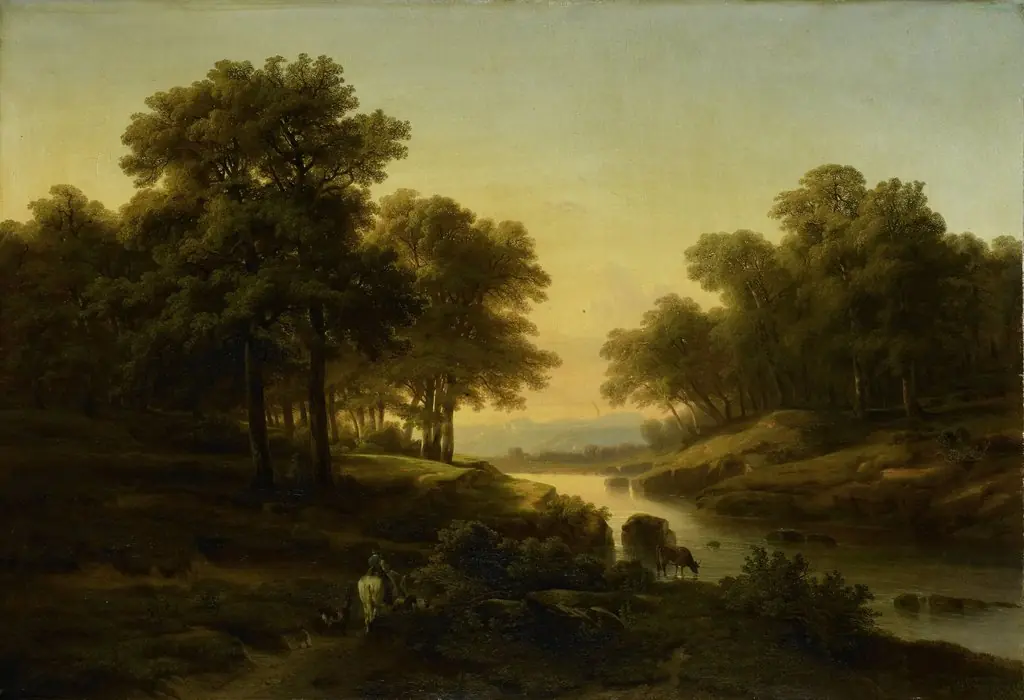
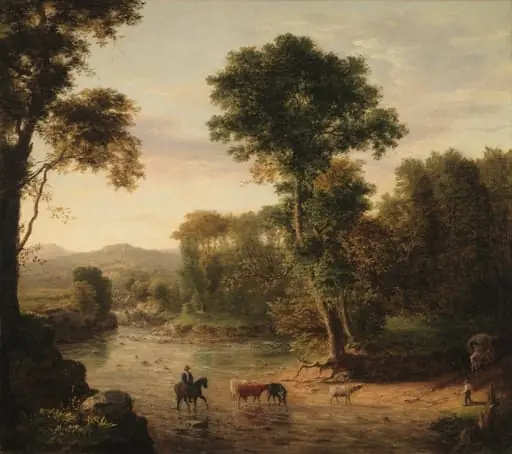
A Pastoral Scene is an oil painting by the Hudson River School artist Asher Brown Durand. It dates from 1858 and is held in the collection of the National Gallery of Art.
- Inscription
- Inscribed:lower center: A B Durand / 1858
About this work
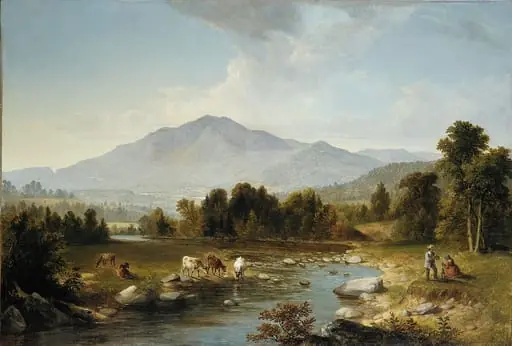
A placid river winds past low hills where cows graze toward fields blanketed with trees that recede into the distance.
A placid river winds past low hills where cows graze toward fields blanketed with trees that recede into the distance. Painted in 1858 by Asher Brown Durand and signed lower center "A B Durand / 1858," this oil on canvas was likely acquired directly from the artist by Frederick Sturges of Fairfield, Connecticut, and entered the National Gallery of Art in 1978 as accession number 1978.6.3. The picture distills the Hudson River School conviction that careful observation of nature carries spiritual weight.
Technique & Style
Asher Brown Durand executed A Pastoral Scene in oil on canvas, a standard medium for Hudson River School landscapes of the mid‑19th century. The painting measures 55.5 × 82.3 cm (approximately 21.8 × 32.4 in.) and depicts a serene countryside with hills, a mountain, a river, and a shore beneath a cloudy sky. Cattle graze among scattered trees, reinforcing the pastoral theme.
The handling is consistent with Durand’s detailed, naturalistic approach, though the sources do not describe specific brushwork or surface condition. The composition balances open sky with layered landforms, inviting the viewer into a quiet, idealized vista.
History & Provenance
Painted in 1858, A Pastoral Scene likely entered the collection of Frederick Sturges Sr. soon after its completion. A June 1858 letter from Sturges to Durand thanks the artist for a 'beautiful picture' and encloses $550, but the canvas’s smaller size (55.5 x 82.3 cm) suggests a price closer to $250–300, making the identification uncertain. The painting remained in the Sturges family, passing to Frederick Sturges Jr. (1876–1977), who bequeathed it to the National Gallery of Art in 1978.
The painting is held by the National Gallery of Art in Washington, D.C.. It entered the gallery's collection in 1978 as a bequest from Frederick Sturges Jr., who inherited it from his father, Frederick Sturges Sr., a New York and Fairfield, Connecticut resident. The work's accession number is not specified in the sources, and no exhibition history is documented in the provided materials.
Overview
Asher Brown Durand's 1858 oil on canvas, "A Pastoral Scene," embodies the principles of the Hudson River School. This painting reflects the movement's belief that meticulous engagement with the natural world could reveal profound spiritual truths. It presents a tranquil landscape, characteristic of Durand's mature style, featuring a gentle river, grazing livestock, and receding tree-lined fields under a serene sky.
Subject & Meaning
The composition of "A Pastoral Scene" features a calm river flowing past gentle hills where cattle graze, leading the eye towards distant, tree-covered fields and a subtle ridge. This serene depiction is not merely a landscape but an expression of the Hudson River School's conviction that nature, when observed with diligence, possesses inherent spiritual significance. Durand's work encourages contemplation of the American wilderness as a source of moral and aesthetic instruction.
Context
Three years prior to painting "A Pastoral Scene," Asher Brown Durand articulated his artistic philosophy in his "Letters on Landscape Painting," published in The Crayon. He advocated for artists to approach nature with sincerity and intellectual rigor, rather than adhering to established European artistic conventions. This painting exemplifies his call for an authentic American landscape tradition, grounded in direct observation and a reverence for the native environment.
Own this work as a print
Artist & collection
Artist
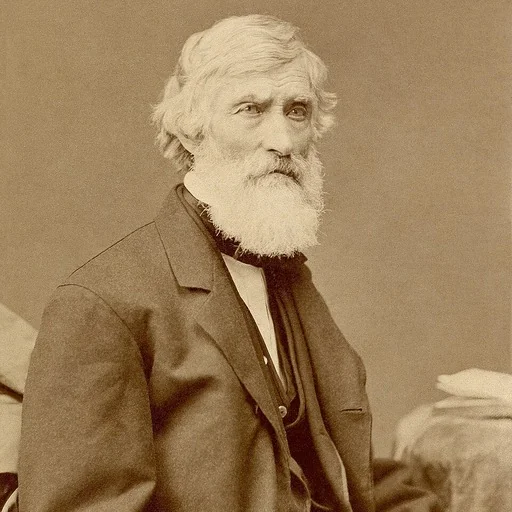
Asher Brown Durand spent his life in the rolling hills of New Jersey, where the forests and farmland shaped his quiet, deliberate way of seeing.