Singerie: The Fishermen by Huet, Christophe
Christophe Huet's "Singerie: The Fishermen," from around 1739, is a charming example of the 'singerie' genre, or 'monkey scene,' popular in 18th-century art. This oil on canvas, housed in a private collection, playfully critiques human customs through the absurdity of animals in human roles.
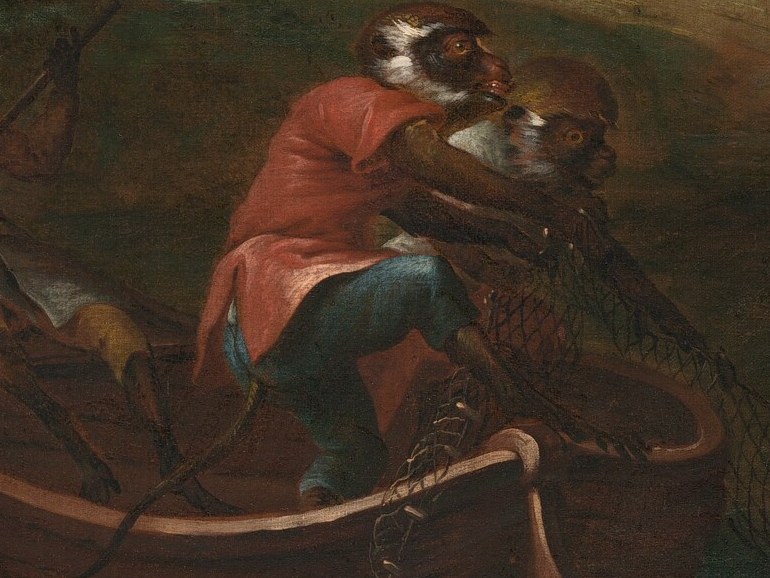
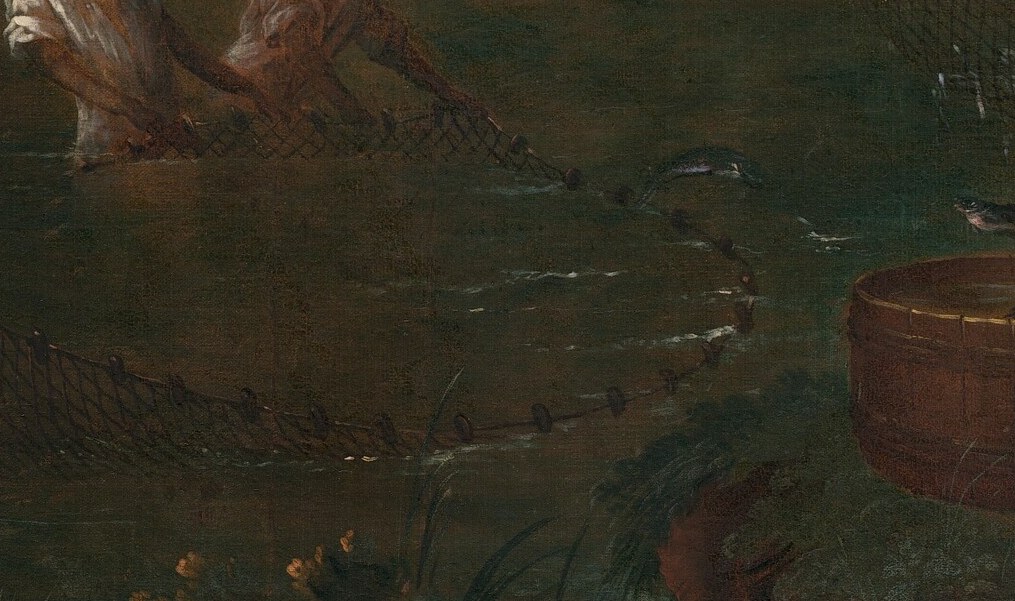
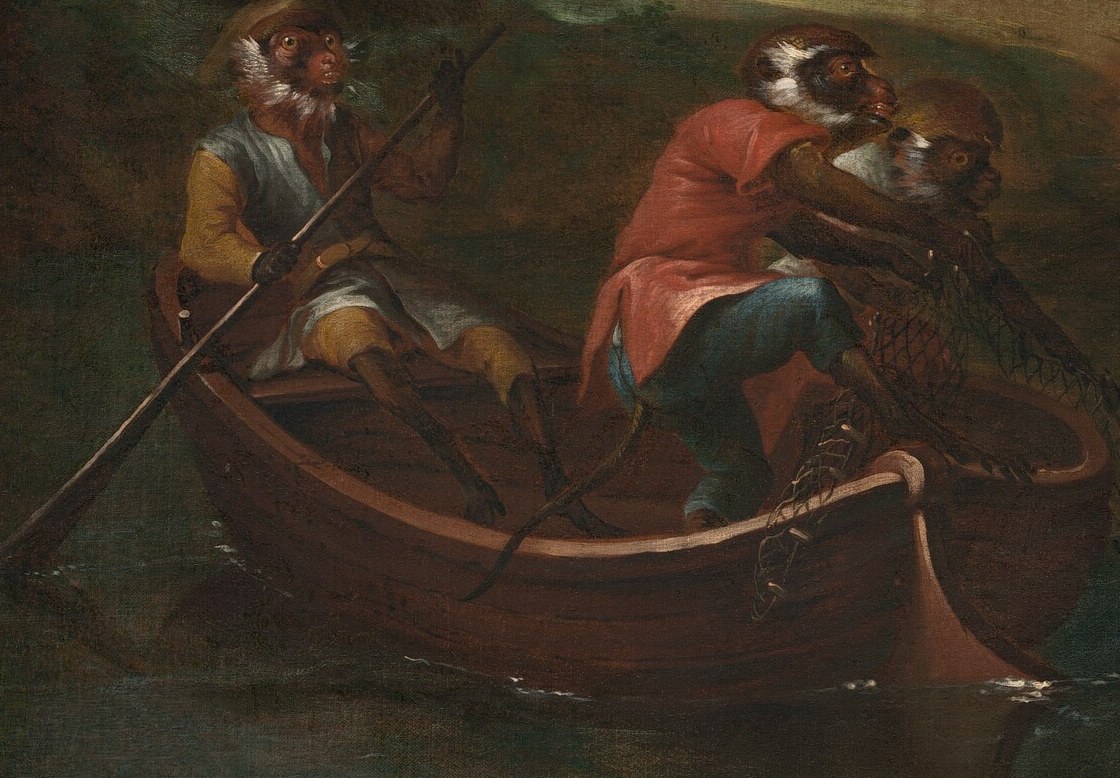
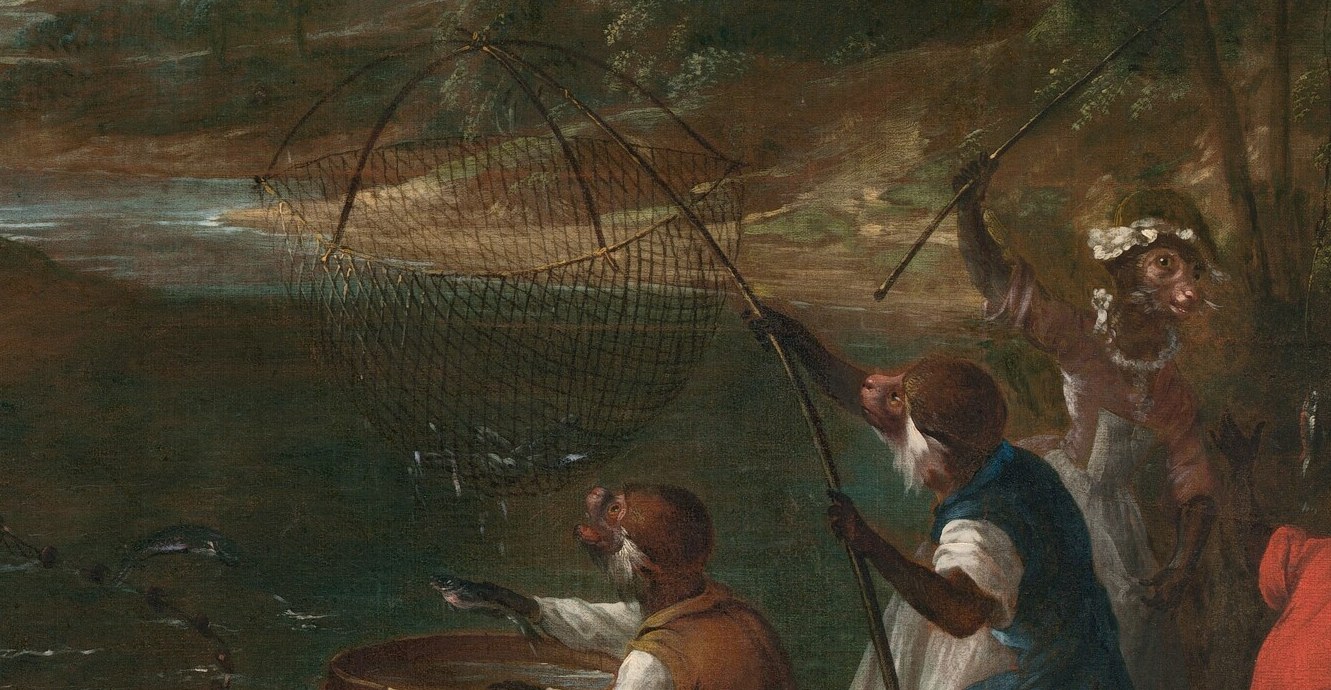
Observe the monkeys, dressed in period attire, diligently engaged in the act of fishing. One grips a fishing pole, another pulls a net, and a third observes from a boat. Their earnest mimicry of human leisure activities creates a humorous and subtle commentary on social pretensions of the time.
Huet's work aligns with a trend that allowed aristocratic audiences to enjoy satirical observations about their own society. The artist's use of a muted palette and varied brushwork enhances the contrast between the natural world of the monkeys and the artificiality of their human-like roles.
The next time you see monkeys in art, consider what human behavior the artist might be holding up to a mirror.
Details
Transcript
This painting is called a 'Singerie'. It means 'monkey trickery' or 'monkey scene'. The artist is satirizing human behavior. These monkeys are dressed in human clothes. They are imitating human leisure activities, like fishing. This genre was popular for critiquing society with humor.