A Path among the Rocks by Théodore Rousseau
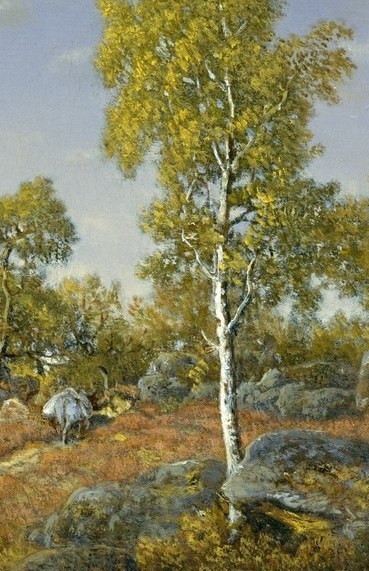
Théodore Rousseau, a master of the Barbizon school, created 'A Path among the Rocks' in 1849, now held at The Metropolitan Museum of Art. This painting is a testament to his obsession with natural light and shadow.
Observe the birches and rocky outcroppings. Rousseau didn't paint light directly, but instead crafted an illusion of luminosity through careful color layering and high contrast, making the forms appear to emerge from the canvas.
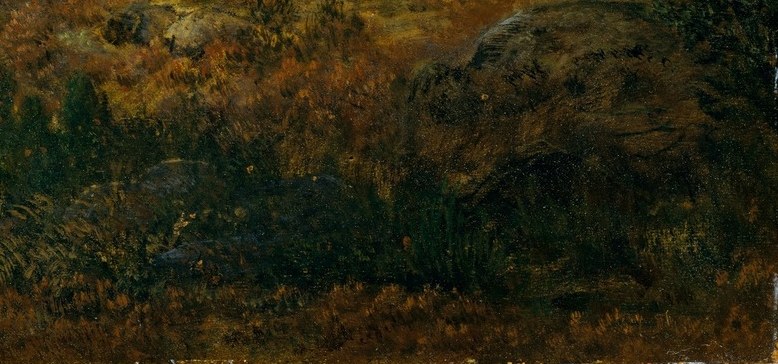
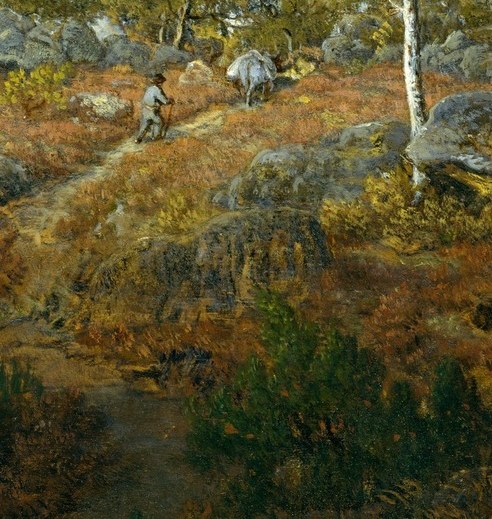
His meticulous rendering of varied textures, from rugged stone to dry foliage, captures the raw authenticity of the French countryside. Rousseau’s technique emphasizes direct observation, a hallmark of his approach to landscape art. This attention to detail creates an immersive, quiet atmosphere, inviting viewers into a specific, unembellished moment in nature.
How does this play of light and shadow alter your perception of the landscape?
Details
Transcript
This painter was obsessed with the light and shadow of nature. Look at the birch tree. Its trunk almost glows. But the light is not painted, it's implied by contrast. See how every rock face has both bright and dark tones? He layered his colors to create this illusion of depth and form. Even the dry leaves feel real from varied brushstrokes.