Peaches on a Plate by Renoir, Auguste
Auguste Renoir painted "Peaches on a Plate" in 1904, late in his career, while contending with severe arthritis that deformed his hands. This oil painting, part of the National Gallery of Art collection, showcases his enduring commitment to capturing beauty despite physical challenges.
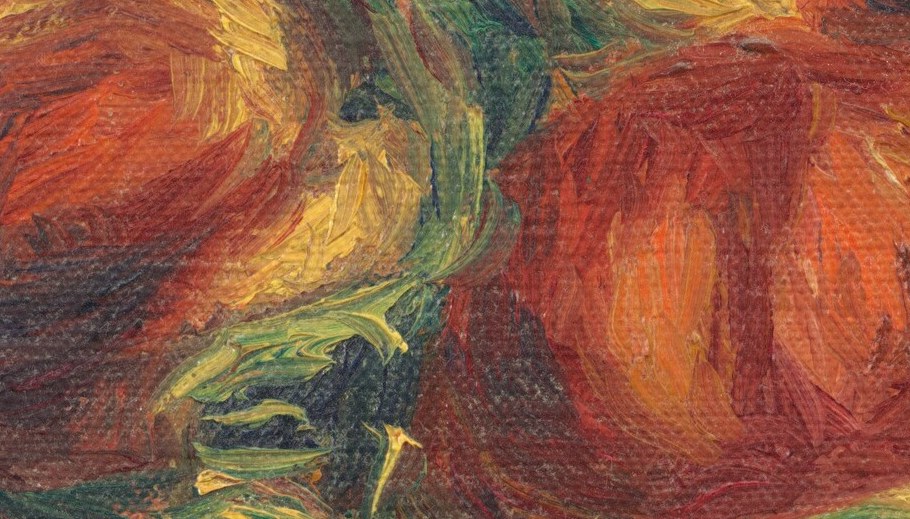
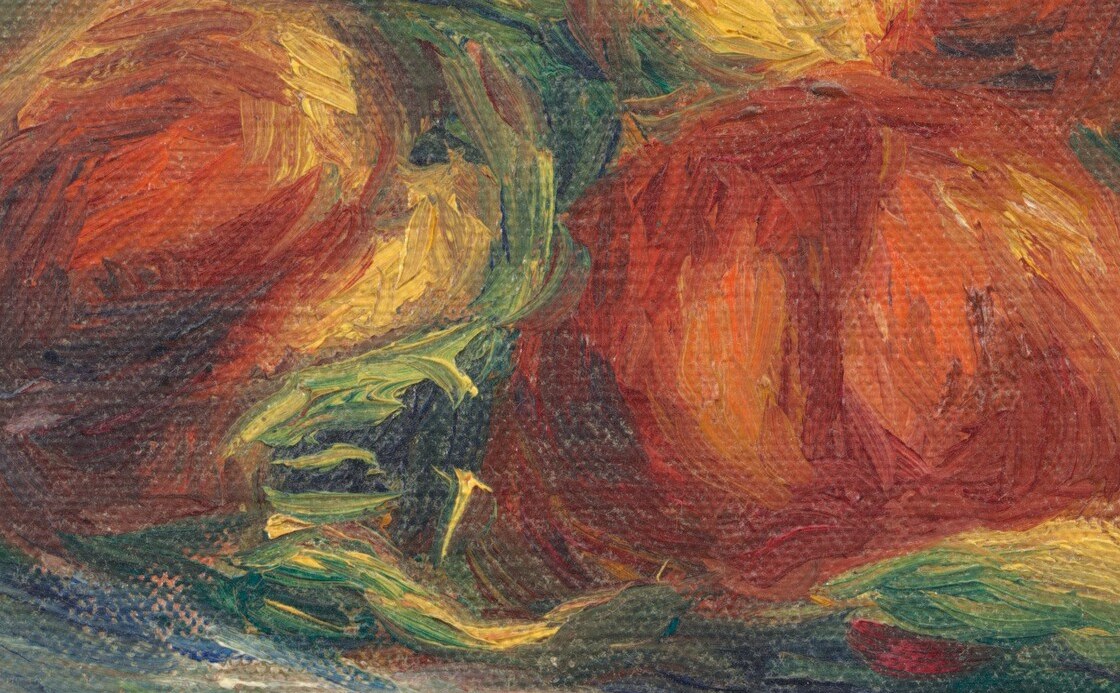
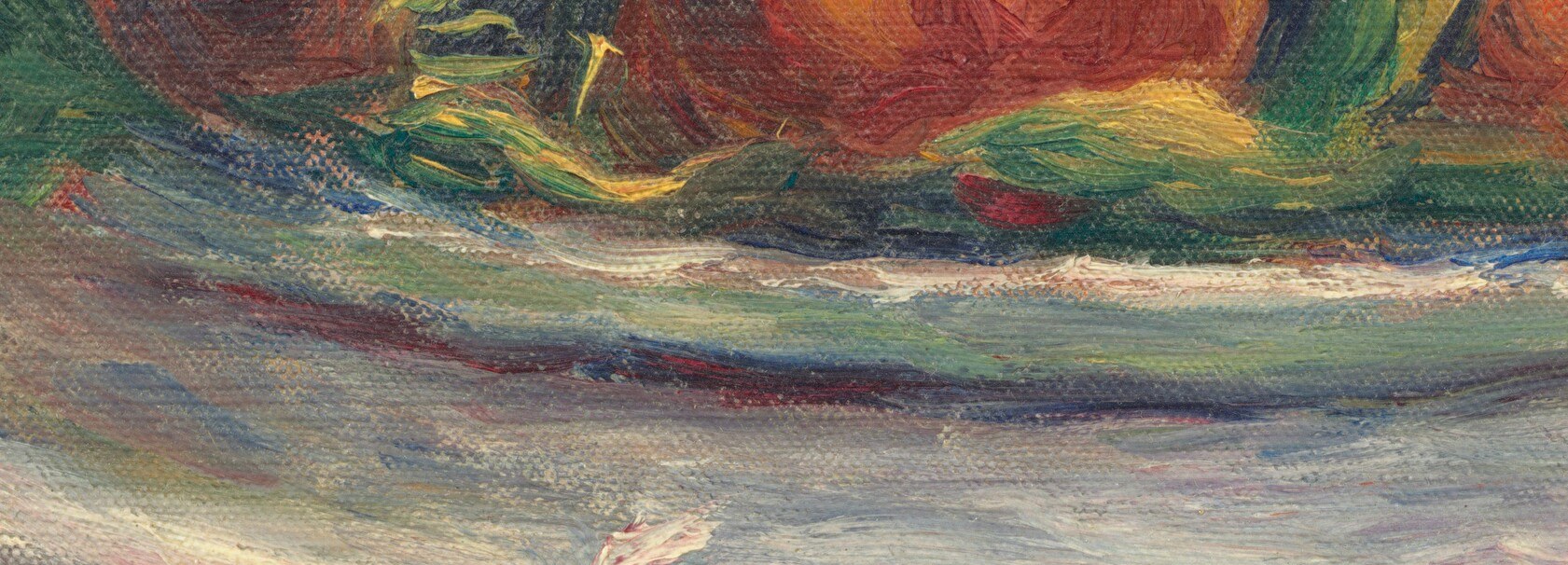
Notice the vibrant, almost luminous quality of the peaches, rendered with thick, expressive brushstrokes. The way light catches the fruit and the ceramic plate is a testament to Renoir's mastery of color and texture, even as his technique adapted to his physical limitations.
Renoir, who once painted porcelain in his youth, later co-founded Impressionism. Despite the pain of rheumatoid arthritis, he continued to paint by having brushes strapped to his wrists. This still life embodies his persistent artistic vision, turning a simple subject into a profound statement of will.
How do you think his physical struggles influenced the unique texture and immediacy we see in these works?
Details


Transcript
Renoir painted these peaches late in his life. He was suffering from severe, crippling arthritis. His hands were almost entirely deformed. Yet he captured the shimmer of light on fruit. Thick paint, applied with brushes tied to his wrists. Look at the sheer will in every single stroke.