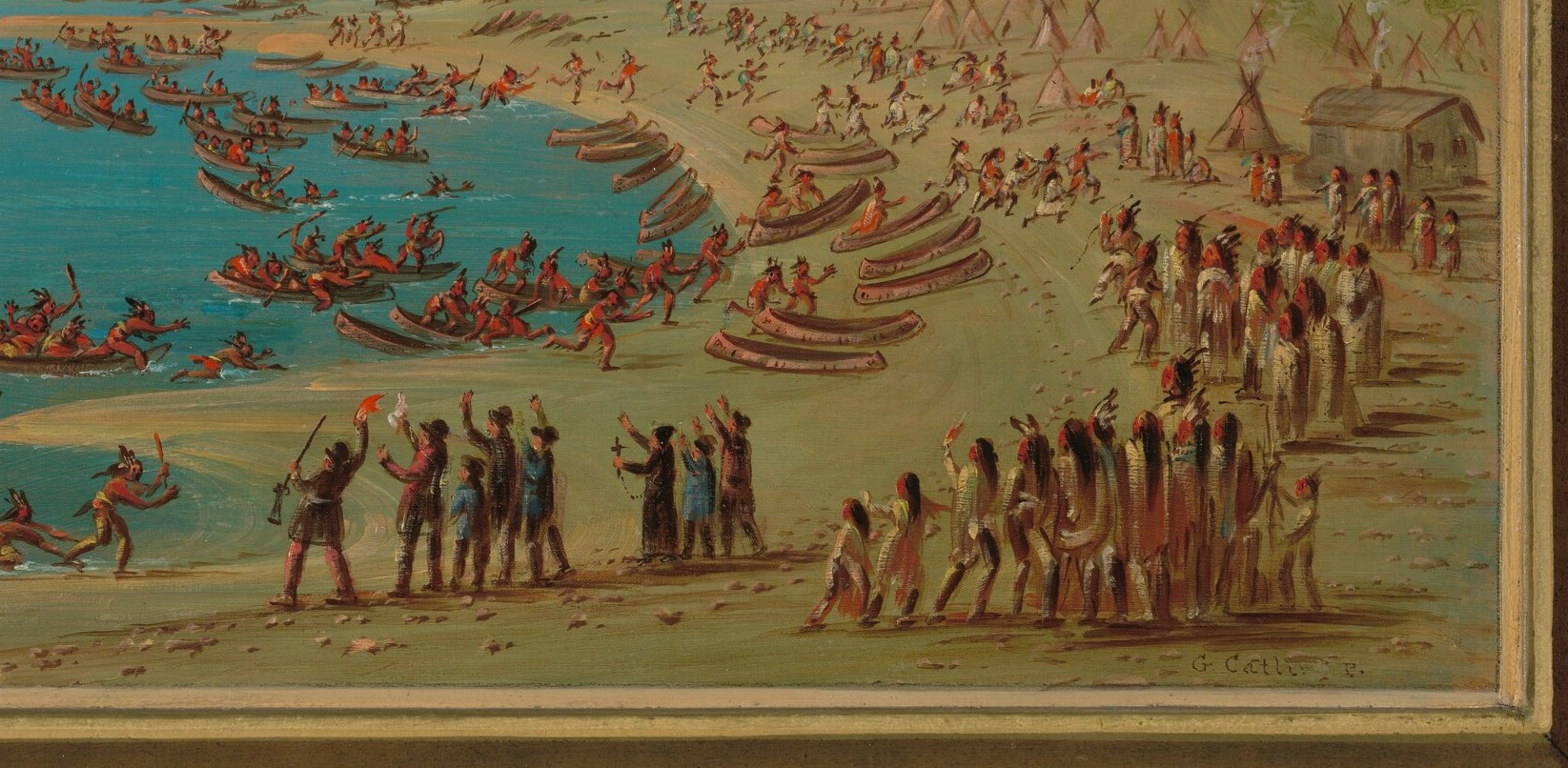
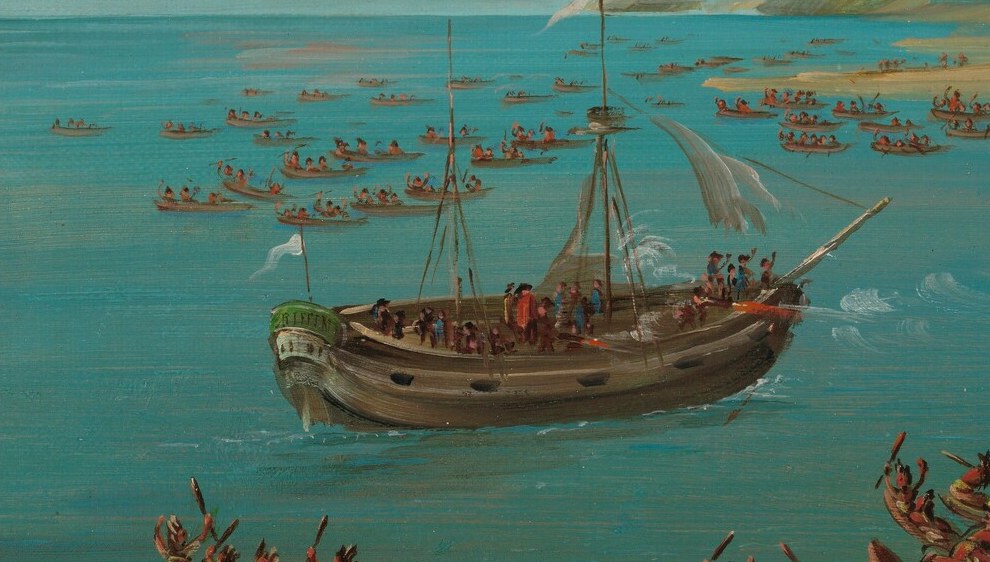
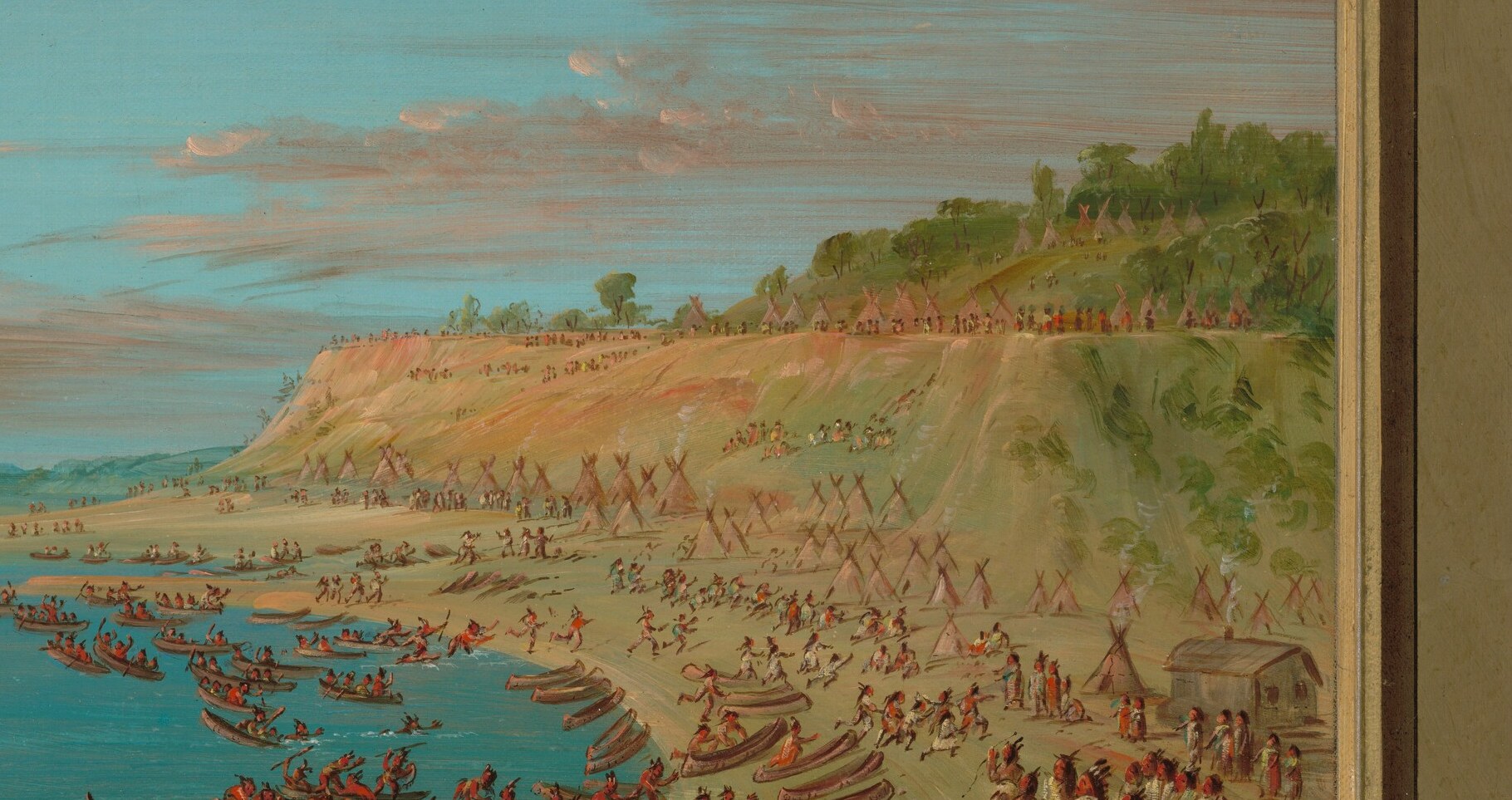
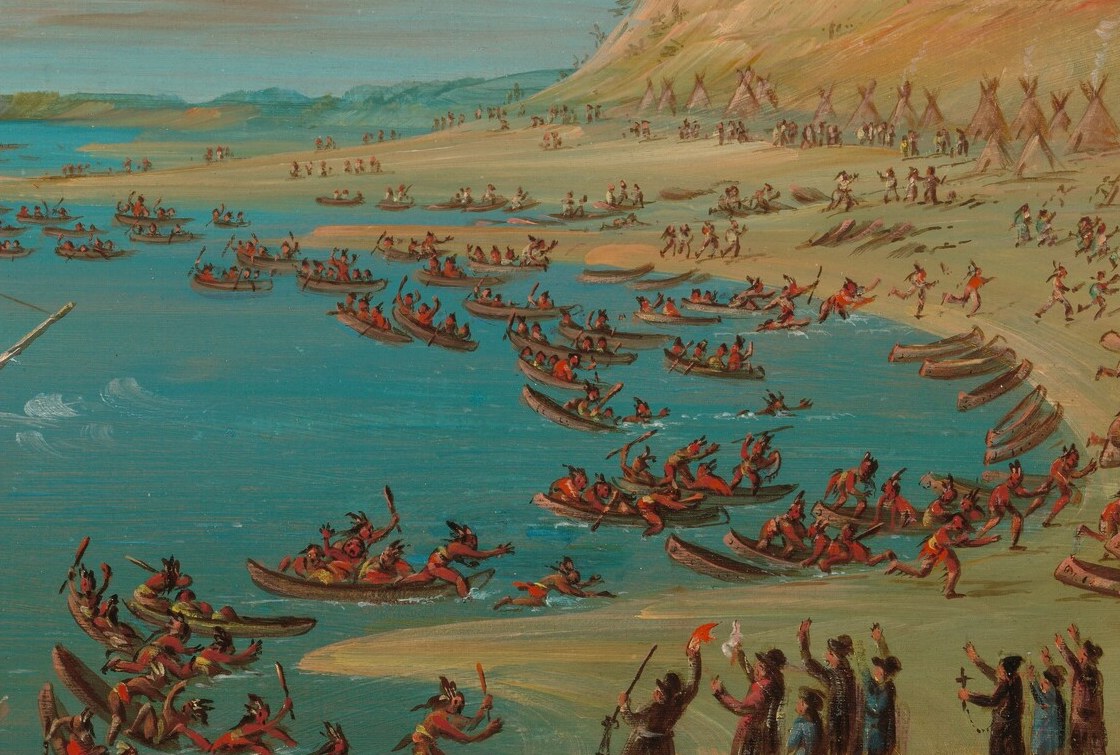
The Griffin Entering the Harbor at Mackinaw. August 27, 1679 by Catlin, George
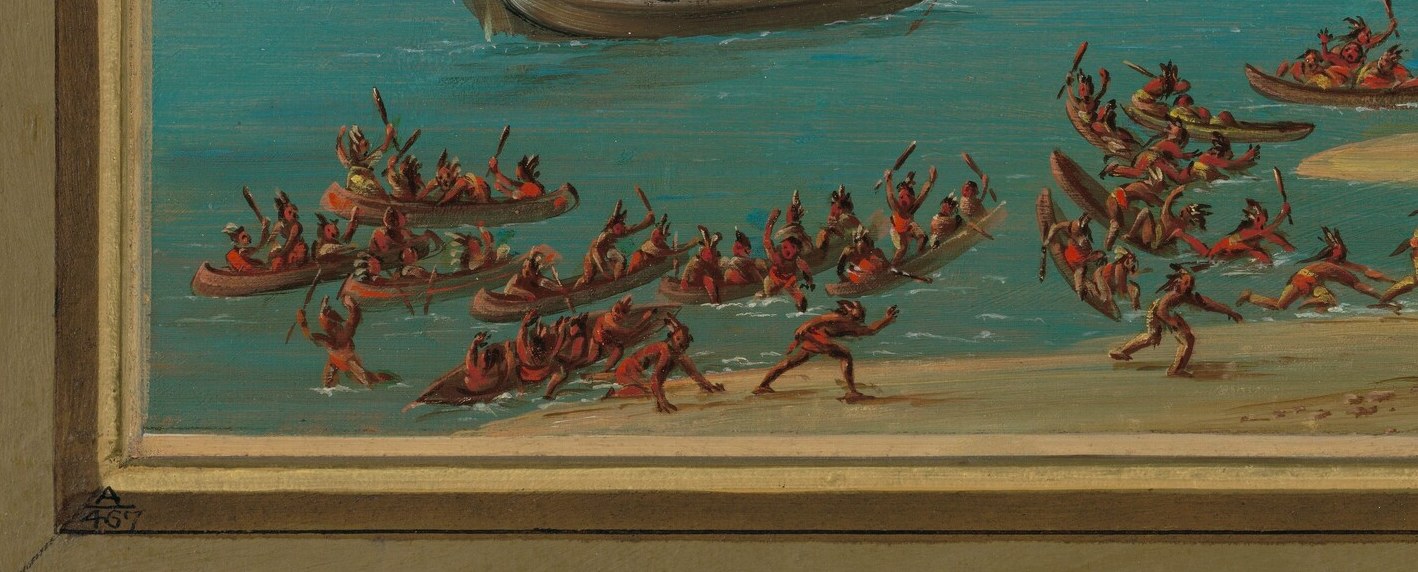
George Catlin's "The Griffin Entering the Harbor at Mackinaw. August 27, 1679" (1847/1848) at the Smithsonian American Art Museum, presents a surprisingly mythological detail.
While Catlin is famous for his portraits of Native Americans and scenes of frontier life, this painting features a ship with a carved griffin figurehead, a fantastical creature of legend. This unique detail merges the imaginary with the tangible, inviting viewers to consider historical narratives and the role of myth in exploration.
Catlin, an American lawyer-turned-artist, traveled extensively through the American West in the 1830s. His early career also involved creating engravings of sites along the Erie Canal, which likely honed his precise rendering of maritime and landscape details visible here.
What other hidden details do you think might be in his other works?
Details
Transcript
This painting depicts Mackinaw Harbor in 1679. The artist, George Catlin, often painted American frontier life. He was known for documenting Native American cultures. Notice the massive ship at the center. Look closer at its stern, where the flag would be. There, a mythical griffin is carved, wings spread. This ship, 'The Griffin', truly sailed the Great Lakes.