Muster Day by Granger, Charles Henry
Charles Henry Granger's "Muster Day," painted in 1843, offers a vibrant glimpse into American civic life of the mid-19th century. Now held at the National Gallery of Art, it's a fascinating example of genre painting, depicting everyday communal activity.
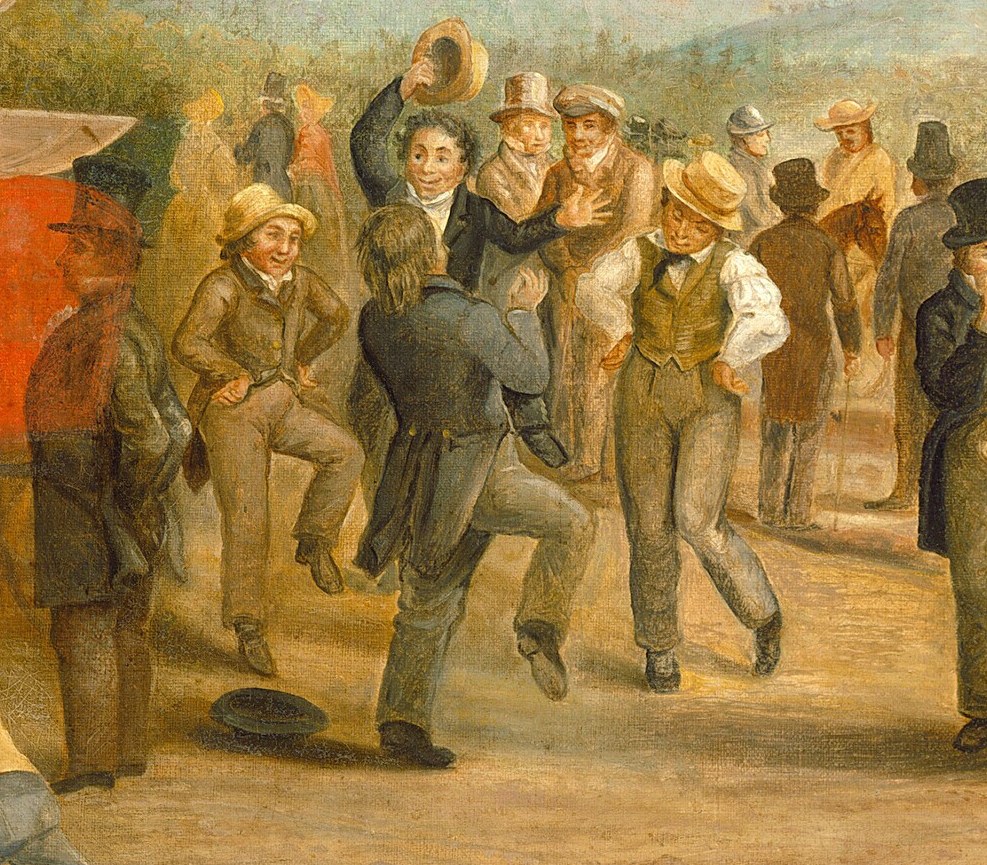
The painting centers on a bustling outdoor gathering, likely a local militia call-to-arms in rural New England. Look for the man on the carriage, announcing the muster, and the young boy eagerly waving a paper. The scene is full of life and detail, from the varied expressions of the crowd to the gnarled trees and dramatic clouds.
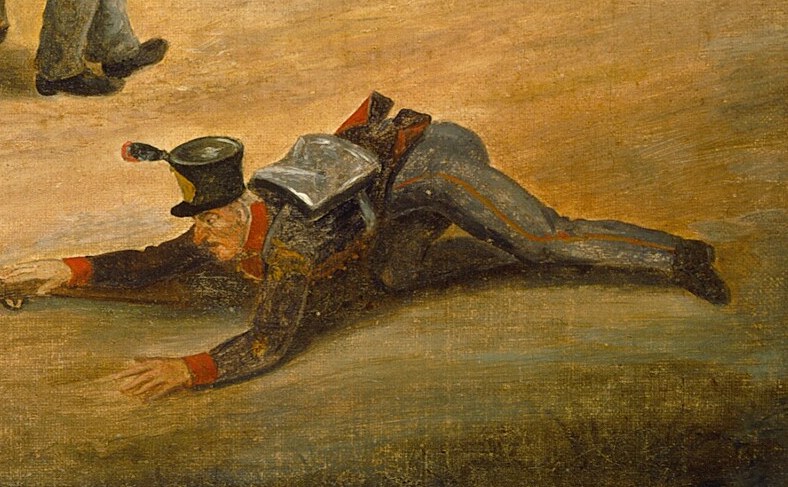
Notice the fallen man clutching his firearm near the red carriage. This detail, and the distant line of soldiers, underscores the period's emphasis on collective readiness and civic participation. Granger used a balanced composition and chiaroscuro to highlight the central action, creating a sense of both immediacy and historical insight.
"Muster Day" captures a moment when community life intertwined with the civic duty of military preparedness. What details in the painting make you feel like you are right there in the crowd?
Details
Transcript
This painting, 'Muster Day,' depicts a bustling 19th-century American gathering. It captures a typical New England communal event, a militia call-to-arms. On the wagon, a man announces the muster, holding a paper high. A young boy waves another paper, mirroring the excitement. Near the red carriage, a man lies fallen, clutching his firearm. This detail hints at the serious nature of military readiness. The artist, Charles Henry Granger, painted this in 1843.