Martha and Mary Magdalene by Caravaggio
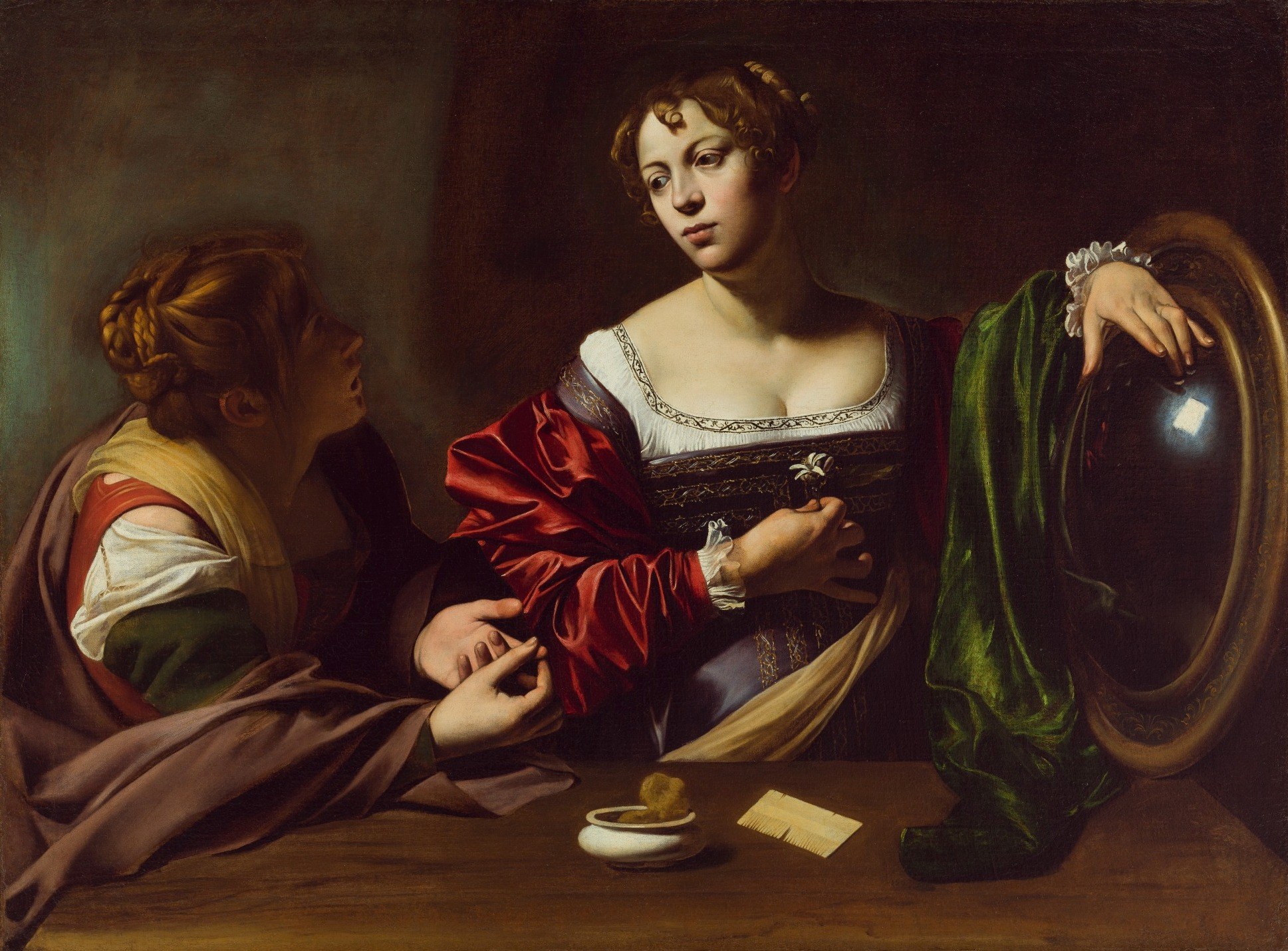
Caravaggio's "Martha and Mary Magdalene" (c. 1598), held at the Detroit Institute of Arts, captures a pivotal moment of spiritual persuasion between two sisters.
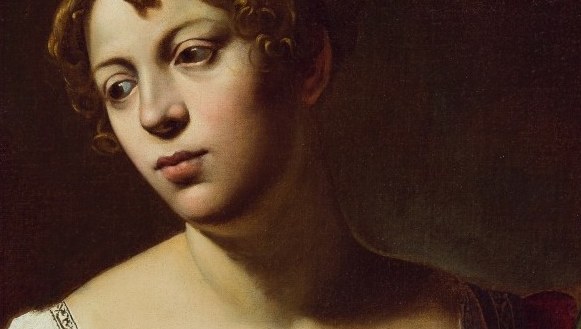
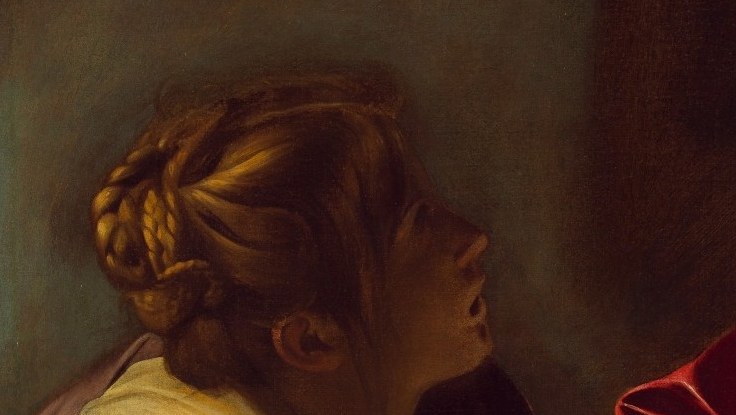
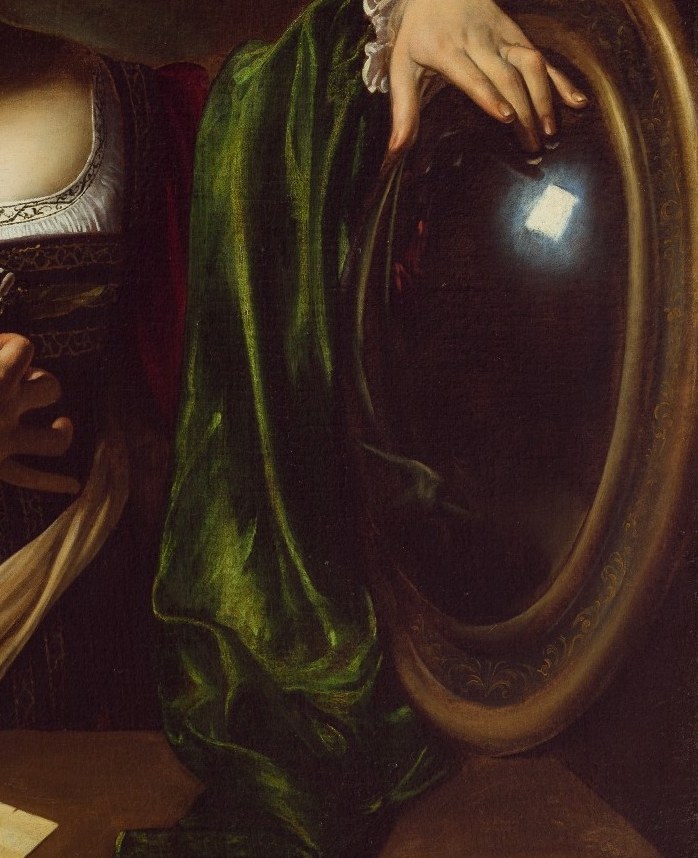
Look closely at the expressions and gestures. Martha, with a serene intensity, offers a delicate flower as a symbol of virtue, urging her sister, Mary Magdalene, toward a life of faith. Mary Magdalene, historically portrayed as a former courtesan, is caught in a moment of profound introspection, her hand poised between acceptance and resistance, her worldliness reflected in the ornate mirror beside her.
This painting exemplifies Caravaggio's masterful use of chiaroscuro, a dramatic contrast of light and shadow, to heighten the emotional tension and focus on the human drama. It reflects medieval traditions that conflated Mary Magdalene with Martha of Bethany, depicting her journey of conversion.
The painting invites us to consider the choices we face and the power of human connection in moments of deep personal change.
Details
Transcript
Two sisters, two paths, one dramatic decision. Martha, already a follower, pleads with her sister Mary. She offers a delicate flower, symbolizing a virtuous life. Mary Magdalene, historically a courtesan, hesitates. This mirror reflects the worldly life she considers leaving behind. Caravaggio captures this intimate moment of spiritual conversion.