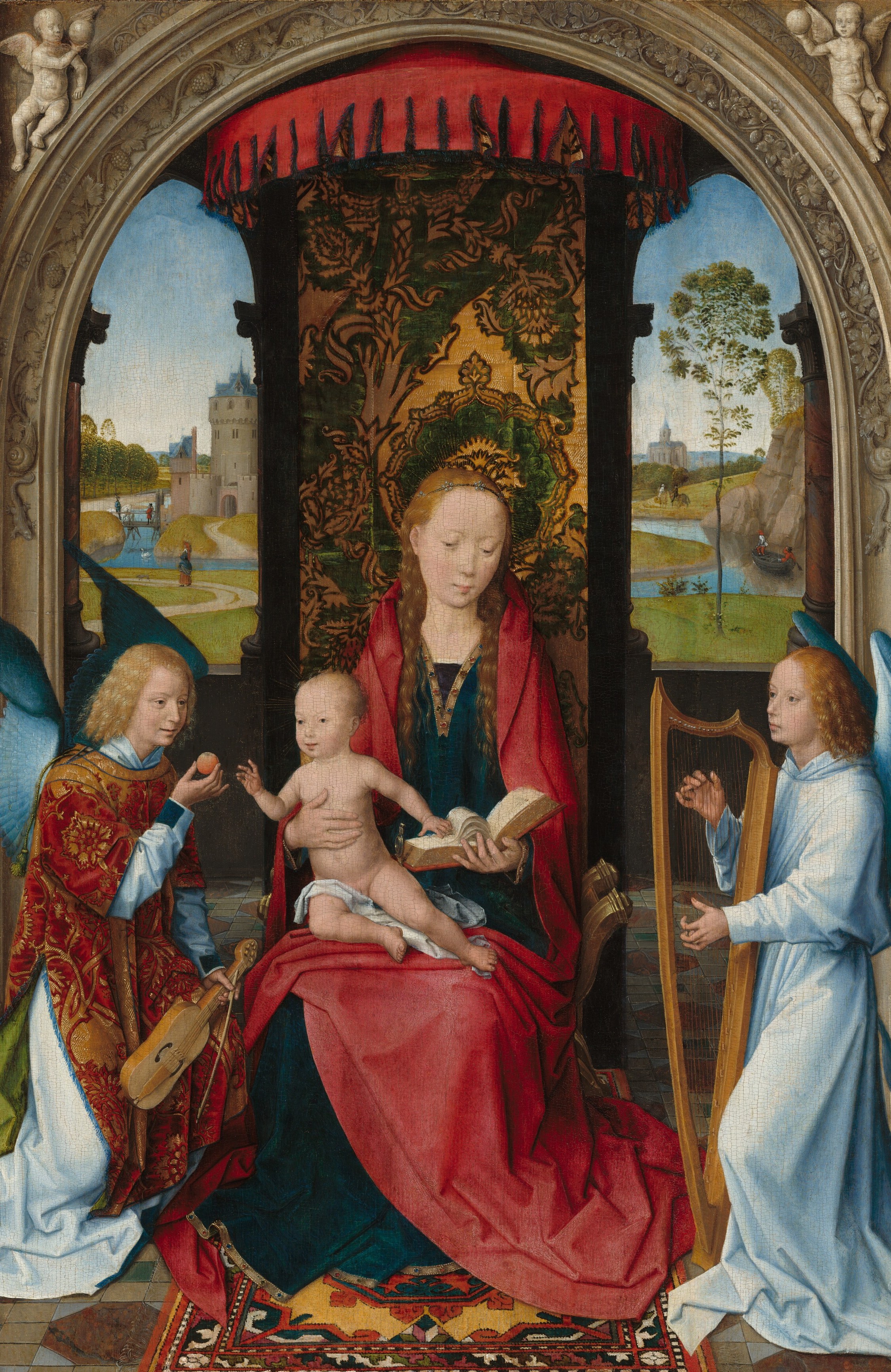
Madonna and Child with Angels by Memling, Hans
Hans Memling's Madonna and Child with Angels, painted after 1479, is a masterclass in artistic transition. It bridges two worlds: the flat, eternal gold of medieval icons and the deep, measurable space of the Renaissance. Memling achieved this quietly, inside a single gilded surface.
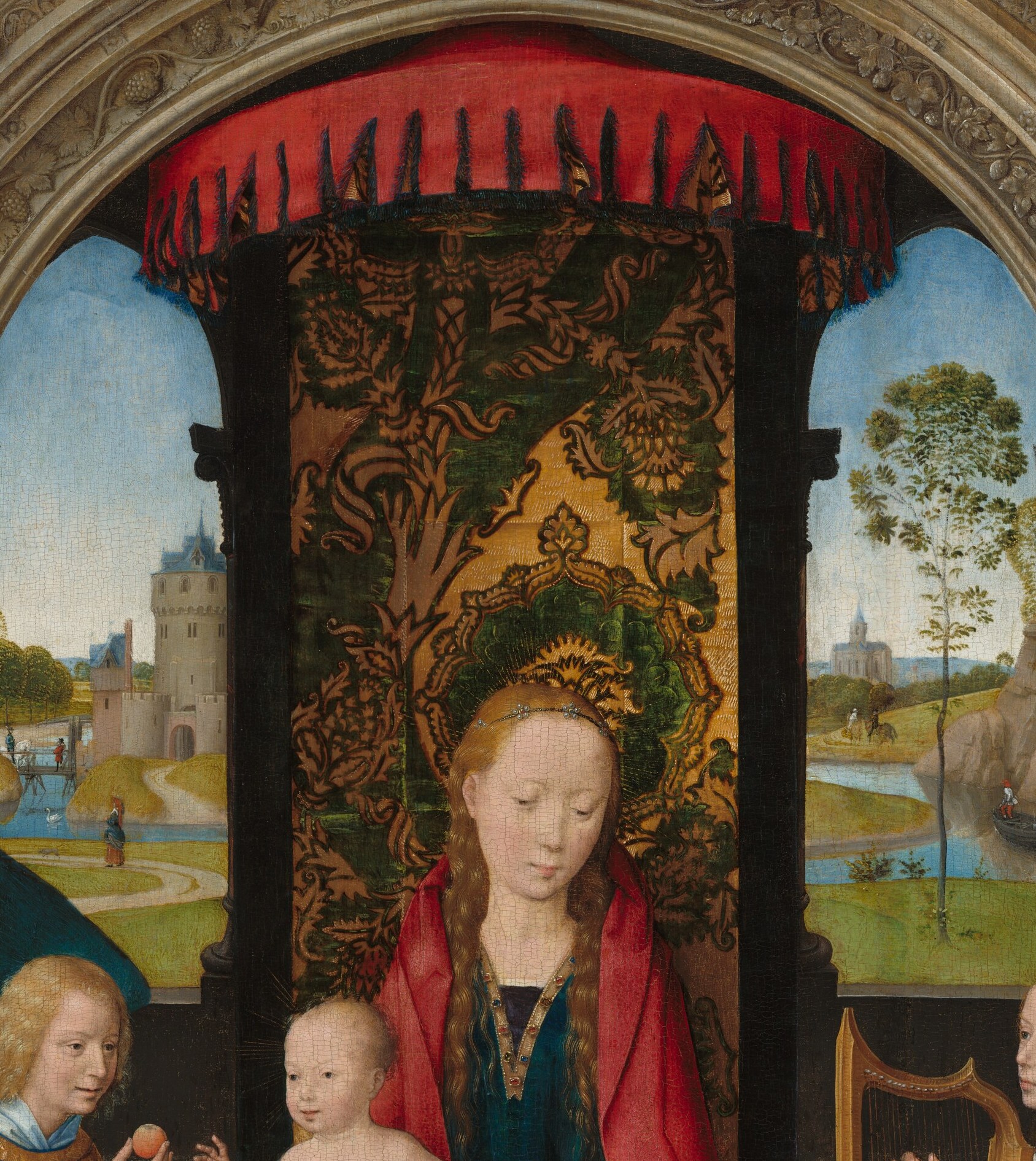
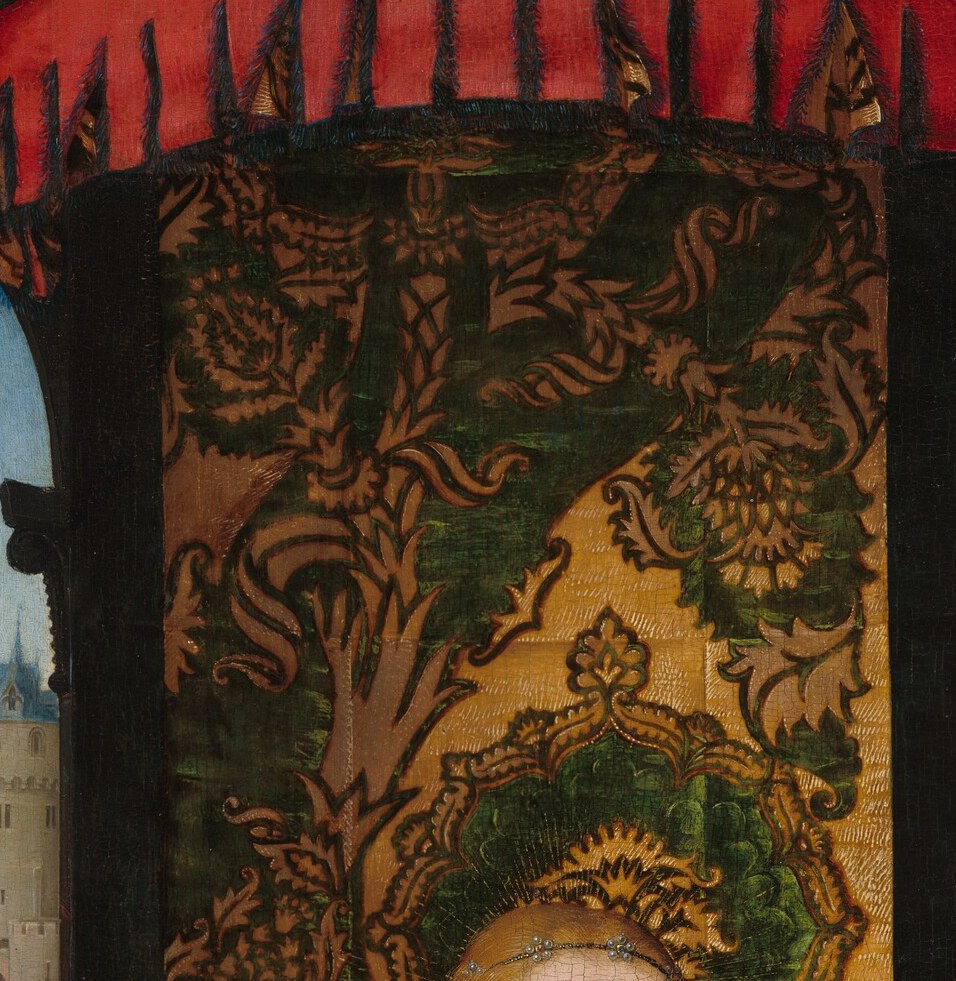
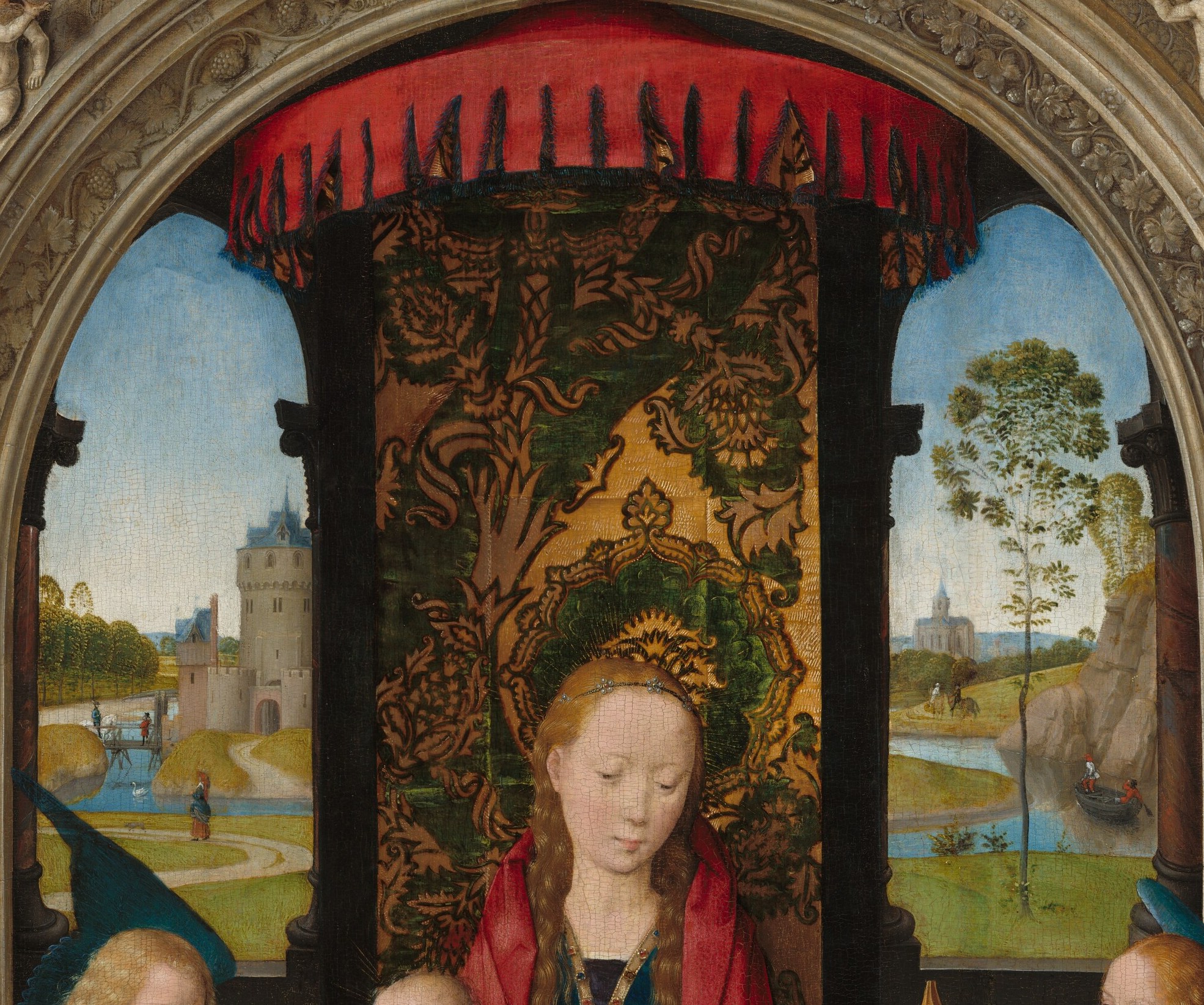
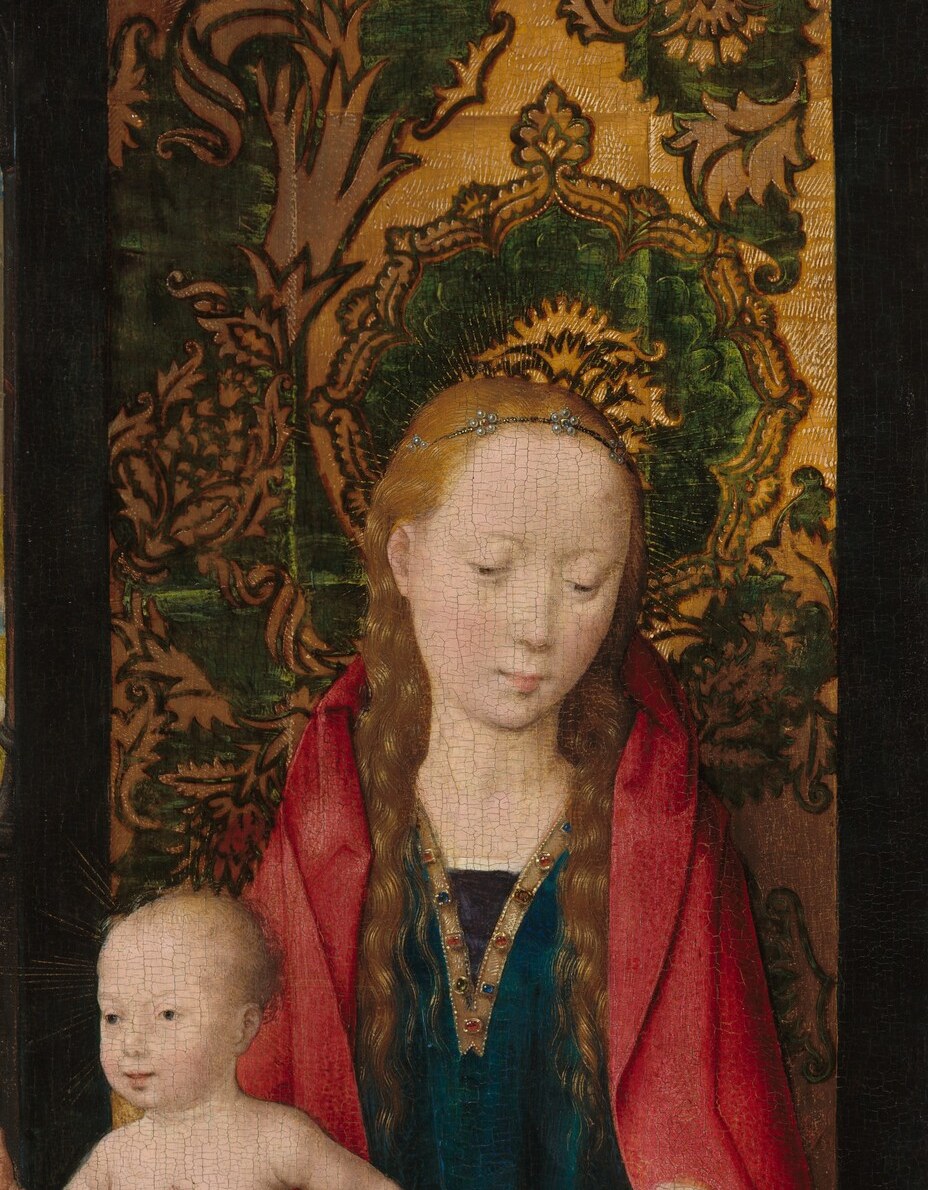
Look first at the throne behind the Virgin. It glows like a Byzantine gold ground, the kind that signified heaven for centuries. But then the eye adjusts. That gold is not a flat plane. It is a constructed object, a Gothic throne with carved pinnacles, a pointed arch, and receding perspective. The Virgin sits inside real space, even as the gold insists on the divine.
Then look through the arch, into a luminous Flemish landscape. Memling tucked distant architecture, water, and tiny pilgrims into these marginal vistas. The message is theological: the Queen of Heaven is attended by celestial angels, but the world outside the throne room is the ordinary, green world we walk through. The composition holds both realms without a seam.
Memling trained in Brussels under Rogier van der Weyden before settling in Bruges, where he became one of the city's wealthiest citizens. A tax document from 1480 lists him among the richest. This painting comes from his late period, when his workshop was producing highly refined devotional panels for clergymen, aristocrats, and the merchant class. The lute held by the left angel is painted with enough organological accuracy to help identify 15th-century Flemish instrument types.
The painting rewards patience. Every glance through the arch, every fold of lapis-blue drapery, every feather on an angel's wing carries information Memling wanted you to notice. What do you see in the distant landscape?
Details
Transcript
This gold behind the Virgin isn't a flat medieval icon. It's a gilded throne, built in perspective. See the carved stone pinnacles and pointed arch. The crown above her: pure medieval Queen of Heaven. Memling painted this in 1479. He was Bruges' wealthiest painter. Now look past the throne, through the arch. A Flemish countryside. Distant pilgrims, water, architecture. Two devotional worlds, held inside one panel.