Street Scene in Paris (Coin de rue à Paris) by Félix Vallotton
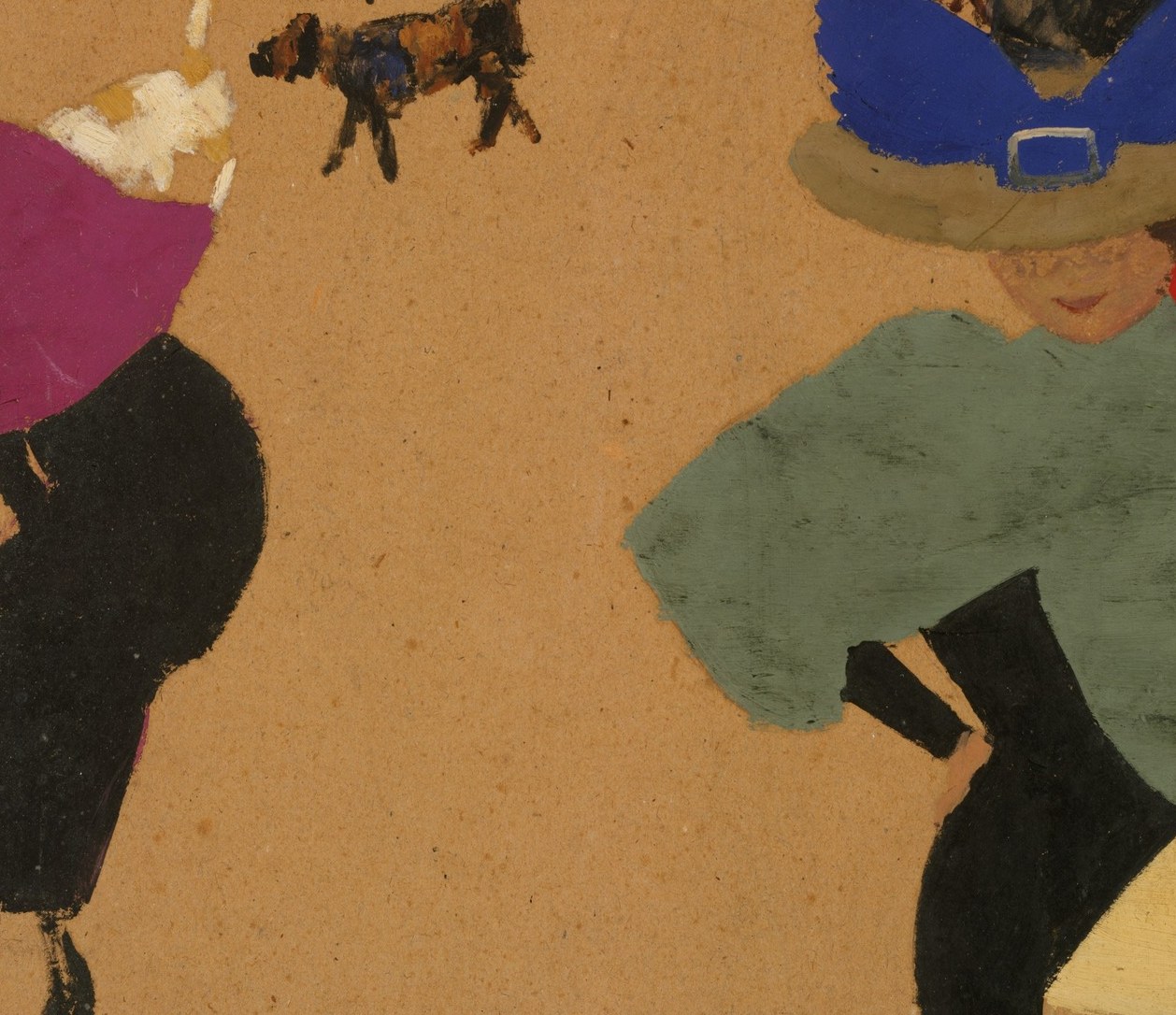
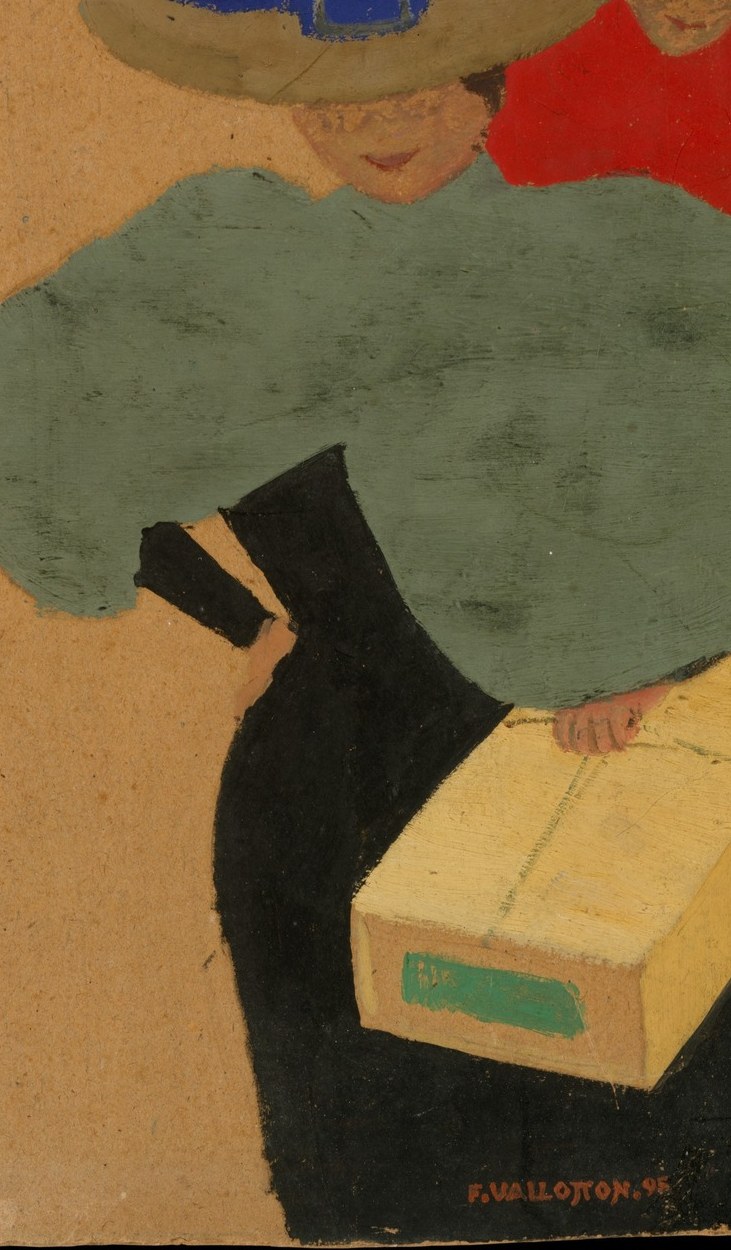
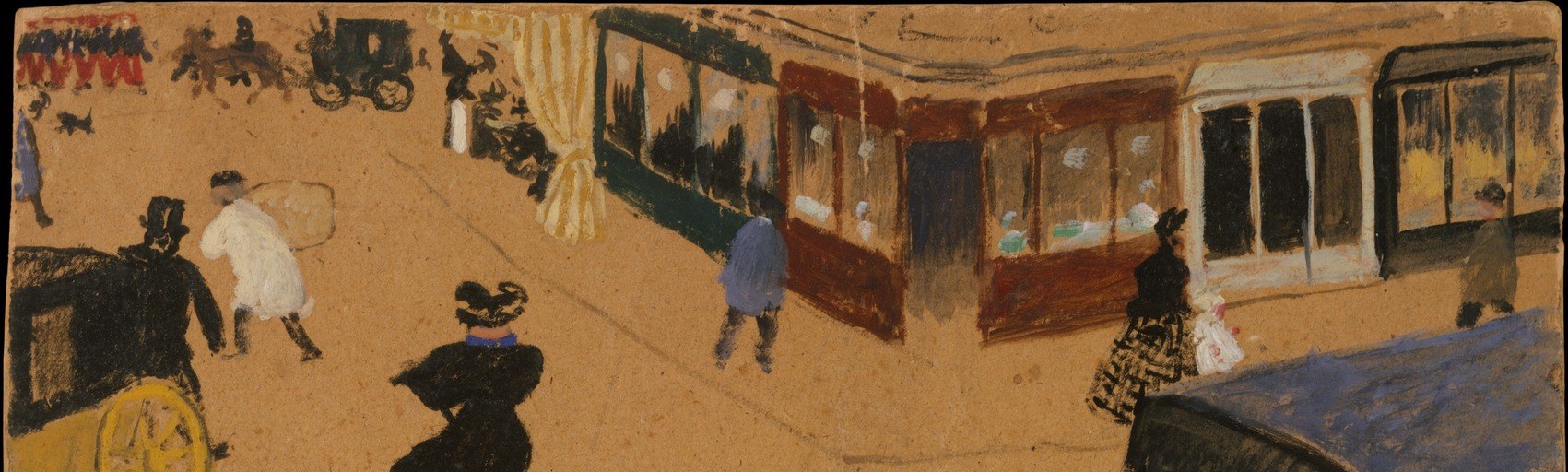
This is Félix Vallotton's "Street Scene in Paris" (Coin de rue à Paris), painted in gouache in 1895. It now hangs in the collection of the Musée d'Orsay. When it was first shown, critics were genuinely offended. Paris had just spent decades carving out its grand new boulevards, the Haussmann-era arteries meant to embody light, order, and modernity. Vallotton gave them back this: a flat ochre void, populated by cut-out silhouettes with no faces.
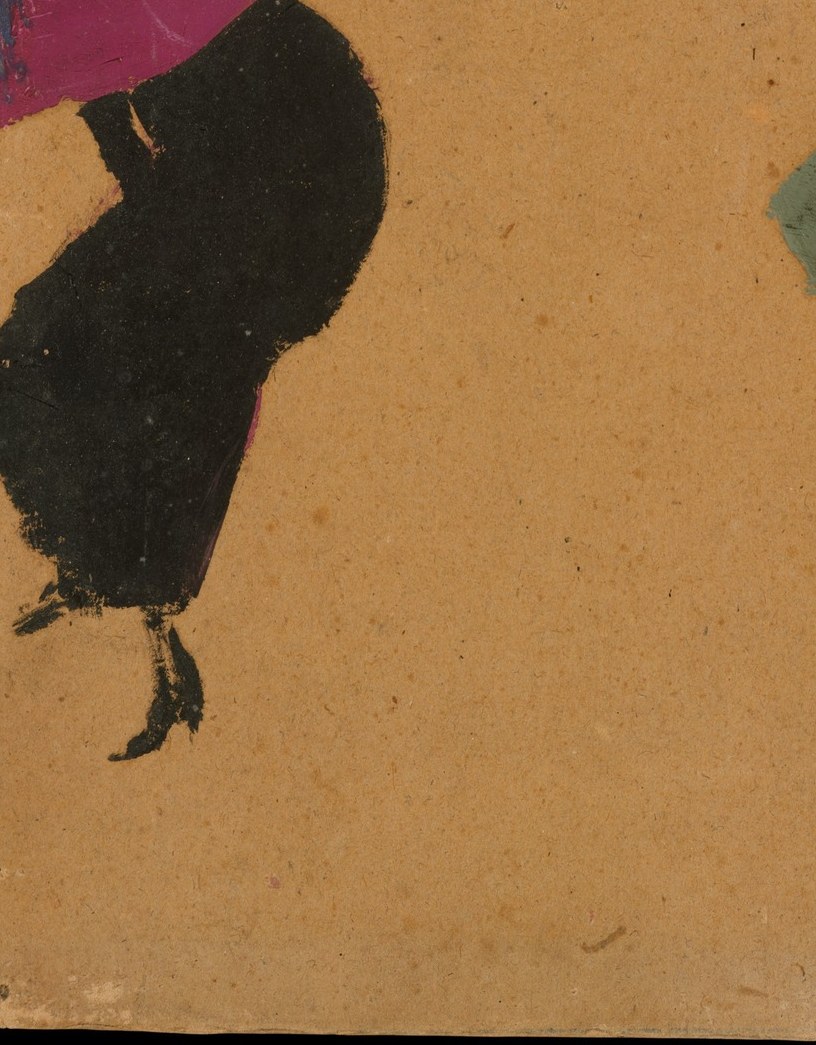
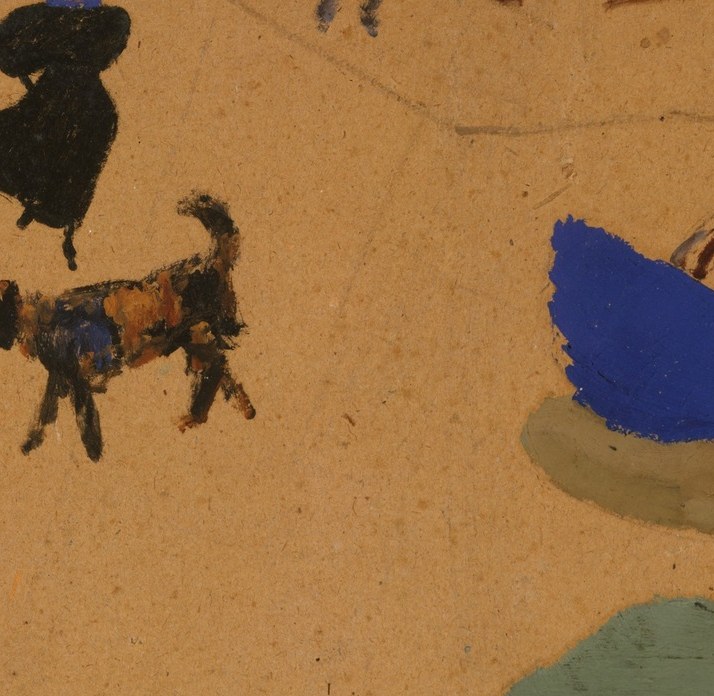
Look first at the giant black form dominating the lower left. That is a woman seen from behind, and she is the single most important shape in the painting. Vallotton denies you her face entirely. To the right, a blue horse-drawn tram glides through the upper centre, the electric blue an almost aggressive chromatic choice against so much sand and shadow. In the background, tiny pedestrian figures become thumbnail portraits of 1895 dress if you look closely, but Vallotton refuses to let them distract you from the flatness.
Vallotton was a Swiss-born member of Les Nabis, a group of young French artists who believed a painting was first a surface of arranged colors before it was anything else. Their name meant "the prophets." While Impressionism had already softened academic realism, the Nabis took a harder turn into pure design. This little gouache is practically a poster: thick paint applied fast, no atmospheric haze, no flattering detail. The scandal was not in the subject, but in the insistence that a great city could be rendered as a graphic sign and nothing more.
He was also a celebrated printmaker whose woodcuts had already shocked Europe with their black-and-white severity. This painting translates that woodcut logic into color. The result still feels bracingly modern. It is a reminder that every generation has to fight for what a picture is allowed to be.
Details
Transcript
Paris, 1895. The brand-new boulevards were the city's pride. This painter reduced them to a slab of ochre mud. Critics called it crude. A child's cut-out cartoon. The woman in black refuses to even show her face. And that bright blue tram? The only punch of real color. Félix Vallotton was a Nabi. They believed in paint, not politeness. He never joined the scandal. He just watched, and painted what he saw.