Mercury and Argus in a Landscape by Dirck van der Lisse
Dirck van der Lisse's "Mercury and Argus in a Landscape," painted in 1635, captures a pivotal moment from Ovid's Metamorphoses. This stunning work, executed on copper, is held at The Cleveland Museum of Art.
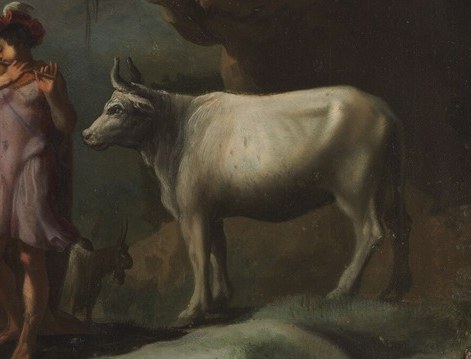
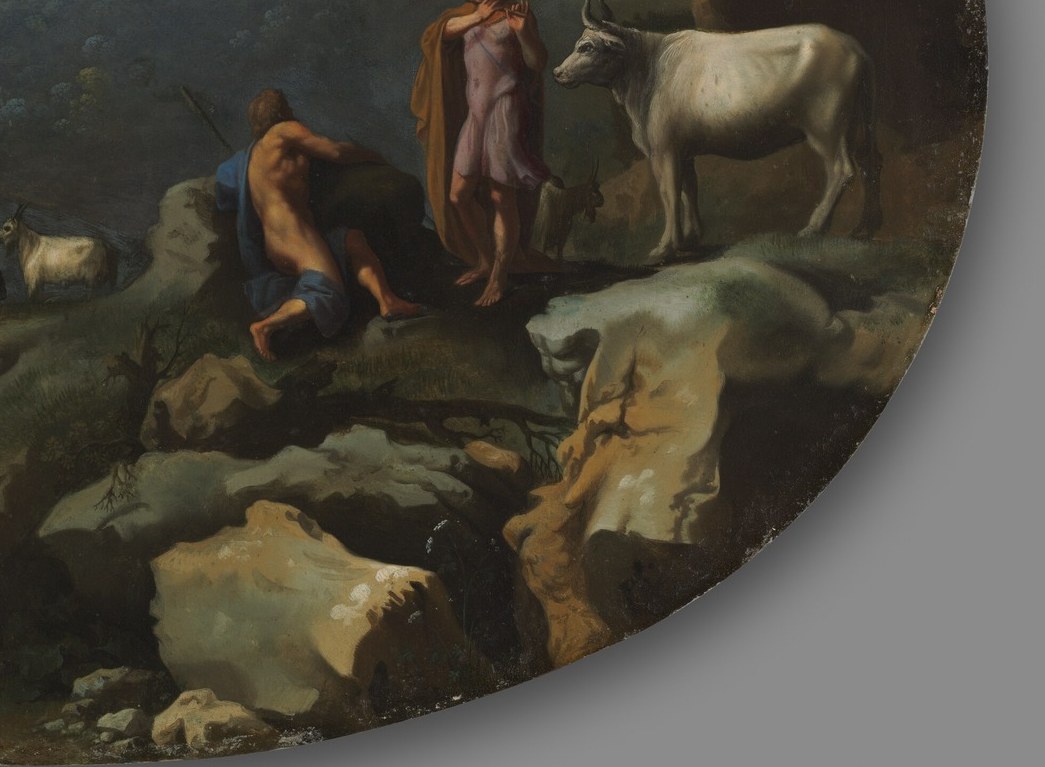
The painting depicts the messenger god Mercury, identifiable by his purple tunic and his winged cap (though barely visible here), tasked by Zeus to rescue Io, a nymph transformed into a white heifer. She is guarded by Argus Panoptes, a giant with a hundred eyes.
Van der Lisse cleverly illustrates the calm before the storm. Mercury carries a flute, which he will use to lull Argus's many eyes to sleep. Once Argus is asleep, Mercury will slay him, freeing Io. The tranquil setting belies the dramatic narrative unfolding.
What other classical stories do you see reflected in everyday art?
Details
Transcript
This tranquil landscape hides a moment of high drama. The painting shows a story from Greek myth, about gods and giants. This is Mercury, the messenger god, in his purple tunic. He watches Argus, a giant with a hundred eyes, who guards the white cow. Mercury has been sent to steal the cow from Argus. The painter gave Mercury a flute, to lull Argus to sleep.