Girl in Red with Flowers and a Distelfink by American 19th Century
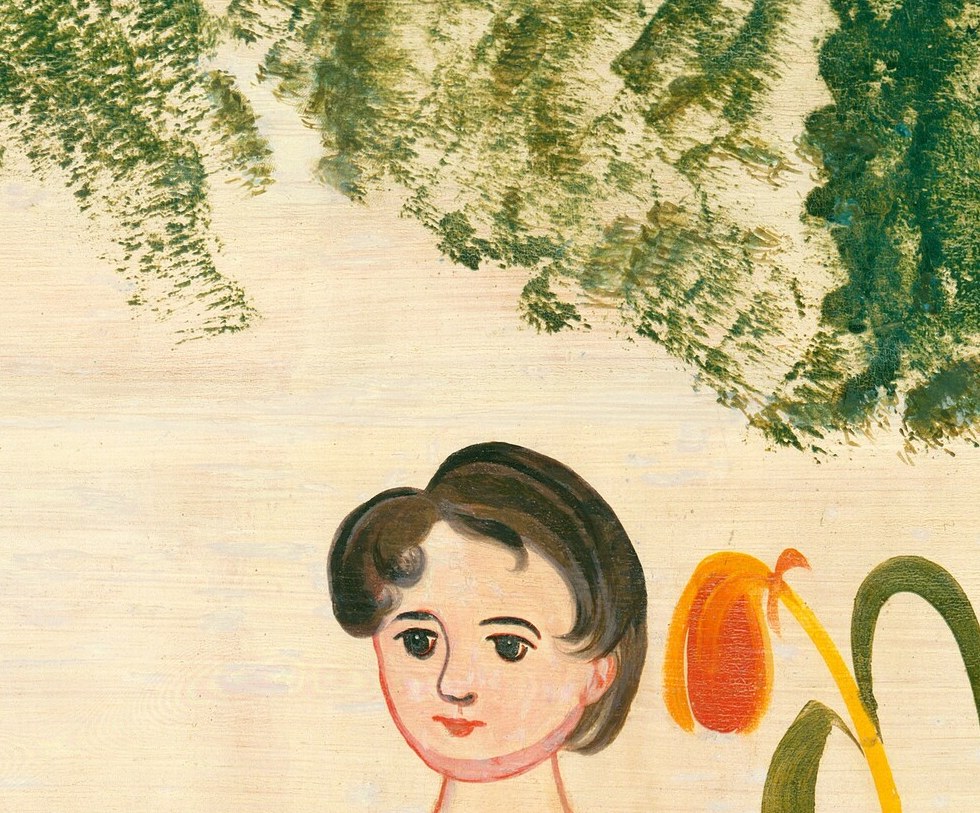
This isn't just a charming portrait; it's a coded message of well-wishing. *Girl in Red with Flowers and a Distelfink*, painted around 1830 by an unknown American artist, is an oil on wood work, likely a fireboard, and resides in a private collection.
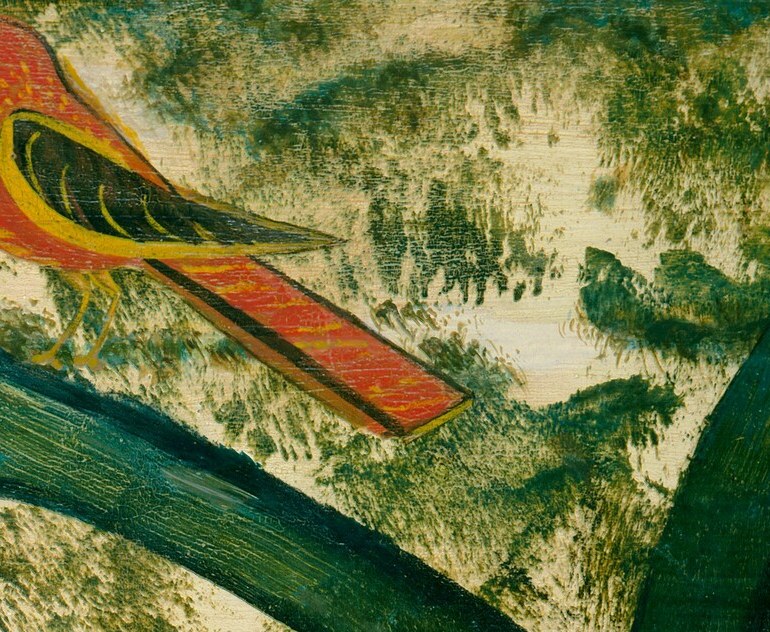
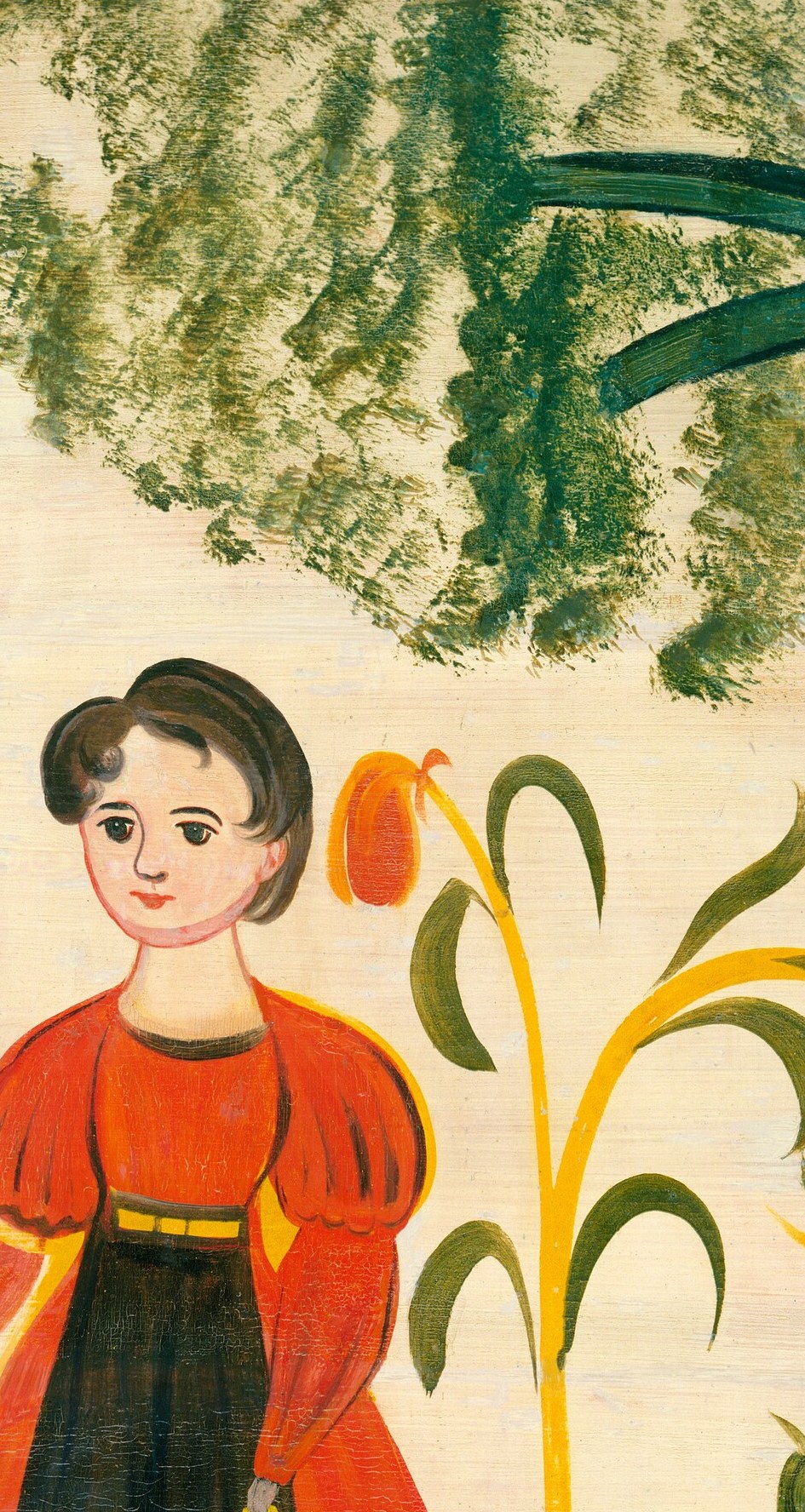
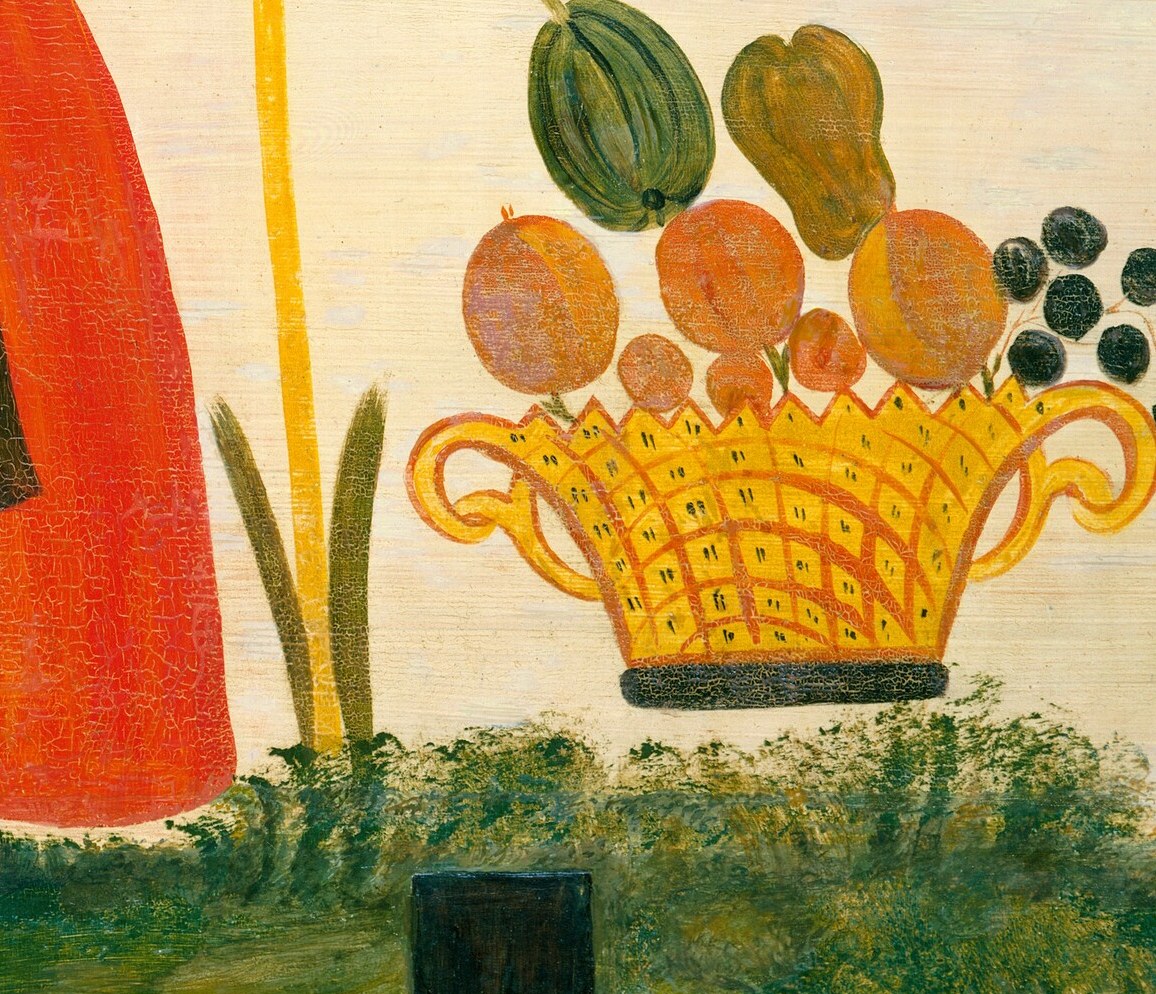
Nearly every element in this painting carries a specific meaning from Pennsylvania Dutch folk art. Look closely at the distelfink (goldfinch), a powerful symbol of good luck. The prominent tulips represent faith and the Holy Trinity, while the overflowing basket of fruit signifies abundance and prosperity.
This "decoder" approach reveals the painting to be a carefully constructed program for good fortune, meant to bless the home it adorned. Such symbolic art was common in the region, blending portraiture with traditional fraktur motifs.
What other hidden meanings might be in plain sight in everyday objects?
Details

Transcript
This isn't just a portrait. It's a coded message. The painter worked on a fireboard, for a home. The bird, a distelfink, is a Pennsylvania Dutch good luck charm. The towering tulips symbolize faith and the Holy Trinity. And this basket of fruit means abundance and prosperity. This painting is a program for good fortune.