Summer Day by Johan Hendrik Weissenbruch
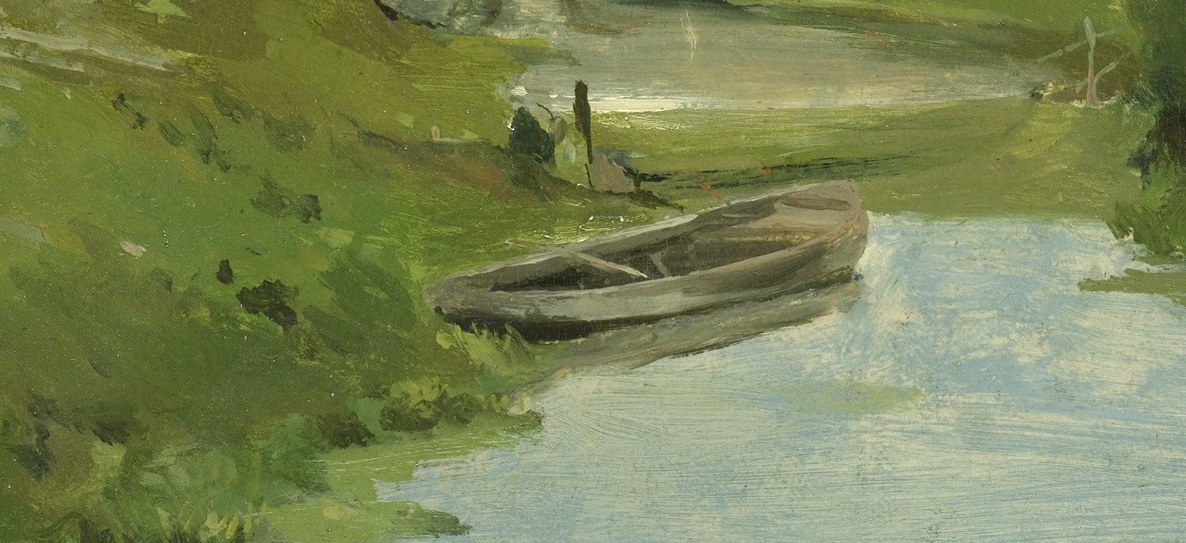
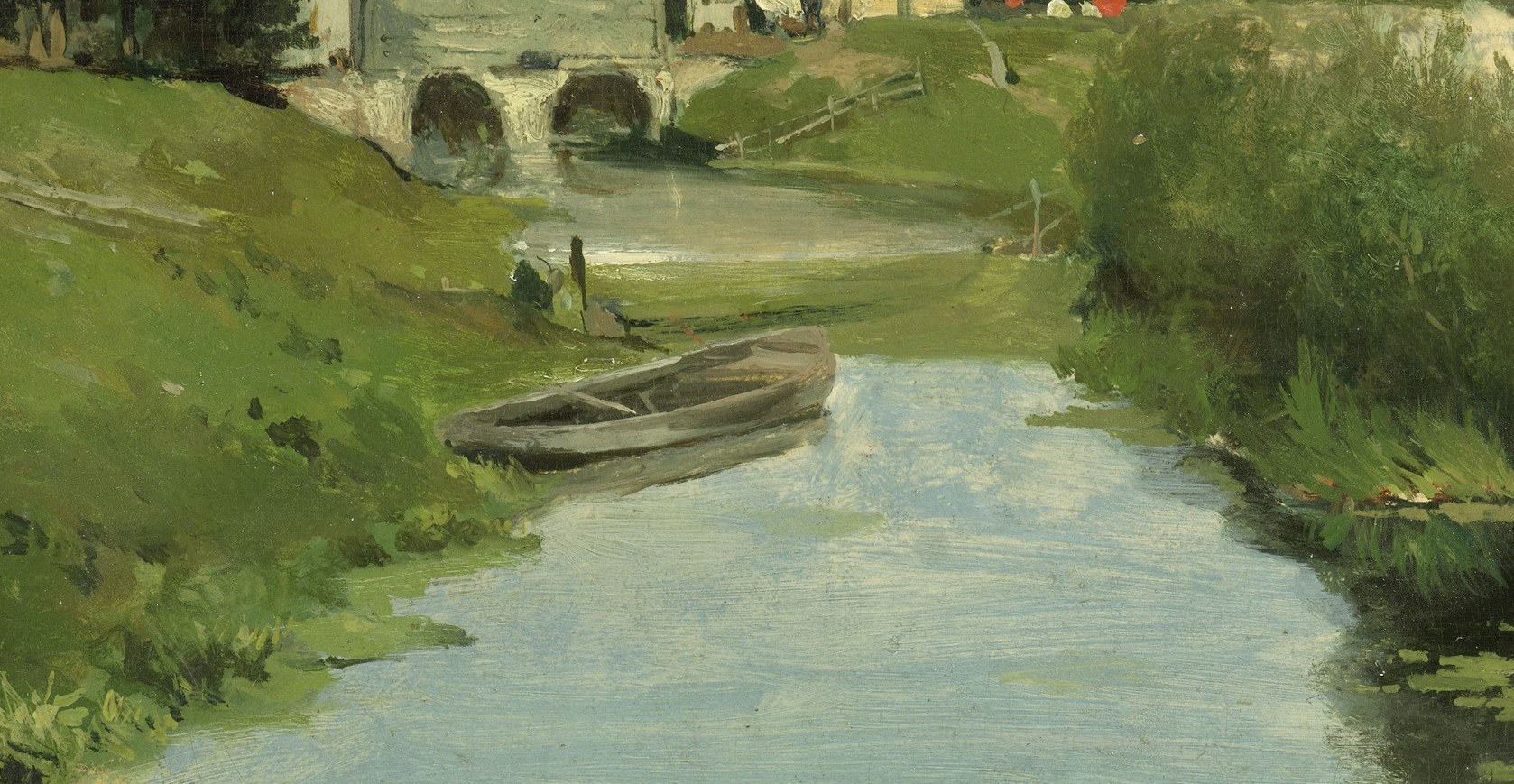
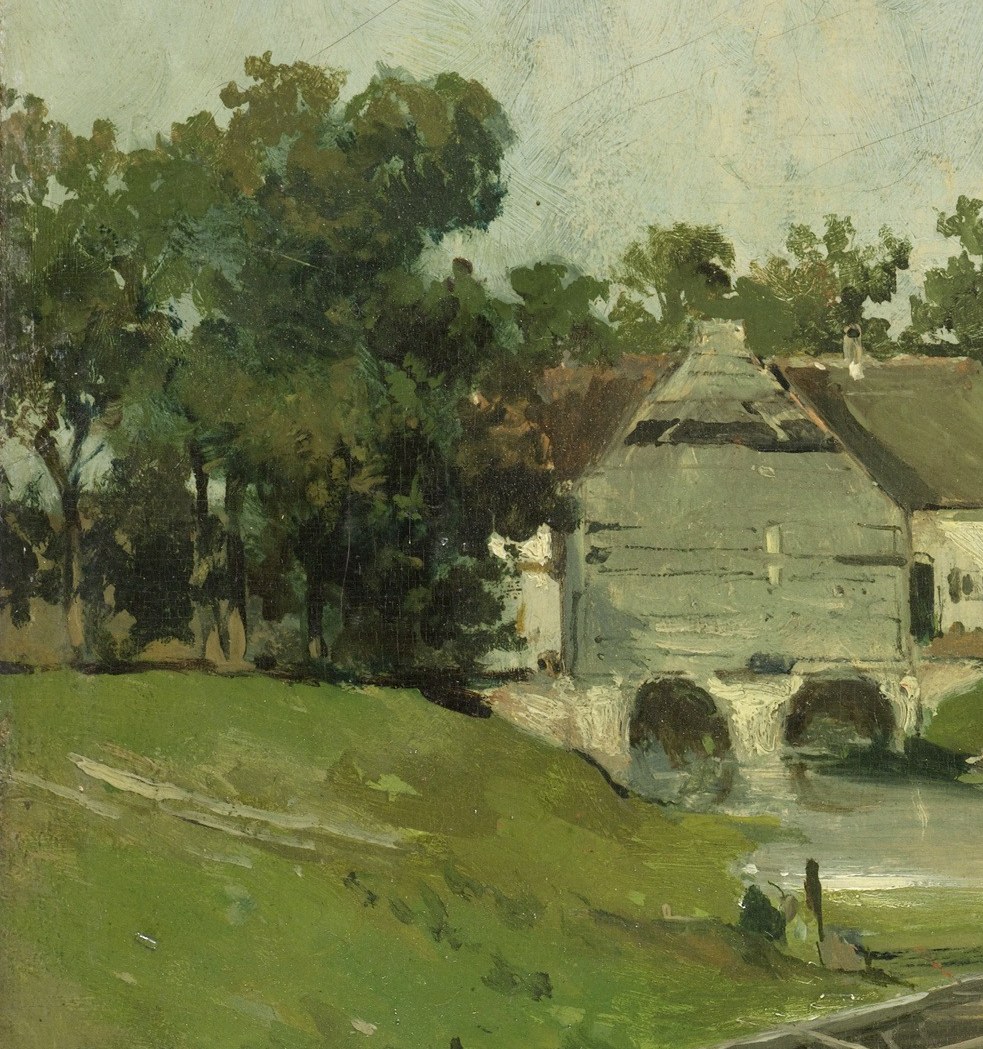
Weissenbruch's Summer Day (1886) is held in a private collection, but its lesson in technique belongs to everyone. It is not a grand subject, a farmhouse, a boat, a strip of Dutch river, yet the water in this painting is a small miracle of economy. Where other painters built reflections with careful glazes, Weissenbruch dragged a nearly dry brush sideways and let the weave of the canvas do the work.
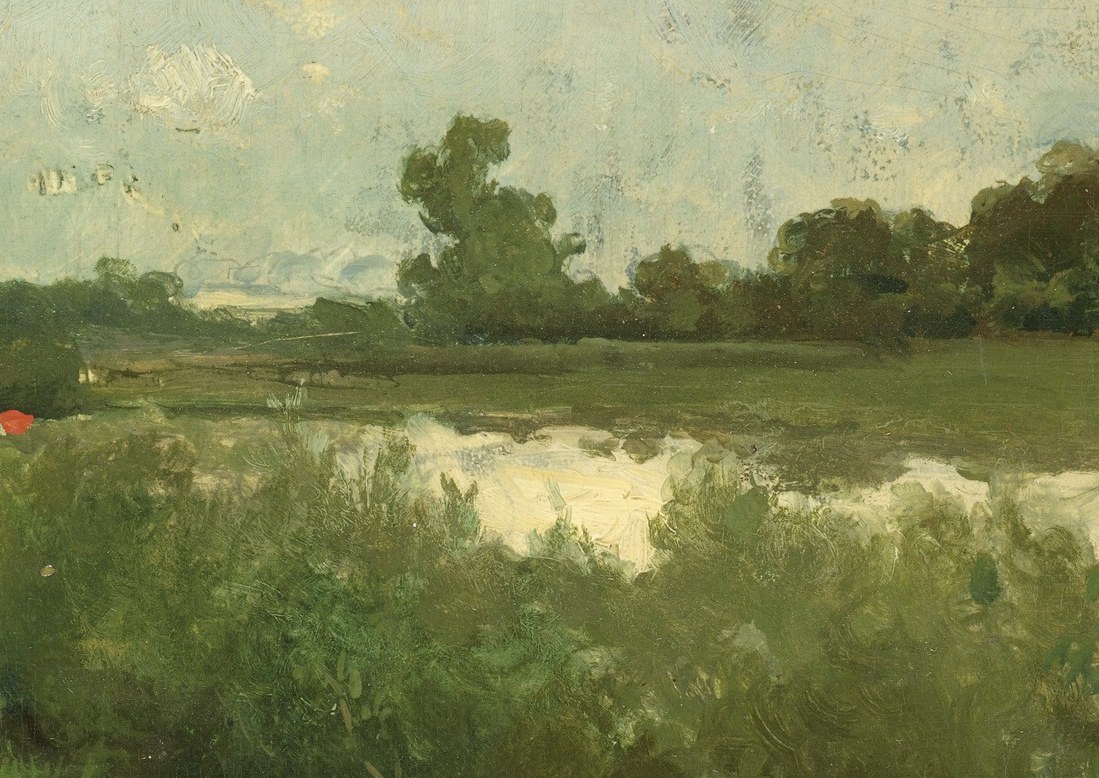
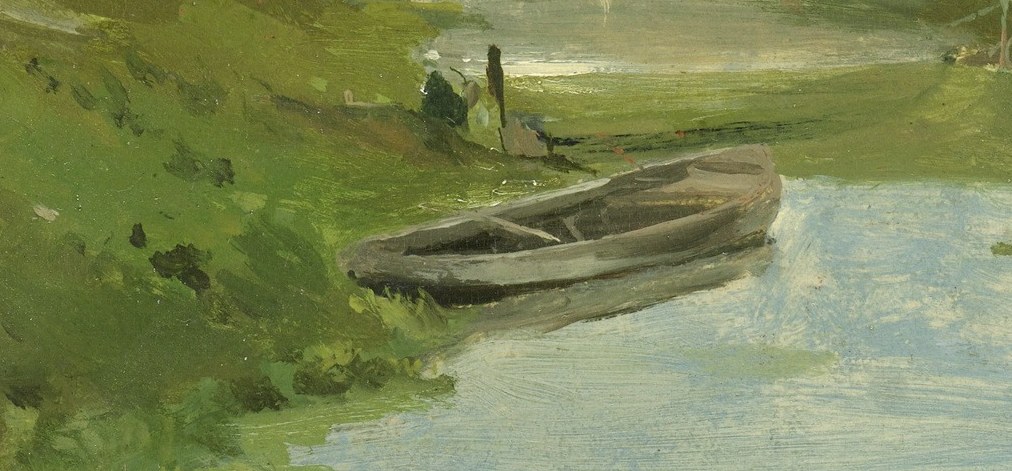
Watch the green reflection just left of center. Those strokes are horizontal slashes, almost casual, laid down wet on dry. From a foot away they look like nothing. From six feet, they convince completely as foliage trembling on the surface. The sky reflections use the same trick in paler keys. He painted what the eye actually receives, a shimmer, not what the mind knows is there.
Weissenbruch belonged to the Hague School, the generation after the great Romantics, and he was revered among them as a watercolorist first. That matters here. He carried watercolor's demand for speed and nerve into oil, and you can see the result: no second-guessing, no overworking, just the right stroke the first time. A fellow painter once said watching him work was like seeing a man write a letter, unhurried, but without a single false move.
Next time a painting stops you, step close and try to find its fastest moment. It is often the best one.
Details
Transcript
Look at this water. It hardly looks like paint. Now look closer. Green foliage dissolves into the river. These are not careful leaves. They are quick, horizontal strokes. The painter, Weissenbruch, worked en plein air, outside, in the moment. Speed was his tool. A watercolorist's reflexes, in oil paint. A dry brush dragged sideways across the canvas becomes a ripple.