Still Life by William Michael Harnett
William Michael Harnett's 'Still Life' (1888) is not a generic arrangement of scholarly props. It is a puzzle.
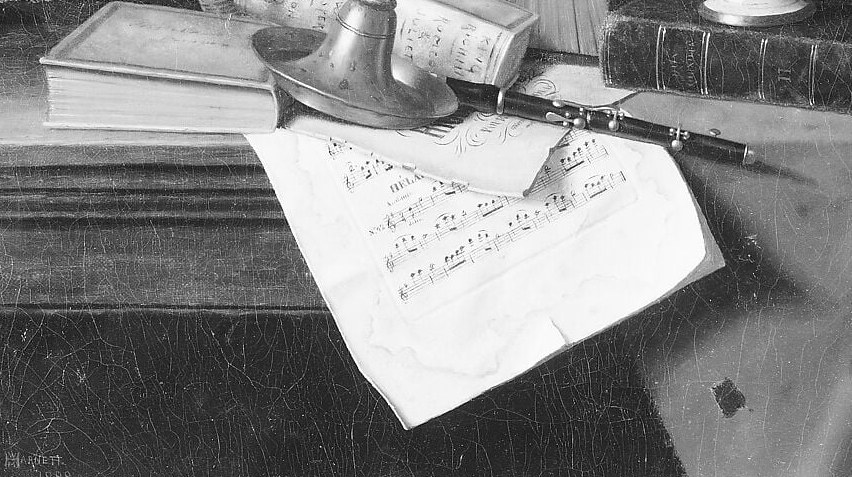
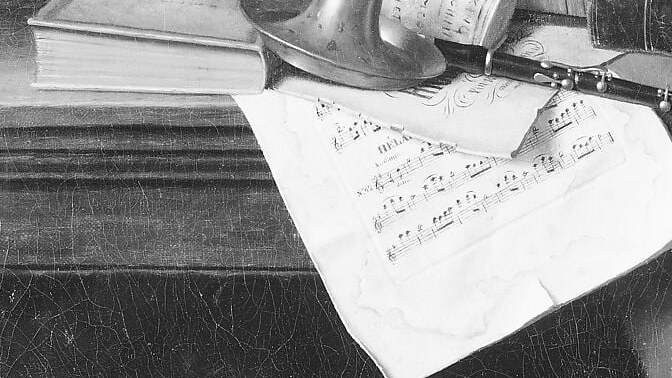
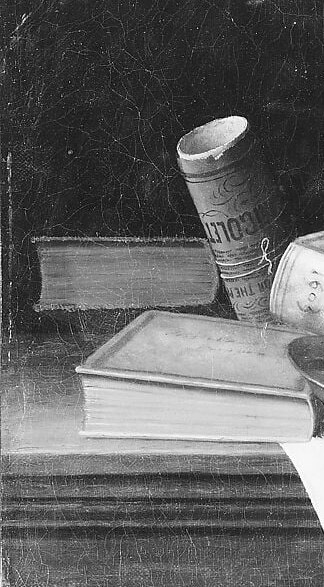
The open sheet music spread across the foreground contains actual, legible musical notation, not invented scrawl but a real melody rendered note for note. The leather-bound books stacked at left carry titles Harnett painted clearly enough to be read. He was not suggesting; he was documenting. Every element is a specific, identifiable object he placed before his easel.
Harnett worked in the trompe-l'œil tradition, an illusionistic style designed to fool the eye into believing painted objects are physically present. But his deeper game was always specificity. Where other still life painters generalized a book or a flute, Harnett painted this book, that flute, this exact sheet of music. The fidelity is an invitation: stop, look closer, read.
The painting lives in a private collection and is less visited than his major museum works, but the rewards inside it are the same. Pause the film on the book spines. See if you can make out a title.
Details
Transcript
It looks like a dignified still life. Books and music on a wooden ledge. Quiet, scholarly. But Harnett didn't invent the sheet music. Those notes are a real, playable melody. And the books aren't props. Look at the spines. The title is legible. He wanted you to read it. A scavenger hunt left in plain sight for over a century.