Isola Bella in Lago Maggiore by Sanford Robinson Gifford
View the artwork: Isola Bella in Lago Maggiore →
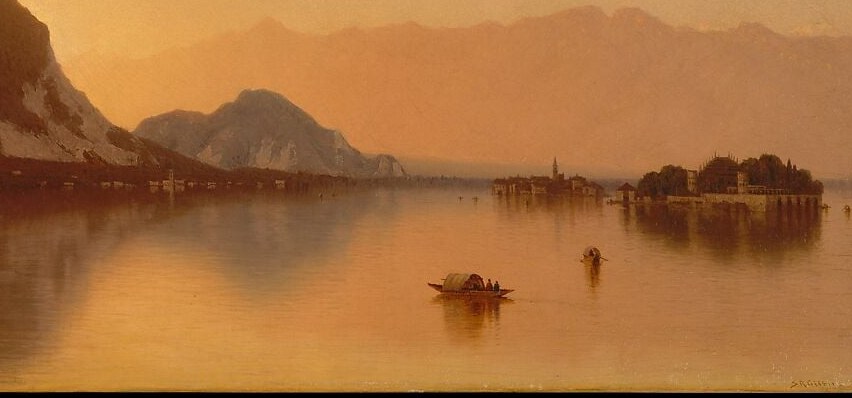
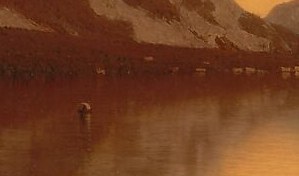
Gifford called Lago Maggiore the finest of the Italian Lakes. He spent days sketching it in 1868, made a small sunset sketch, and three years later expanded it into this painting. The result is one of the quietest, most careful landscapes in American art.
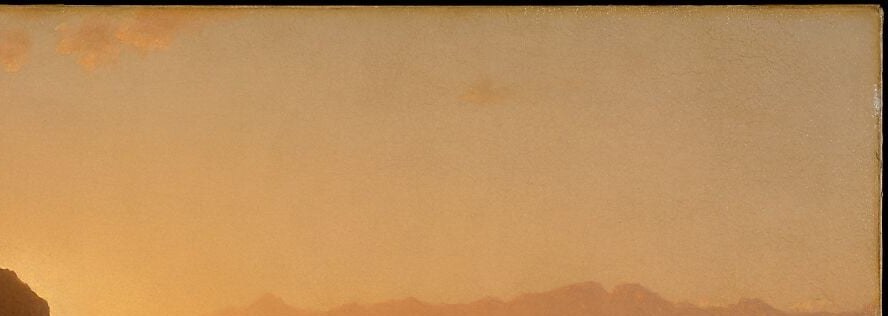
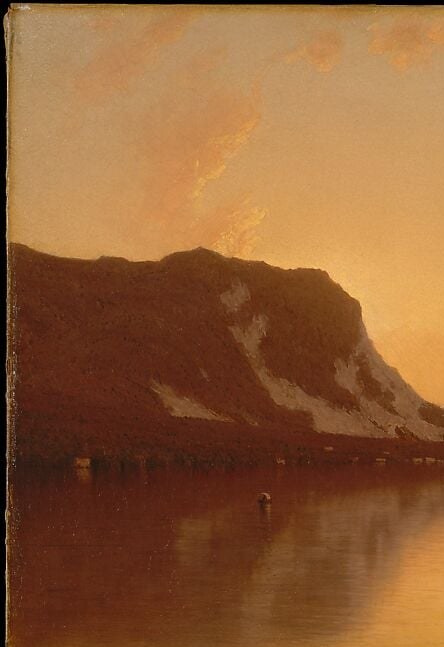
Look at what he doesn't show you. The sun is just above the upper edge, pouring amber light into the clouds but never declaring itself. The famous island, Isola Bella, is reduced to a dark silhouette you could almost overlook. What he wanted was the light between things: the exact seam where sky and lake stop being separate.
Gifford was a leading Hudson River School painter and a founding member of the Met. The museum later gave him its very first monographic retrospective. This painting entered the collection in 1921, a gift from Colonel Charles Fowler. It hangs in the American Wing as a small, radiant argument that the subject of a painting can be something you never actually see.
Next time a sunset stops you, ask what it would mean to paint only the glow, and leave the source outside the frame.
#arthistory #hudsonriverschool #americanart
Details
Transcript
In 1868, Gifford declared this the finest of the Italian Lakes. But notice: the sun itself is missing. Gifford kept it just off the canvas, deliberately. The famous island is incidental, a sliver of dark. He cared more about where the sky and water dissolve. This is the real subject: light becoming visible.