Menomonie Chief, His Wife, and Son by Catlin, George
George Catlin, a lawyer-turned-artist, dedicated his life to documenting Native American cultures, creating significant ethnographic records. His painting, *Menomonie Chief, His Wife, and Son*, from 1861, is a powerful example, housed in an American folk art collection.
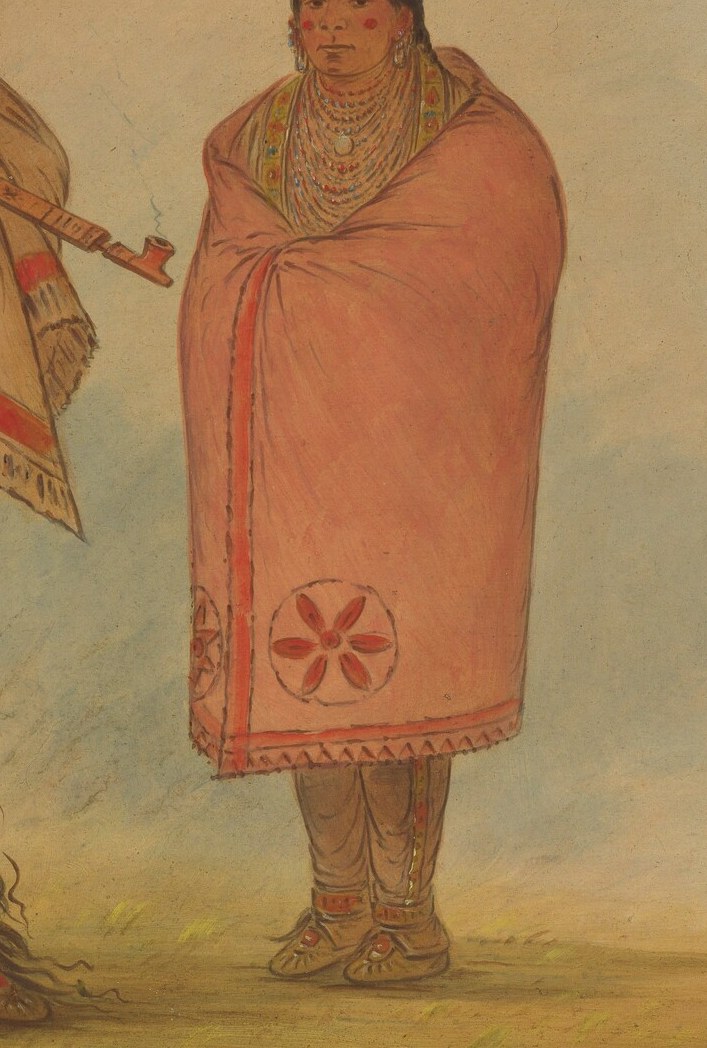
This painting beautifully portrays a Menomonie chief, his wife, and their son. Observe the intricate feathered headdresses and beadwork that signify their status and cultural identity. The chief's pipe, held casually, symbolizes peace and diplomacy, while his wife's vibrant pink shawl and embroidered pattern hint at her unique role within the family.
Catlin embarked on five expeditions to the American West in the 1830s, tirelessly painting portraits that captured the daily lives of the Plains Indians. His work aimed to bridge the cultural gap, offering eastern audiences a rare glimpse into a world many had never seen, preserving these moments in time.
It's a testament to his ambition to record a way of life, captured through the quiet dignity of this family.
Details

Transcript
This painter spent a lifetime documenting Native American life. He traveled to the American West five times in the 1830s. Here, a Menomonie chief, his wife, and son stand with dignity. The chief's pipe is a symbol of peace and diplomacy. His son's headdress indicates his lineage, and future. The vibrant shawl draws attention to her distinct role. He wanted to record their lives for those back East.