The Flag of Truce by Neuville, Alphonse de
Alphonse de Neuville's "The Flag of Truce," painted in 1884, captures a poignant moment of negotiation during a harsh winter. This gouache on canvas, held in a private collection, brings to life the stark reality of conflict and the fragile hope for peace.
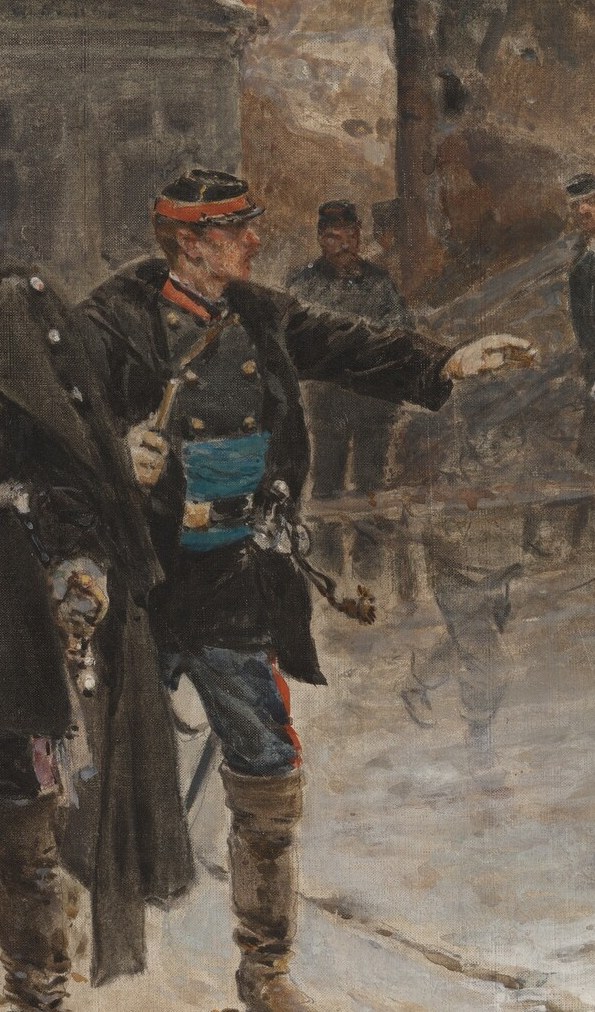
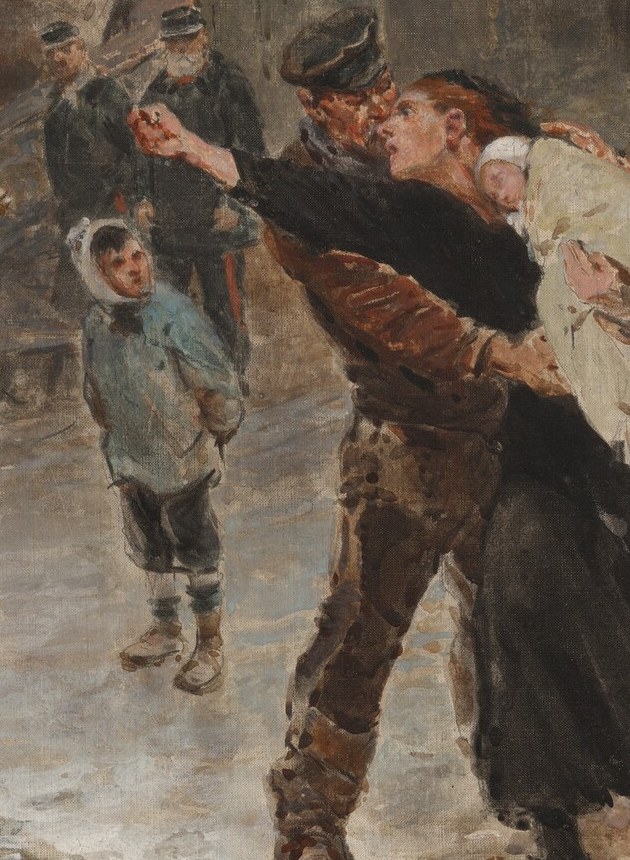
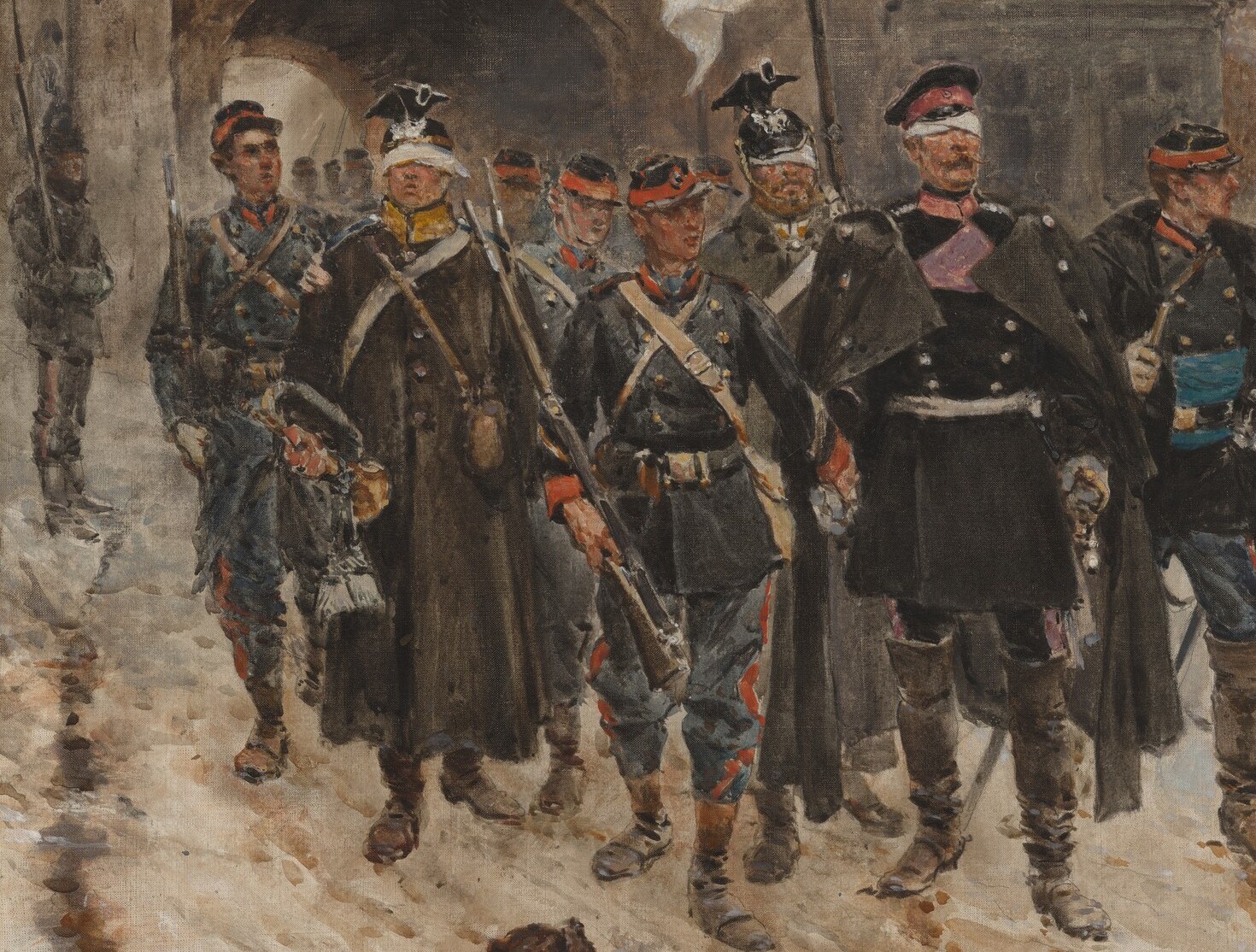
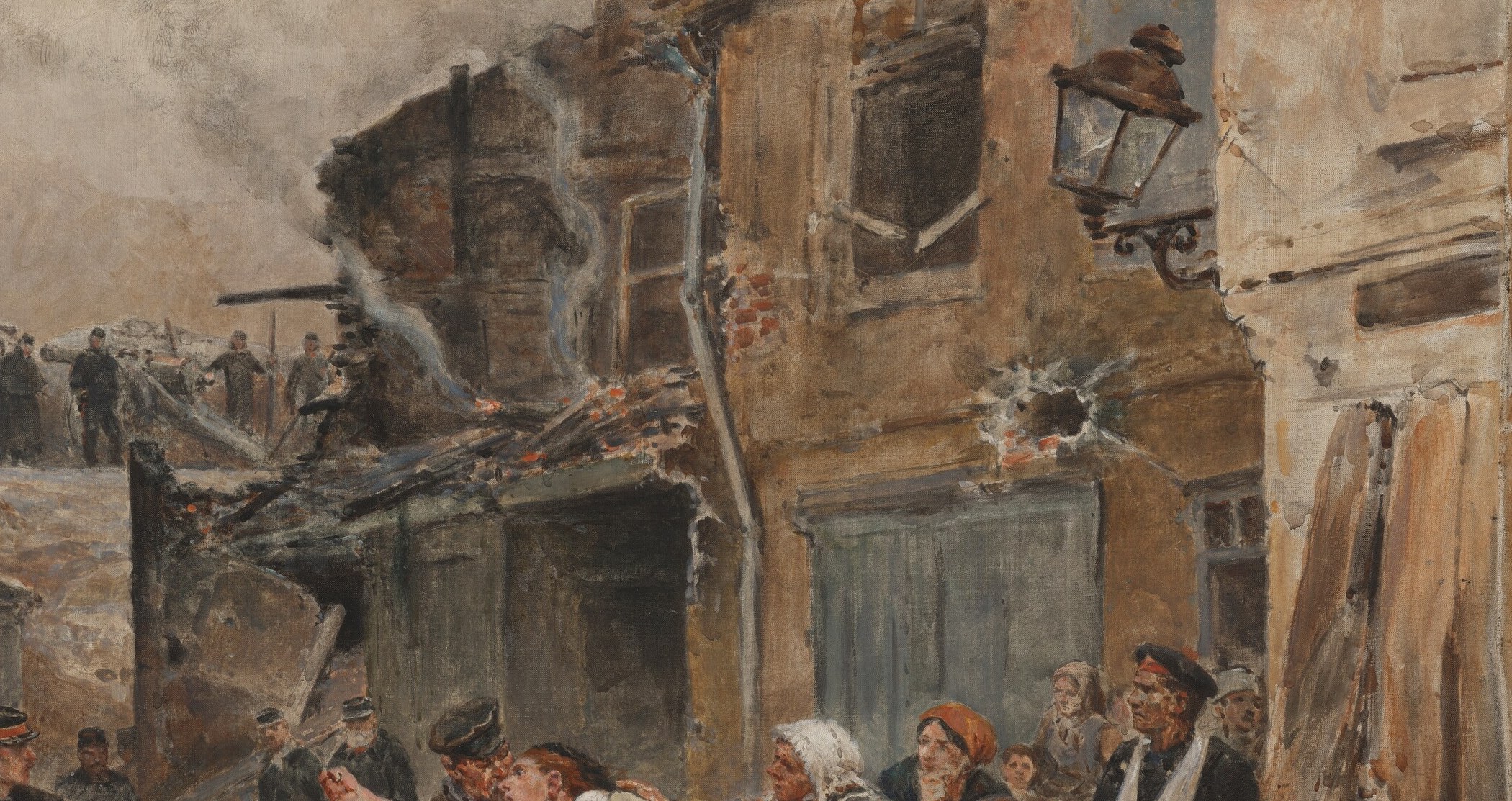
Observe the central figure of the soldier holding the white flag, a universal symbol of cease-fire. His presence is countered by the outstretched hand of a woman, a civilian pleading for an end to hostilities. The surrounding details, from the damaged buildings to the texture of the snow, deepen the sense of a world disrupted by war.
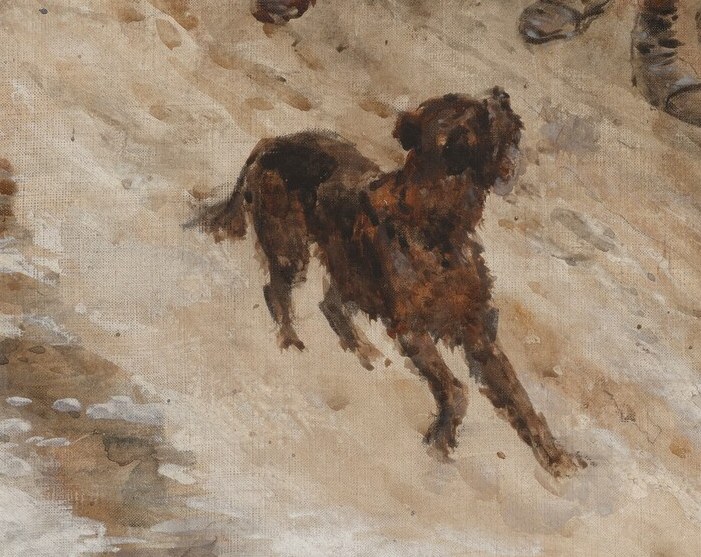
De Neuville was known for his depictions of contemporary military subjects, especially after the Franco-Prussian War. This painting, created with rapid, decisive brushwork, reflects his interest in the human element amidst conflict, highlighting both military authority and civilian vulnerability. The presence of a small dog in the foreground adds a touch of everyday life, making the scene even more relatable.
This powerful work reminds us of the delicate balance between conflict and the longing for peace. What details strike you most in this frozen tableau?
Details
Transcript
A winter street, a tense standoff. This soldier holds the central symbol of truce. Civilians plead for peace, their vulnerability clear. This painter often depicted the Franco-Prussian War. The damaged buildings tell a story of recent conflict. Even a small dog suggests a flicker of normal life. This 1884 painting captures a fragile moment.