The Assumption of the Virgin by Juan Vicente Ribera
Juan Vicente Ribera's The Assumption of the Virgin, painted in 1700, is a compelling oil work depicting the Virgin Mary's ascent to heaven, now held in the Museo del Prado.
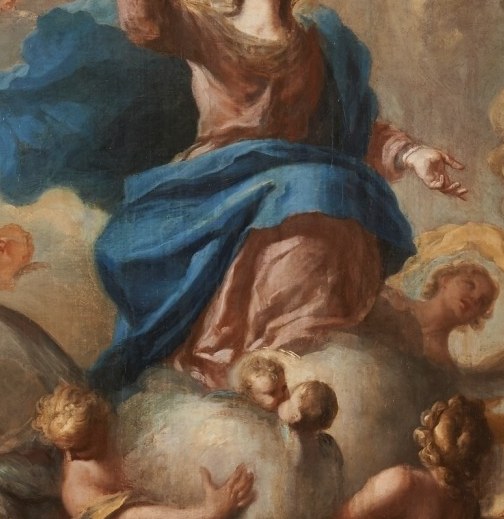
Ribera, a Spanish painter active in Madrid, brought an early Baroque Italian style to his religious art. Notice the dramatic composition and vibrant colors that define this piece, particularly the flowing blue robe of the Virgin.
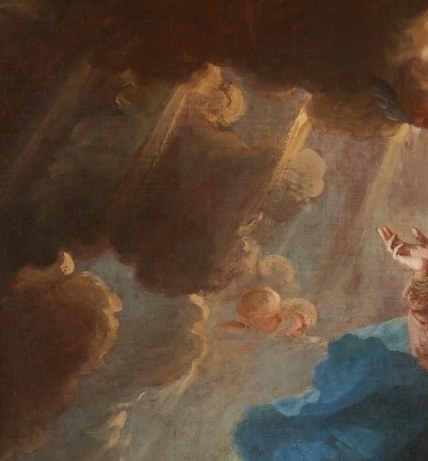
Observe the Virgin's serene face and her open, outstretched hands, symbolizing her acceptance and receptiveness to the divine. The surrounding angels and cherubs underscore the celestial celebration of her journey. The intense divine light and swirling clouds emphasize the miraculous nature of this spiritual transition.
This painting is a significant example of Spanish Baroque art, reflecting the artistic currents of early 18th-century Madrid. What emotions does her expression evoke for you?
Details
Transcript
This painter, Juan Vicente Ribera, worked in Madrid. He was known for his dramatic religious art. Here, the Virgin Mary ascends to heaven. Her face is serene, accepting her divine destiny. Look at her open, outstretched hands. They gesture upwards, in receptiveness to the divine. Surrounded by a heavenly chorus, her journey is complete.