Maison de la Poste, Cagnes by Renoir, Auguste
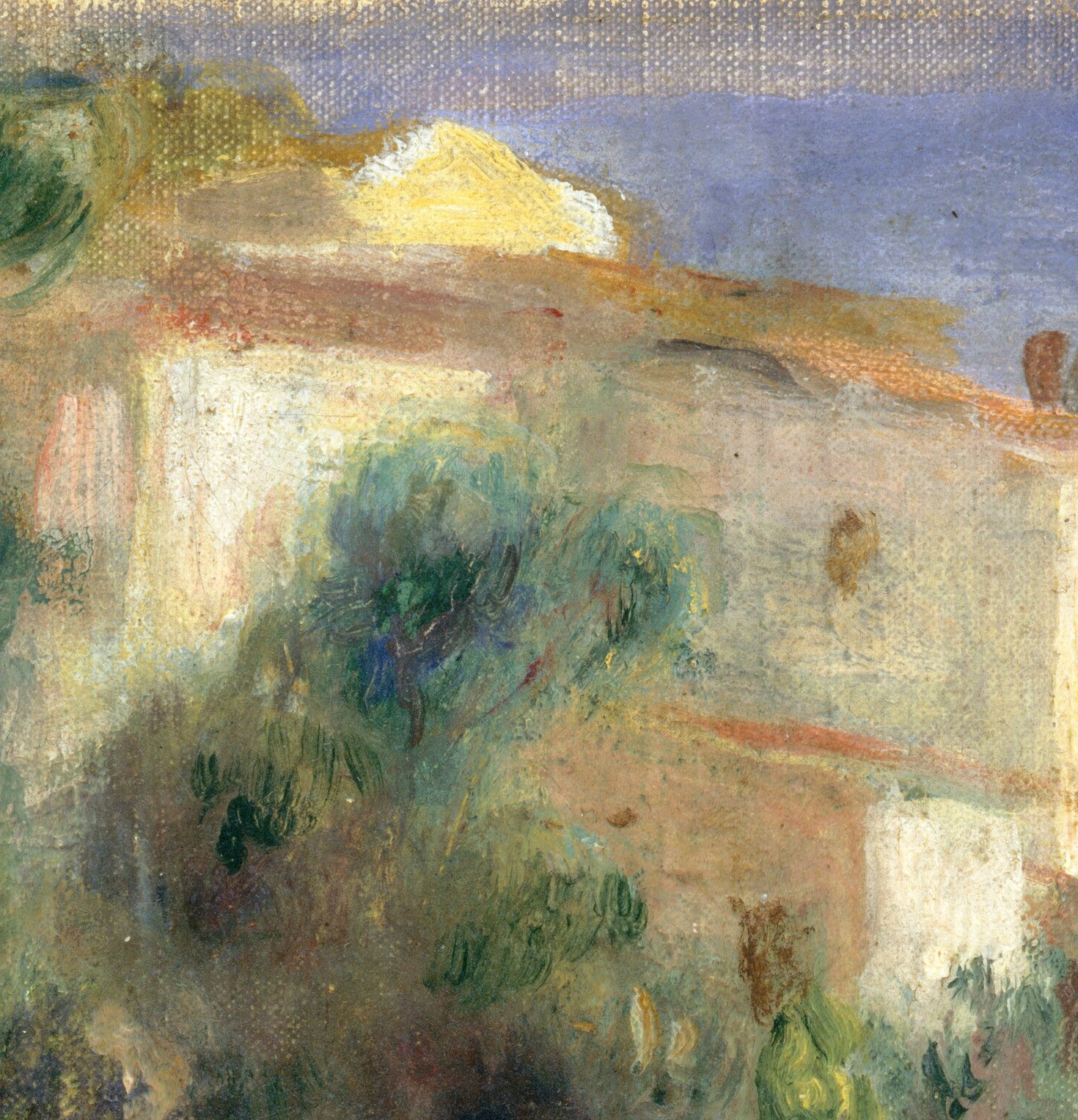
This is Maison de la Poste, Cagnes, painted by Auguste Renoir in 1906. It hangs in the National Gallery of Ireland, a small but radiant work from the artist's final decade on the French Riviera. When Renoir painted the village post office, his neighbors were baffled, and a little offended. A public building rendered in dissolving pink plaster and dappled light was not what they expected for civic architecture.
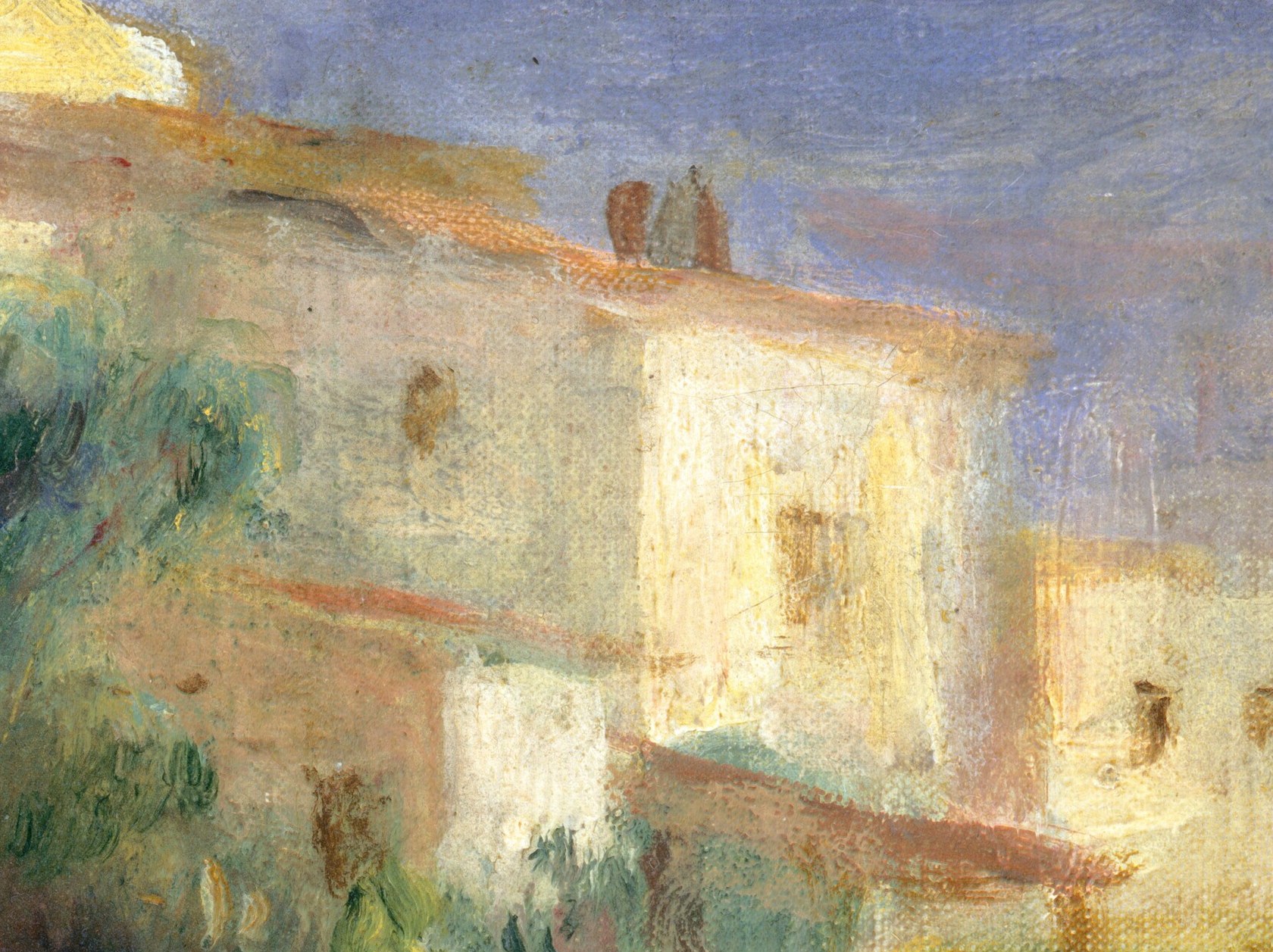
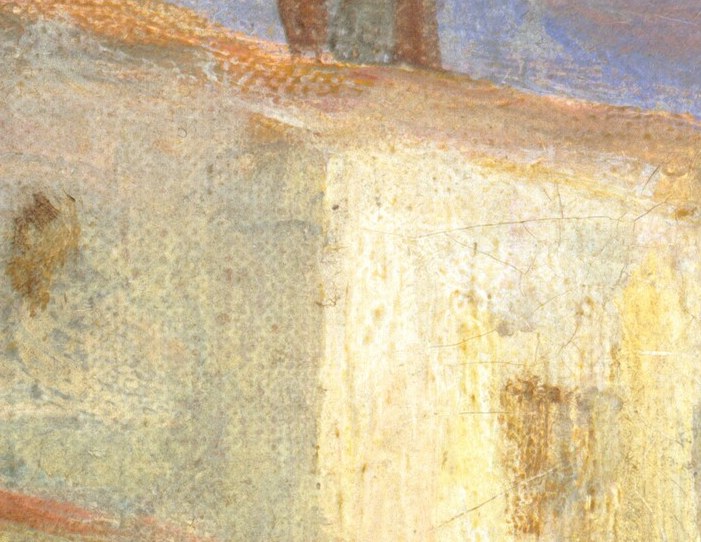
Look at the red-orange shutters on the upper window, the single most saturated accent in the painting, anchoring the eye before it drifts into the foliage. Then look at the roof line, where patches of sunlight nearly bleach the tiles white. Renoir is not describing a building so much as the light that falls on it.
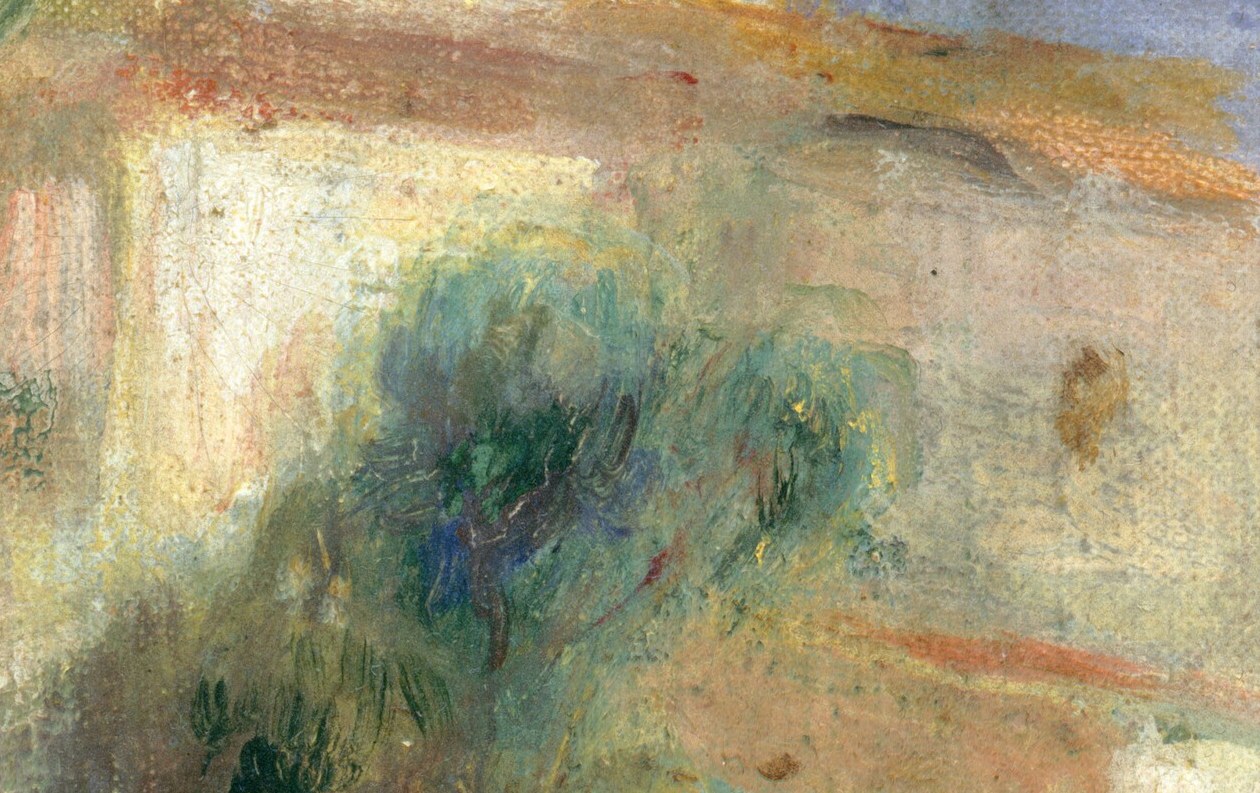
Renoir had rheumatoid arthritis by this time. He painted seated in a wheelchair, a brush bound to his hand with strips of cloth. The thick impasto of the tree canopy, those dense, textured dabs of green and yellow, cost him real physical effort. Every stroke was a negotiation with pain.
He died in Cagnes in 1919, still painting. The post office is still there, though the building has changed. The painting remains a testament to what he chose to see: not a provincial structure, but a wall of warm light holding a village together.
Details

Transcript
1906. Renoir moves south to Cagnes-sur-Mer for his health. He begins painting the local post office, a working building, not a monument. The villagers were appalled. A post office, in pink, with no straight lines. Look at how the light just dissolves the edge of the roof. His hands were twisted with arthritis. He painted this with a brush strapped to his wrist.