Princess Marie d'Orléans in Her Studio by Ary Scheffer
This is Princess Marie d'Orléans, daughter of King Louis Philippe I of France, painted by Ary Scheffer in 1838. But she is not shown as royalty. She is shown as an artist.
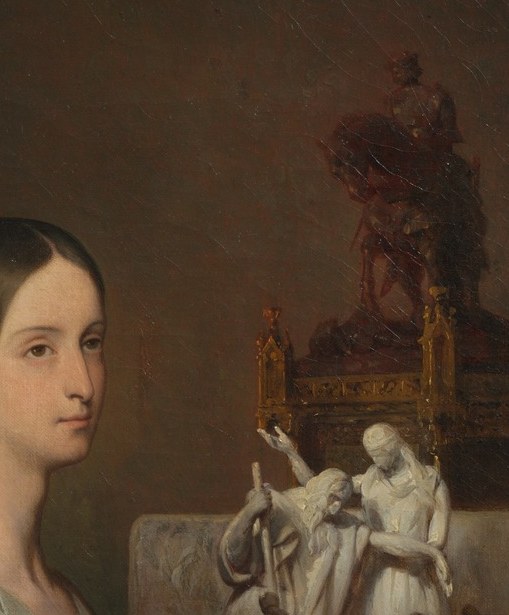
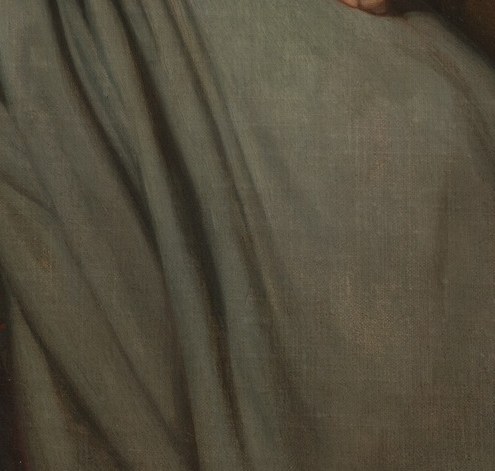
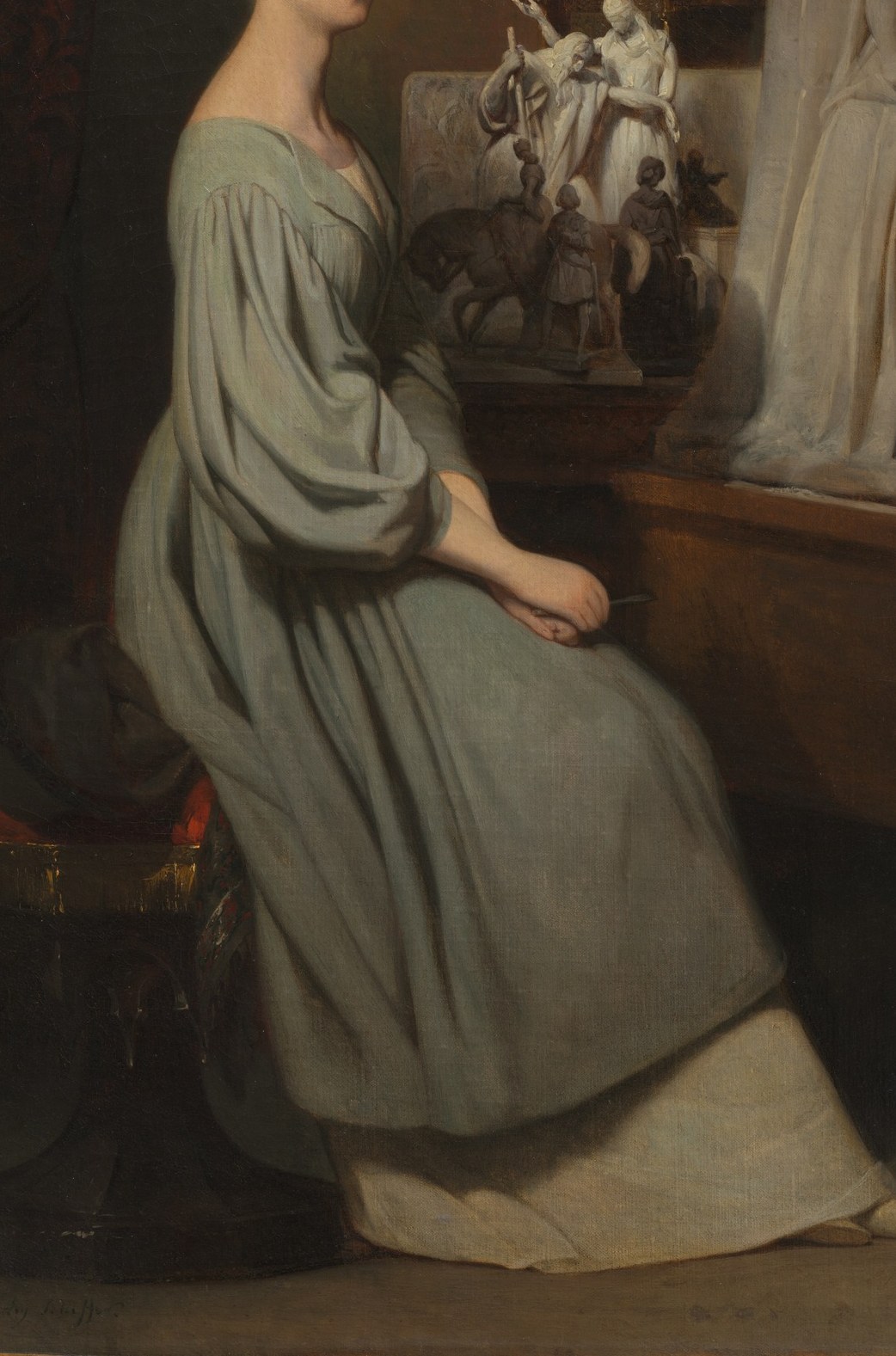
The painting hangs in a museum, but the scene is her private studio. Look at the plain grey-blue dress she chose to be portrayed in, no crown, no jewels, no lace. Her dark hair is simply parted. Her hands rest quietly, not holding any symbol of power. Everything about this portrait insists on her identity as a working sculptor rather than a princess.
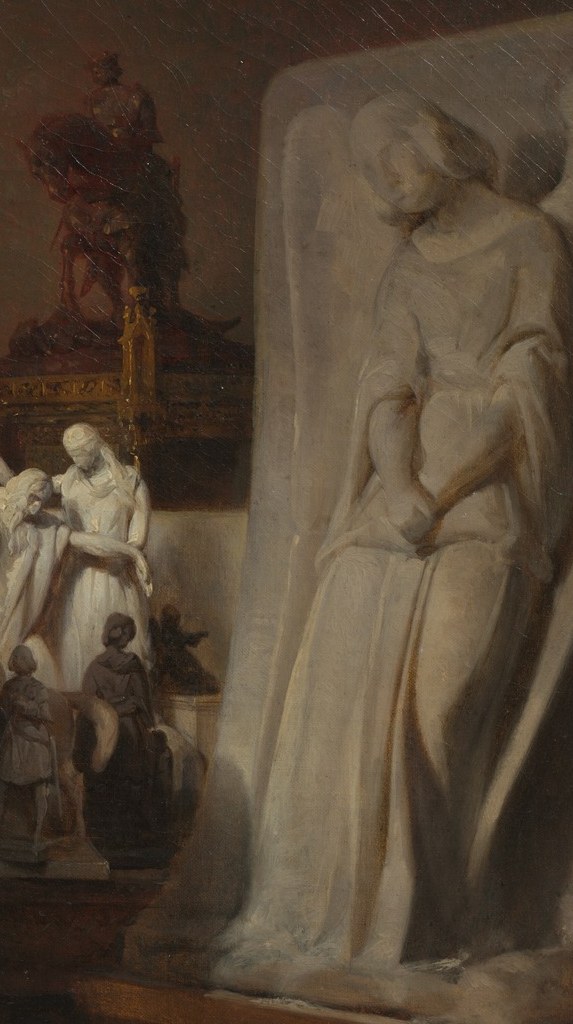
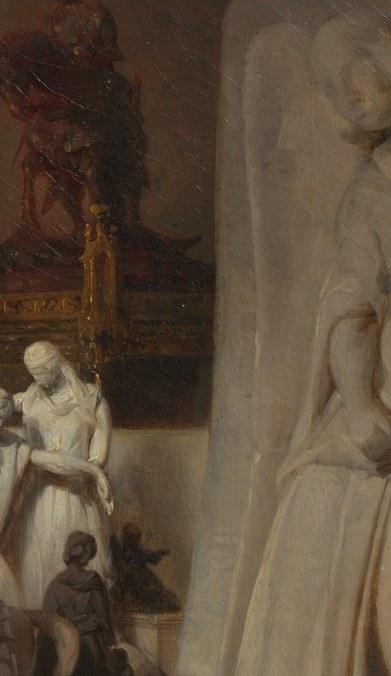
In the dark background above her left shoulder, you can just make out a group of pale plaster figures. That sculpture is almost certainly her own work in progress, likely related to her famous Joan of Arc, a subject she returned to throughout her life. By including it, she and Scheffer turned the portrait into a double statement: a woman of royal blood declaring her real vocation in paint and plaster.
Marie d'Orléans was a serious Romantic sculptor at a time when that was a radical path for a princess. Her father supported it. Scheffer, who taught the royal children, painted her exactly as she wanted to be seen. What does it mean to choose a studio identity over a throne?
Details
Transcript
She is a princess of France. But her dress has no jewels. No lace. Her hands rest like a worker's at the end of a day. She was a sculptor. Her father, the King, let her build a studio. Look into the darkness behind her. She placed her own unfinished work in the portrait. Those pale figures are her Joan of Arc, a royal princess reimagining a warrior saint.