Waterloo Bridge, London, at Sunset by Monet, Claude
Claude Monet painted 'Waterloo Bridge, London, at Sunset' in 1904, one of 41 canvases in his Waterloo Bridge series, now held at the National Gallery of Art in Washington, D.C. He worked from a fifth-floor window at the Savoy Hotel, looking east toward the South Bank, and he often worked on multiple canvases simultaneously as the light shifted throughout the day.
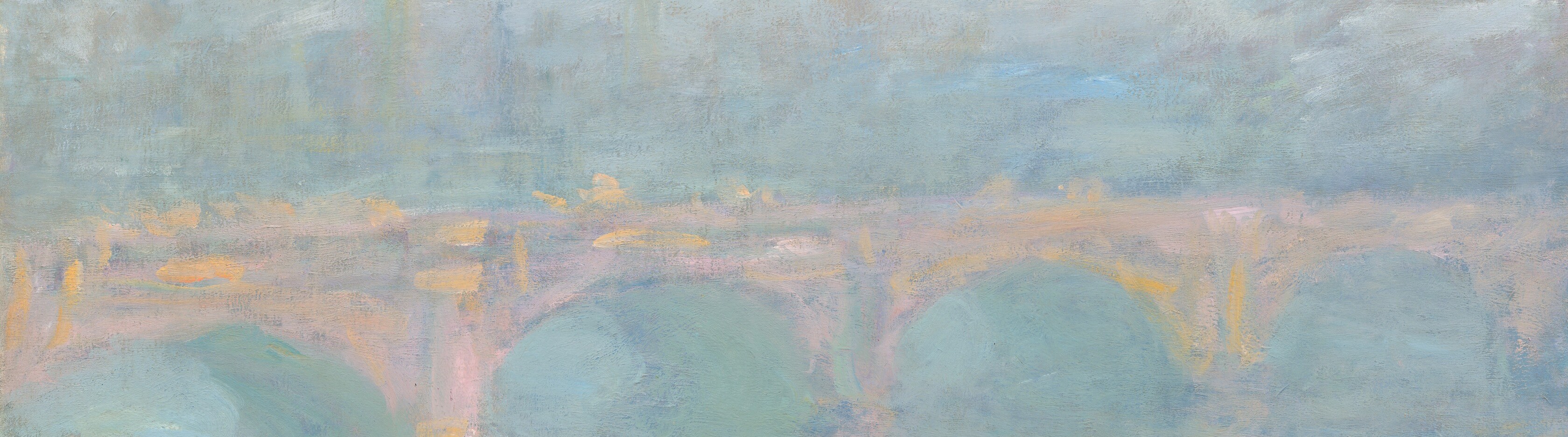
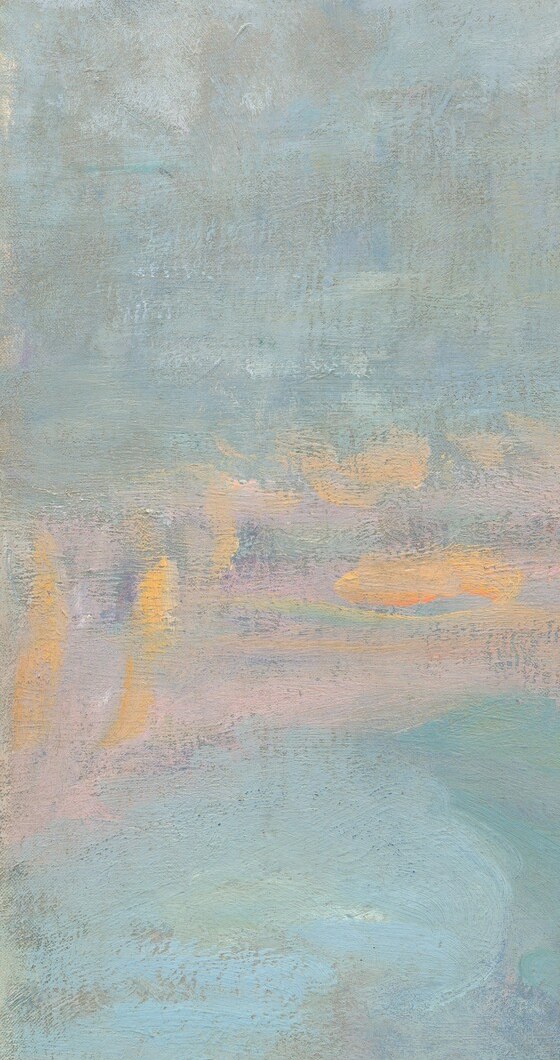
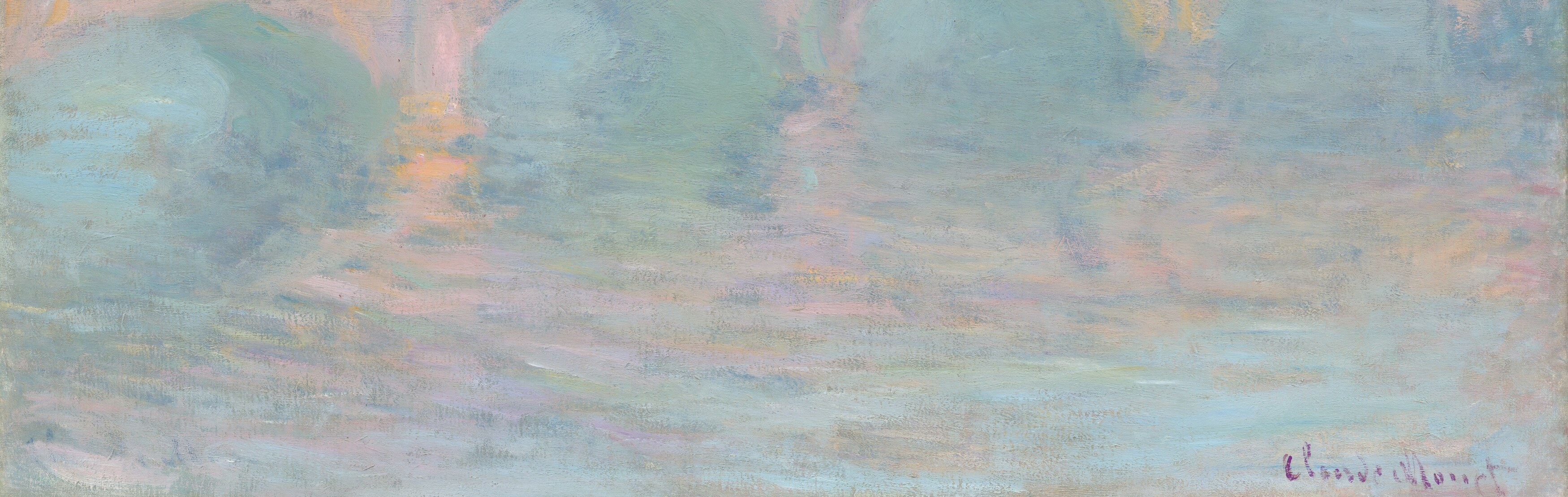
Look at the way the bridge dissolves at the left edge. There is no railing, no parapet, just a fade into colour. Then trace the warm column of light that drops from the sunset straight down through the central arches into the Thames, linking sky and river as one continuous luminous event. The repeating arches soften progressively toward the margins, a textbook demonstration of atmospheric perspective.
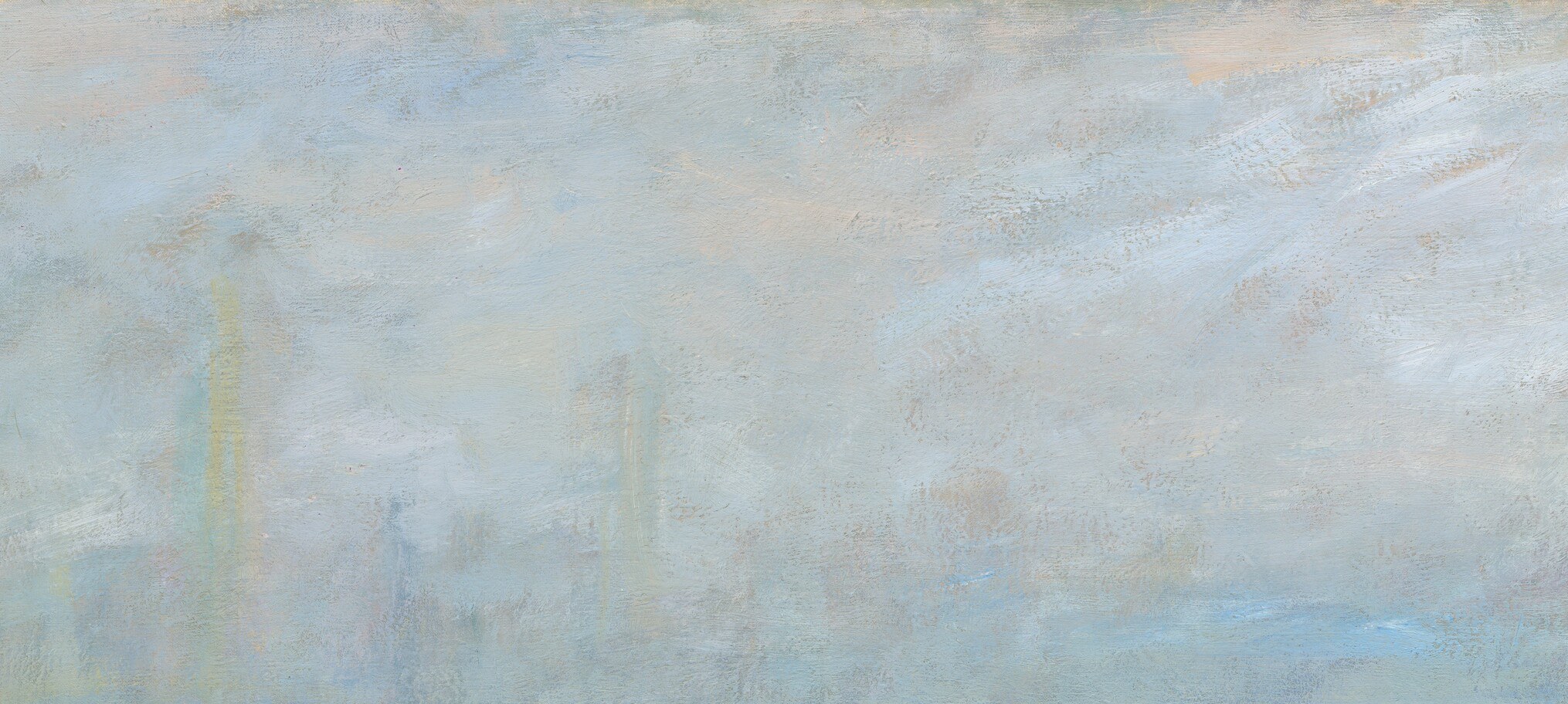
This haze was historical fact. London in the early 1900s still burned bituminous coal, producing a dense, sulfurous yellow-grey smog that could reduce visibility to a few feet. Monet returned to London three times between 1899 and 1901 specifically to paint its effect on light, calling the fog his greatest collaborator. Critics of the time accused him of obscuring the city, but he was painting exactly what the city looked like.
What the painting witnesses is a real sunset over a real, polluted river, and a bridge made fragile by the very air around it.
Details

Transcript
London, 1904. The air was thick with coal smoke. Monet painted this from his window at the Savoy Hotel. The bridge is a silhouette, already losing its edges. Look at the left edge. The stone simply stops. This is not artistic licence. The smog could erase a bridge. But above the haze, the sunset is fighting through. Its light falls straight down through the river.