The Dance Class by Edgar Degas
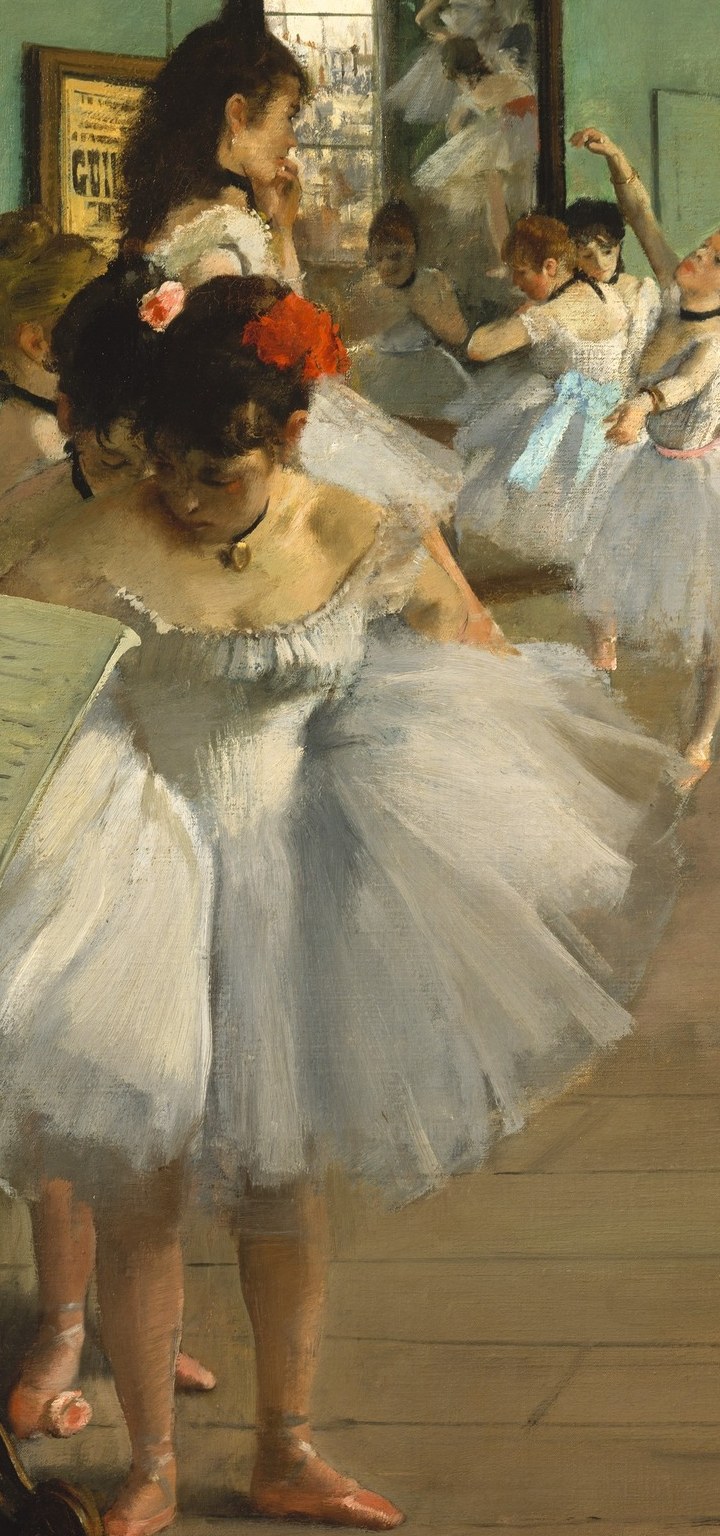
Edgar Degas’s 1874 painting, “The Dance Class,” captures a private, unglamorous moment in the lives of ballet dancers, now held at the Metropolitan Museum of Art.
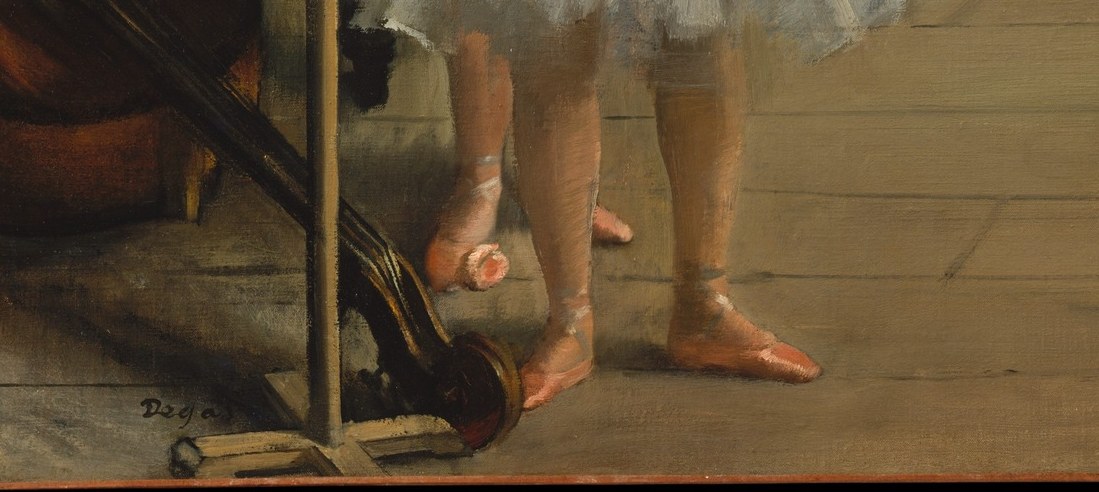
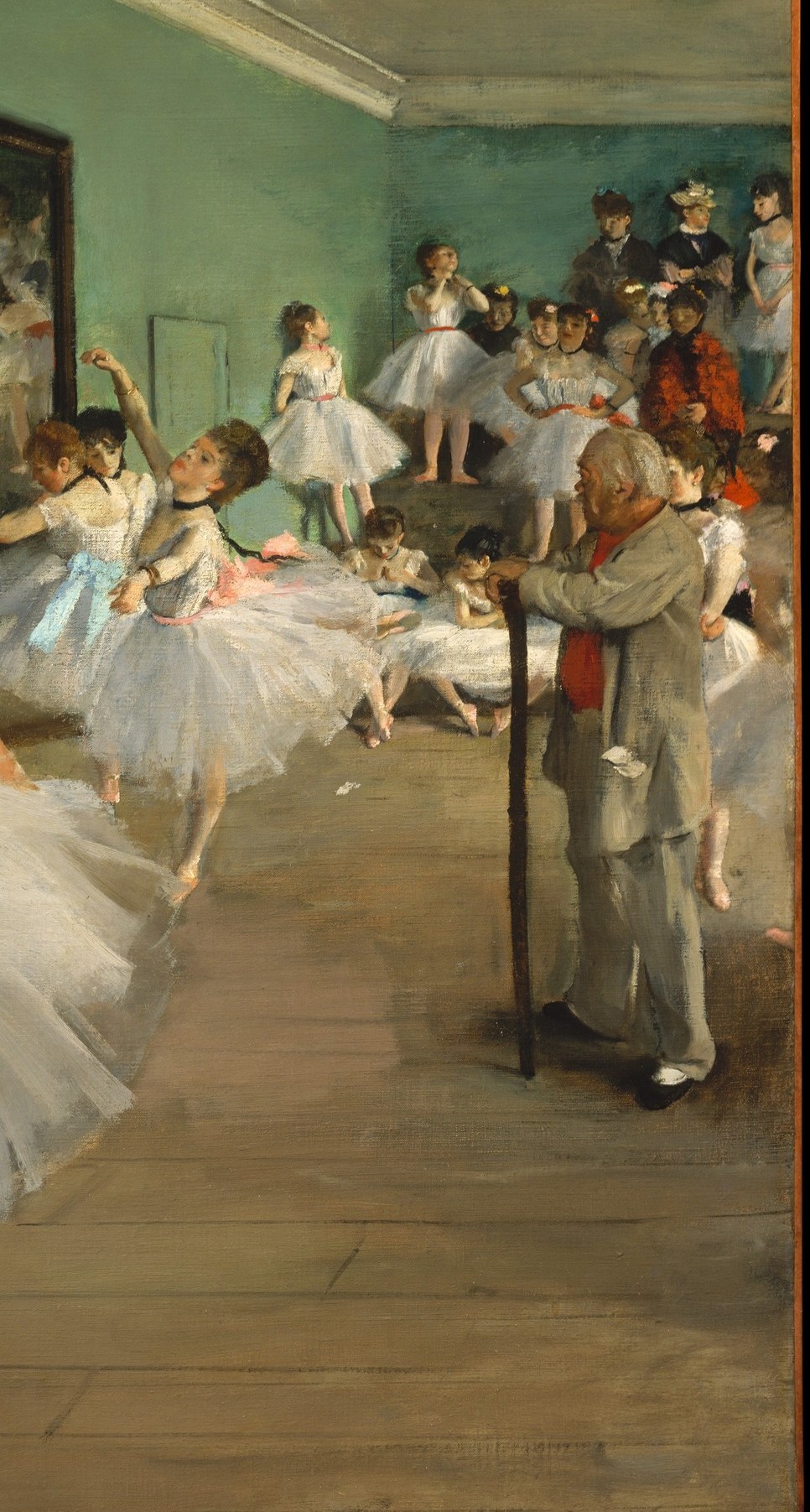
Look closely at the clusters of waiting ballerinas: they fidget, adjust their costumes, and whisper, revealing the candid, unstaged quality Degas was famous for. The worn parquet floor and the simple studio details emphasize the hard work behind the glamorous performances.
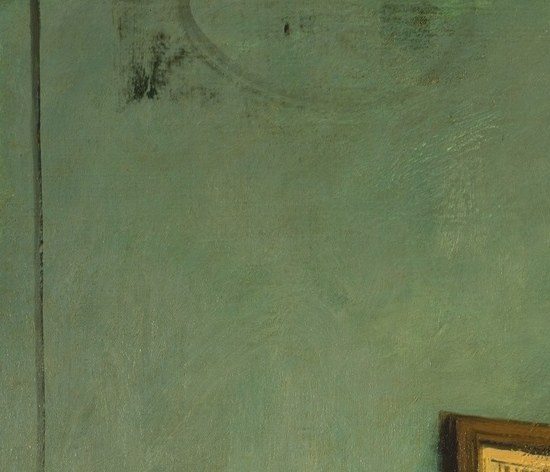
This painting was commissioned by Jean-Baptiste Faure, a celebrated operatic baritone and patron of Degas. The poster for Rossini’s “Guillaume Tell” on the wall is a subtle nod to Faure, who was famous for his performances in the opera.
Degas often depicted the demanding routines of rehearsals, offering an intimate glimpse into the dedication required of these young dancers. What do you notice first?
Details
Transcript
A ballet class at the Paris Opera, but not a performance. This painter often captured the unglamorous reality of dance. Most dancers are not practicing, but waiting for their turn. The ballet master, Jules Perrot, holds his commanding cane. This painting was commissioned by a famous opera singer. He even included a subtle tribute to his patron. He was the painter who saw the beauty in the everyday.