Hans Roth [reverse] by Strigel, Bernhard
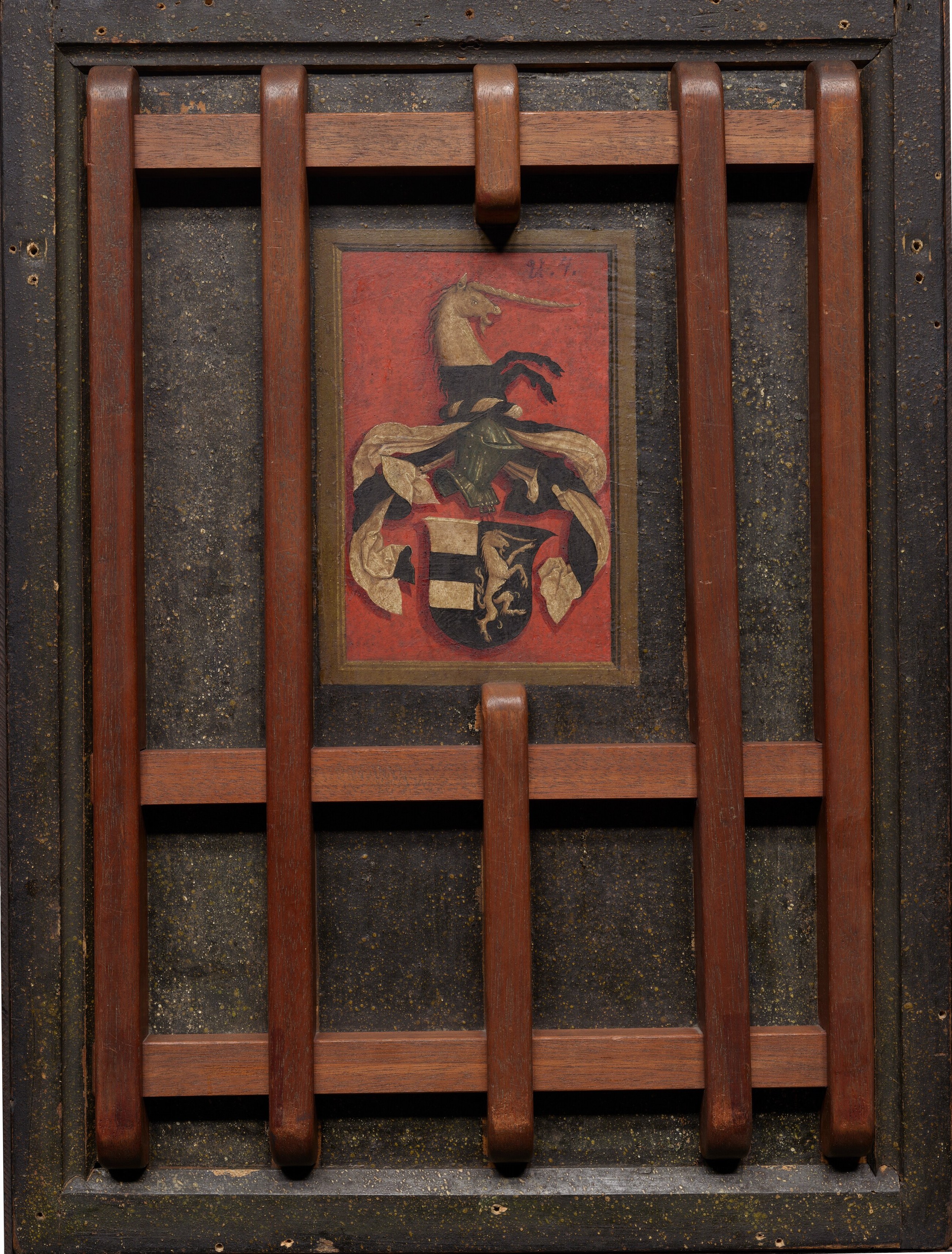
This striking image is actually the reverse side of *Hans Roth*, a portrait painted by Bernhard Strigel in 1527. Instead of being blank, the back of the oil-on-panel work features a detailed coat of arms, a common practice for portraits of the era.
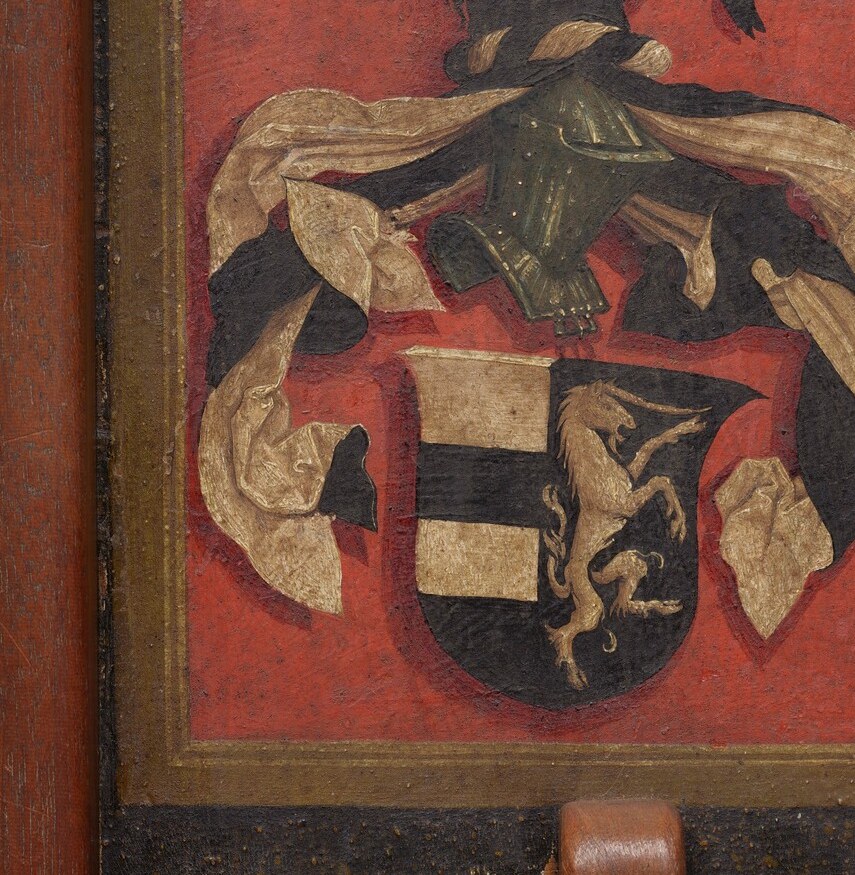
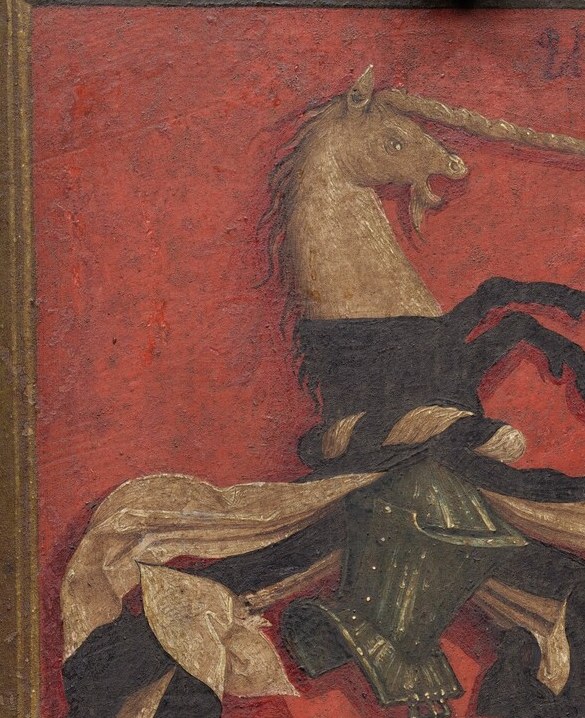
Look closely at the heraldic shield, vibrant against its red background. The unicorn crest signifies purity and grace, while the small lion figure symbolizes courage. These emblems served to identify the portrait's sitter and proudly display their family lineage and social standing.
Bernhard Strigel, a prominent German painter from Memmingen, was favored by Emperor Maximilian I. His work, including religious pieces and portraits, reflects the early 16th century's artistic demands. This reverse side offers a glimpse into the customs surrounding portraiture and personal identity during his time.
What other stories might the 'hidden' sides of paintings tell?
Details

Transcript
This isn't a modern abstract artwork. It's the back of a portrait from 1527. Wealthy patrons often commissioned heraldic symbols. This shield identified the sitter and their lineage. The unicorn crest symbolizes purity and grace. While the lion represents courage and strength. The wooden frame suggests this panel was handled often.