The Italian Brigand's Wife by Léon Cogniet
Léon Cogniet's "The Italian Brigand's Wife" (1825) captures a moment of quiet dignity for a woman whose life was fraught with peril. The painting shows a woman in traditional Italian attire, holding a vibrant textile. She sits amidst the rough terrain and imposing mountains that served as the backdrop for brigandry. Her focused gaze and delicate handling of the fabric suggest an inner resilience. Cogniet, a noted French painter and influential teacher, portrays not the drama of outlaw life, but the personal strength of those who endured it.
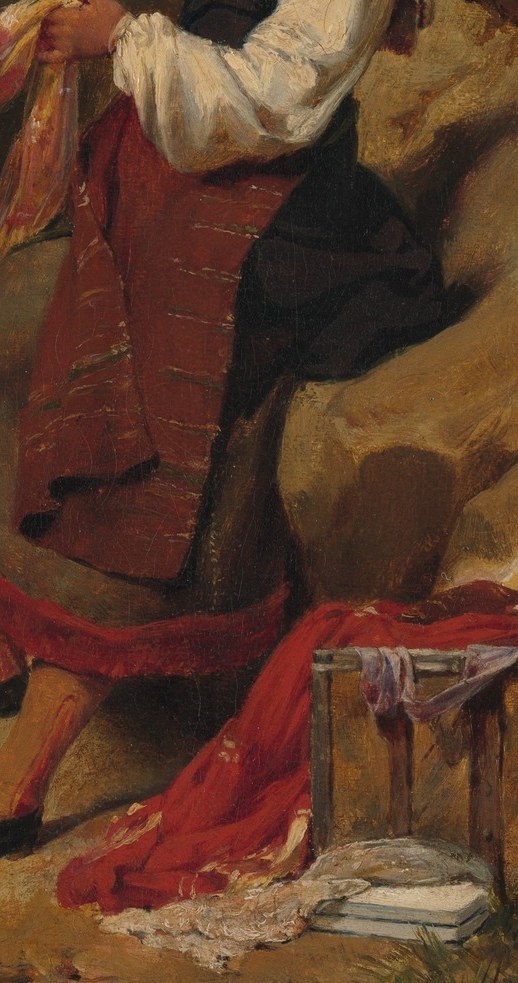
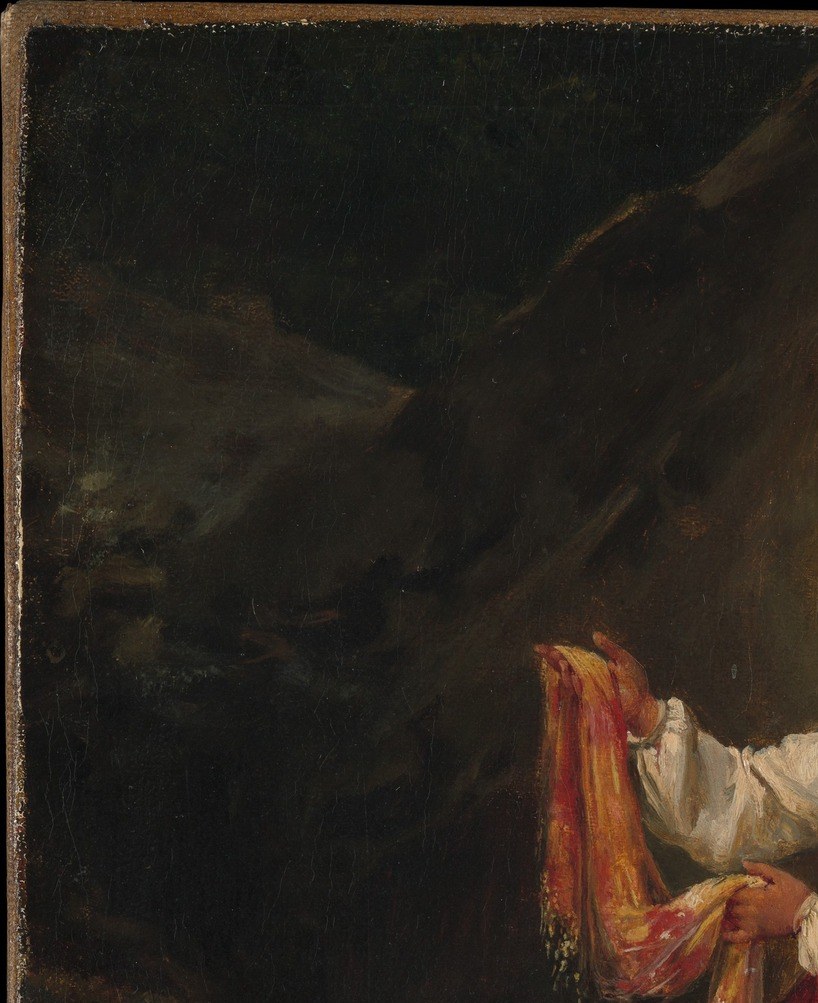
Look at her hands, gently holding the patterned textile. Notice the rich layers of her traditional dress, including the red sash and skirt. The dark mountains behind her underscore the harsh reality of her circumstances.
Brigands were outlaws who roamed the Italian countryside in the early 19th century. Their wives often lived in isolation and constant fear, waiting for loved ones who might never return or who might bring danger home. Cogniet presents a scene of domestic stillness, a stark contrast to the life she undoubtedly led.
This painting invites us to contemplate the unspoken stories of fortitude in the face of adversity. What hopes or fears do you see in her quiet contemplation?
Details
Transcript
She holds the fabric like a fragile memory. This man's wife waited for him. He was a brigand. Her dress shows a life lived with pride. Brigands were outlaws. Their wives lived in danger. Her gaze is turned inward, a quiet strength. Léon Cogniet painted her in 1825. A moment of peace.