The Town Beach, Collioure, Opus 165 by Paul Signac
View the artwork: The Town Beach, Collioure, Opus 165 →
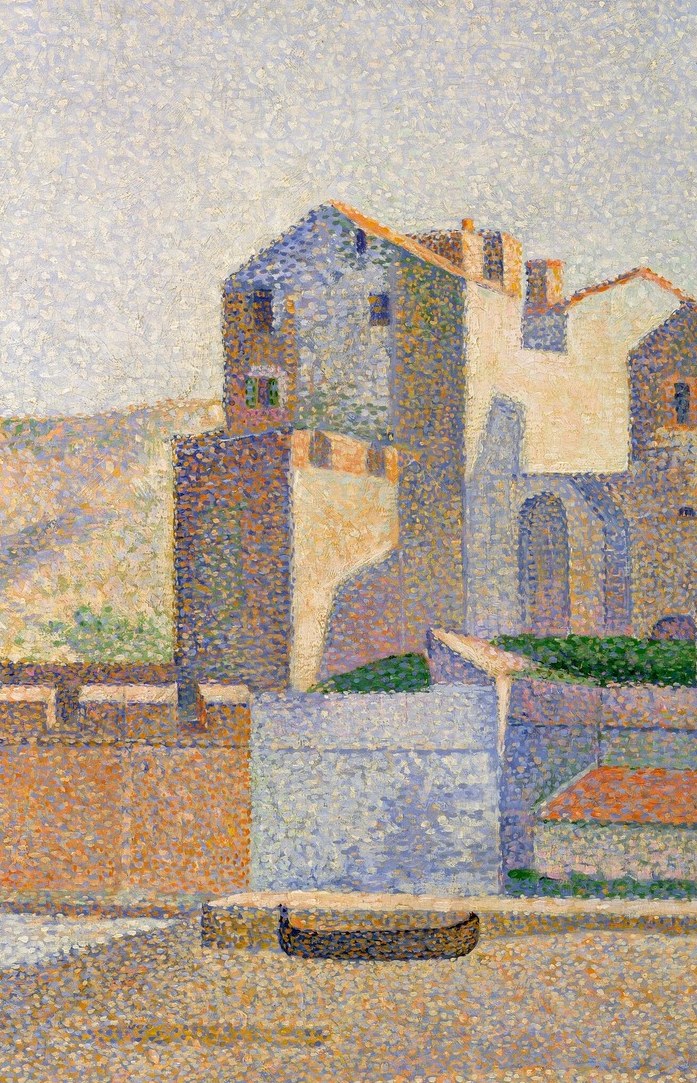
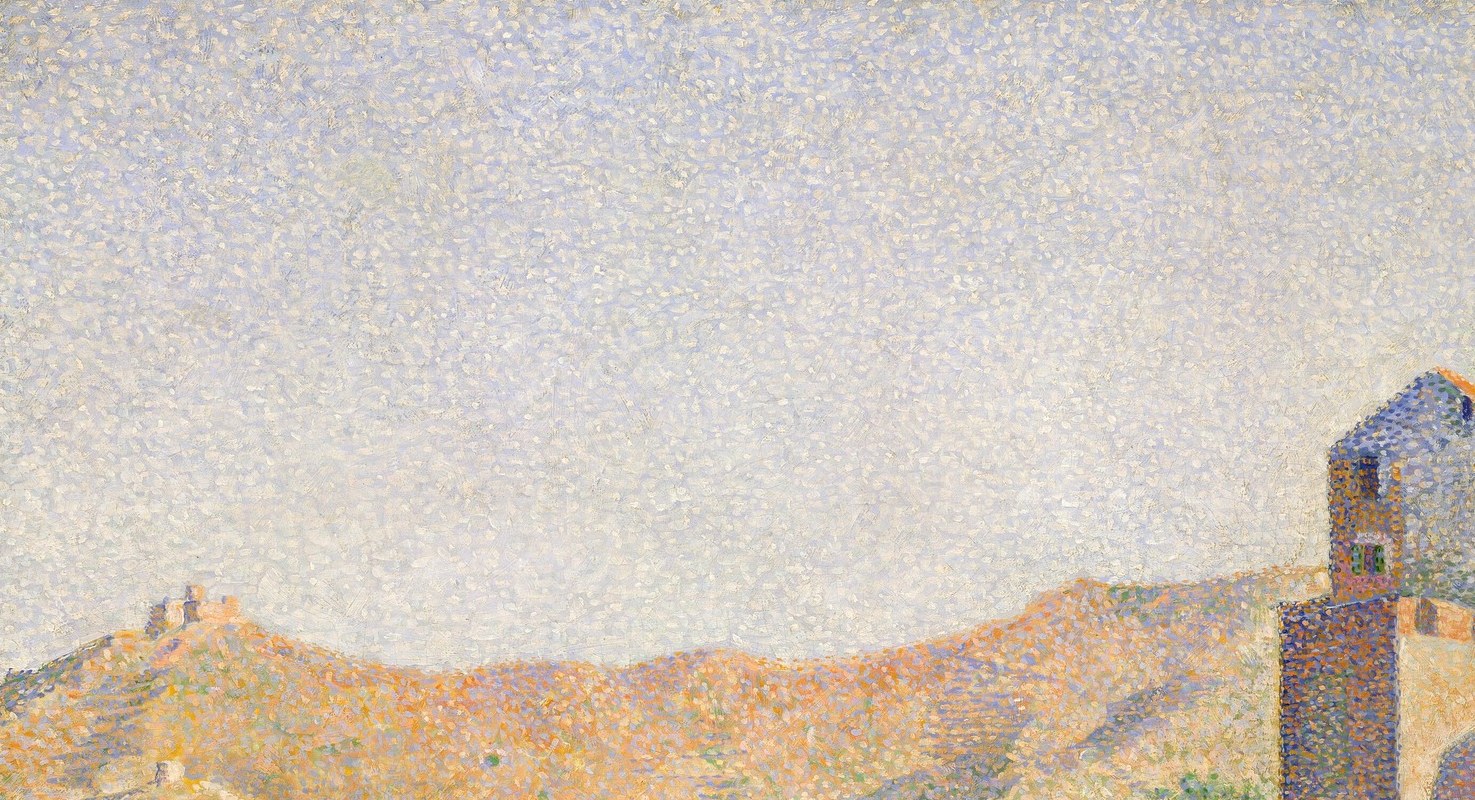
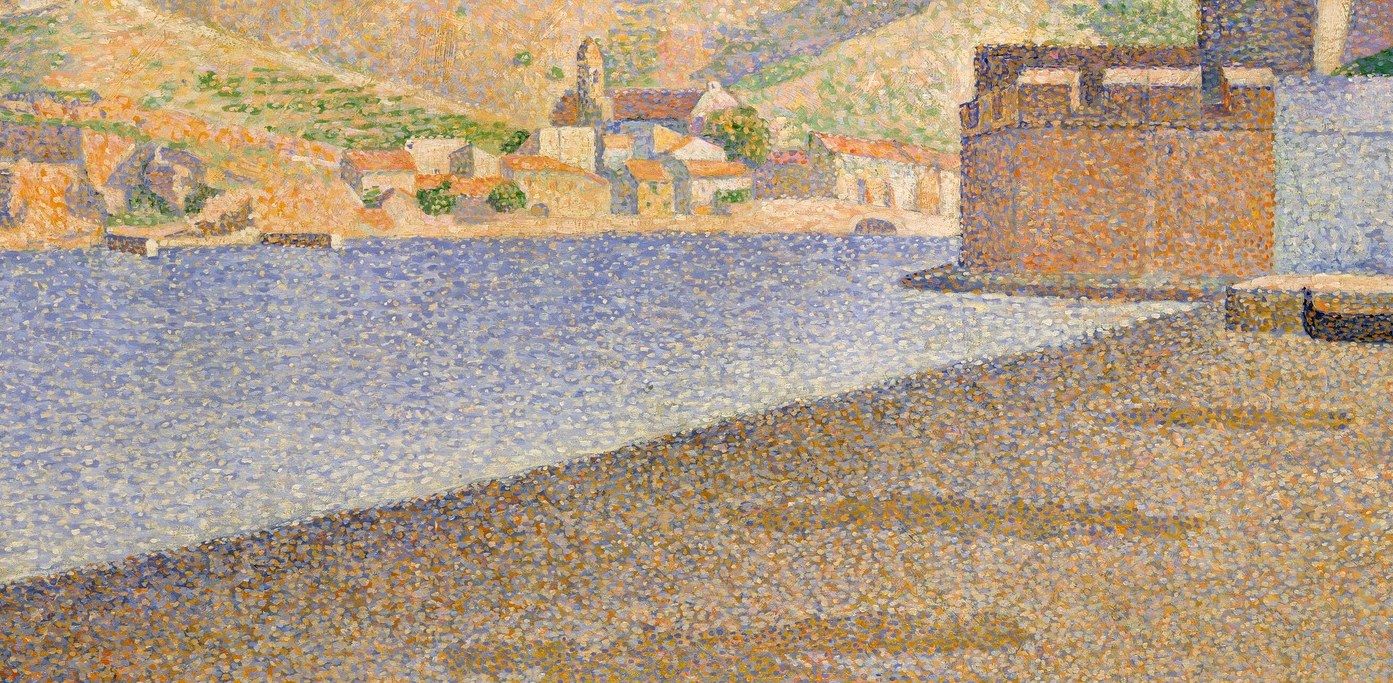
This shimmering scene is Paul Signac's The Town Beach, Collioure, Opus 165, painted during the summer of 1887 and now held at the Metropolitan Museum of Art. It is the only painting from Signac's Collioure series to enter a U.S. public collection, and it captures the village two decades before Matisse and Derain arrived and made it famous for Fauvism.
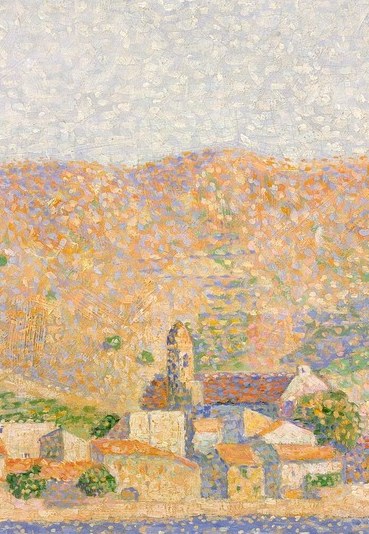
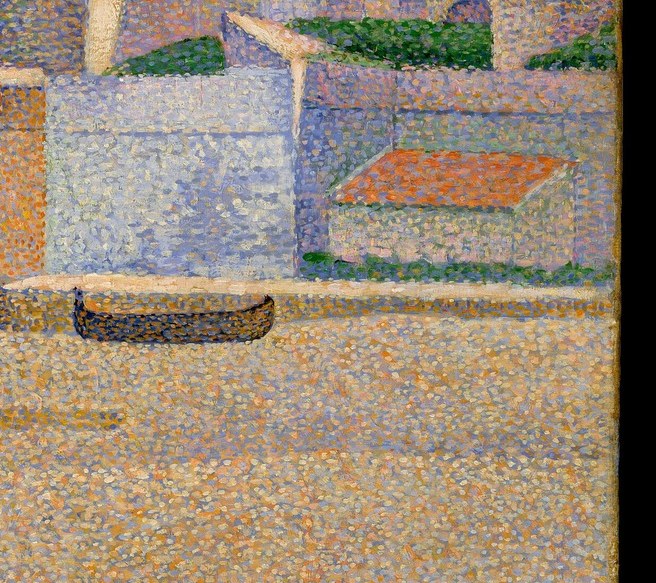
Look first at the two landmarks anchoring the scene: the hulking royal castle tower on the right and the pink dome of the church of Notre-Dame-des-Anges rising near the harbor. Both still stand today. But then step back, or rather, let your eyes step back, and watch the entire village dissolve into a field of tiny, separate dabs of pure color.
Signac called this technique Divisionism, building on the color theory he had absorbed from Georges Seurat. The canvas is covered in small, unmixed strokes that never actually blend on the surface. Instead, the eye does the mixing, turning discrete marks of lavender, blue, and white into shimmering harbor water and warm terracotta rooftops. The painting was exhibited at the Salon des Indépendants in 1888, a venue for artists who rejected the official Salon.
After passing through several French collections, and an anonymous wartime sale in 1943, New York banker Robert Lehman bought the painting in 1950 and later gave it to the Met. A radical optical experiment that happens to look peaceful enough to be a postcard, it quietly documents one of the first times a painter applied pure color theory to a real, sunlit place.
#arthistory #neoimpressionism #paulsignac
Details
Transcript
Summer, 1887. A fishing village near the Spanish border. The tower of a royal castle anchors the harbor. And a pink bell tower marks the town's church. Both still stand today. Signac painted them before the tourists arrived. But from a few steps back, the village dissolves. Thousands of separate dabs. No blending. No outlines. Signac called his method Divisionism. The eye mixes the color. This quiet beach scene was shown in Paris in 1888. A revolution disguised as a postcard.