Artwork
The Town Beach, Collioure, Opus 165
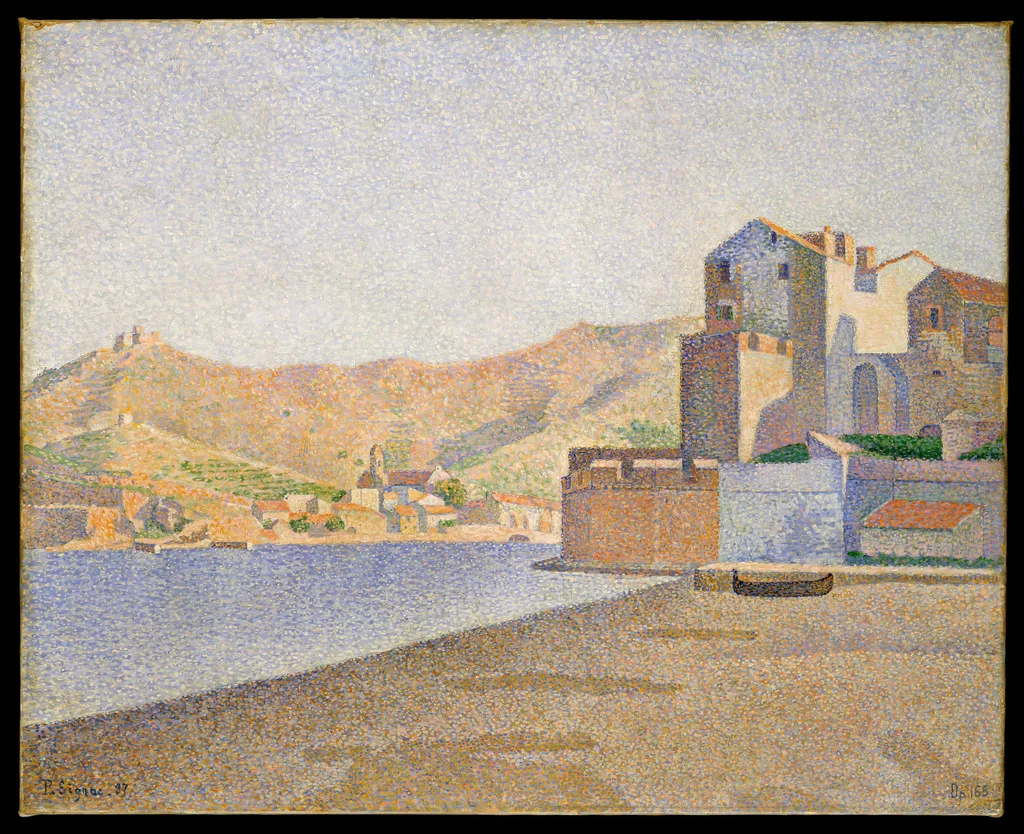
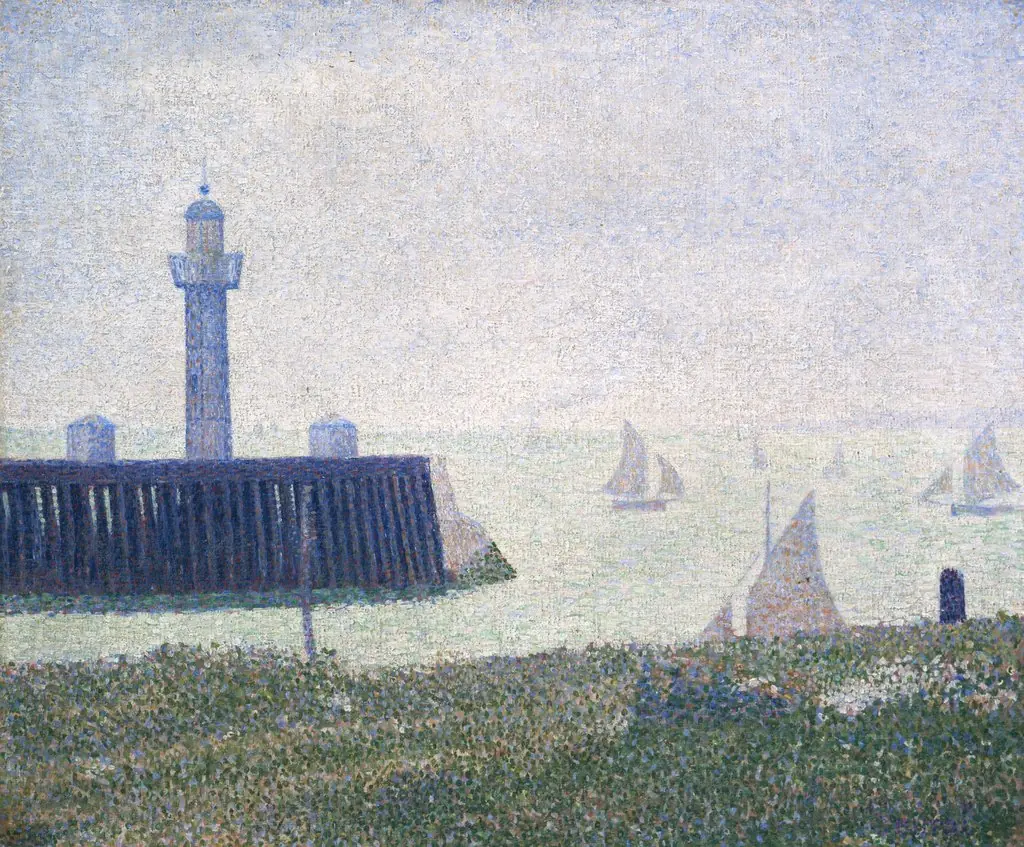
The Town Beach, Collioure, Opus 165 is an oil painting by the Neo-Impressionist artist Paul Signac. It dates from 1894 and is held in the collection of the Metropolitan Museum of Art.
About this work
Subject & Meaning
As a landscape painting from 1887, the work represents a specific geographic setting, capturing the light and atmosphere of the Mediterranean coastline.
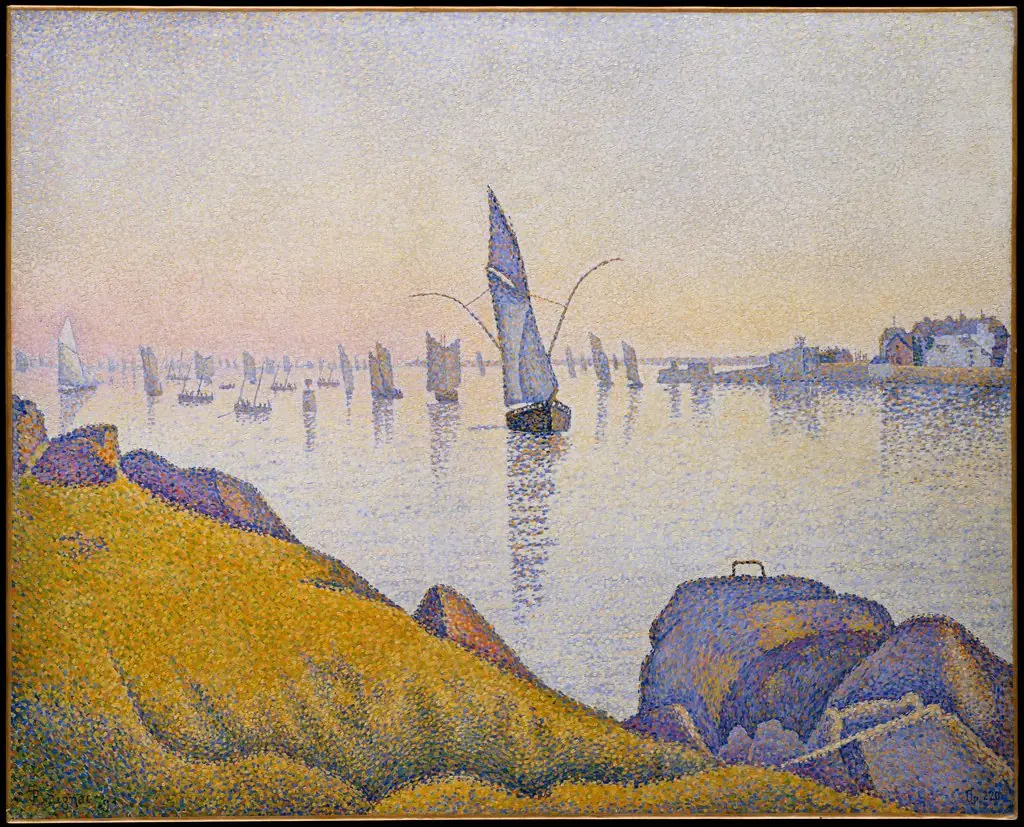
The painting depicts the town beach of Collioure, a coastal village in the south of France on the Mediterranean Sea. The composition includes the sea, a bark (a type of sailing vessel), and the shore with houses and hills in the background. Prominent landmarks visible are the Château Royal de Collioure and Fort Saint-Elme.
As a landscape painting from 1887, the work represents a specific geographic setting, capturing the light and atmosphere of the Mediterranean coastline. The subject matter is purely descriptive of the location, with no explicit symbolism or iconographic meaning provided in the available sources.
History & Provenance
Paul Signac painted The Town Beach, Collioure, Opus 165 in 1887, an oil on canvas landscape that depicts the southern French town of Collioure. The work was created during a period when Signac was developing his pointillist style. Its early provenance is not recorded in detail, but the painting was later owned by Robert Lehman, a prominent American collector and financier.
Through Lehman's collection, the painting entered the Metropolitan Museum of Art in New York, where it remains on view. No commission or detailed chain of ownership beyond Lehman's possession is documented in the available records.
Overview
Paul Signac's oil painting, The Town Beach, Collioure, Opus 165, dates from the summer of 1887. It captures a sunlit scene in the small fishing village of Collioure on France's Mediterranean coast. This canvas is the third in a sequence of four landscapes Signac created during his visit to the region, employing the Neo-Impressionist technique.
Measuring approximately 63 by 80 centimeters, it is the only work from this particular series to reside in a public collection within the United States, housed at the Metropolitan Museum of Art.
Technique & Style
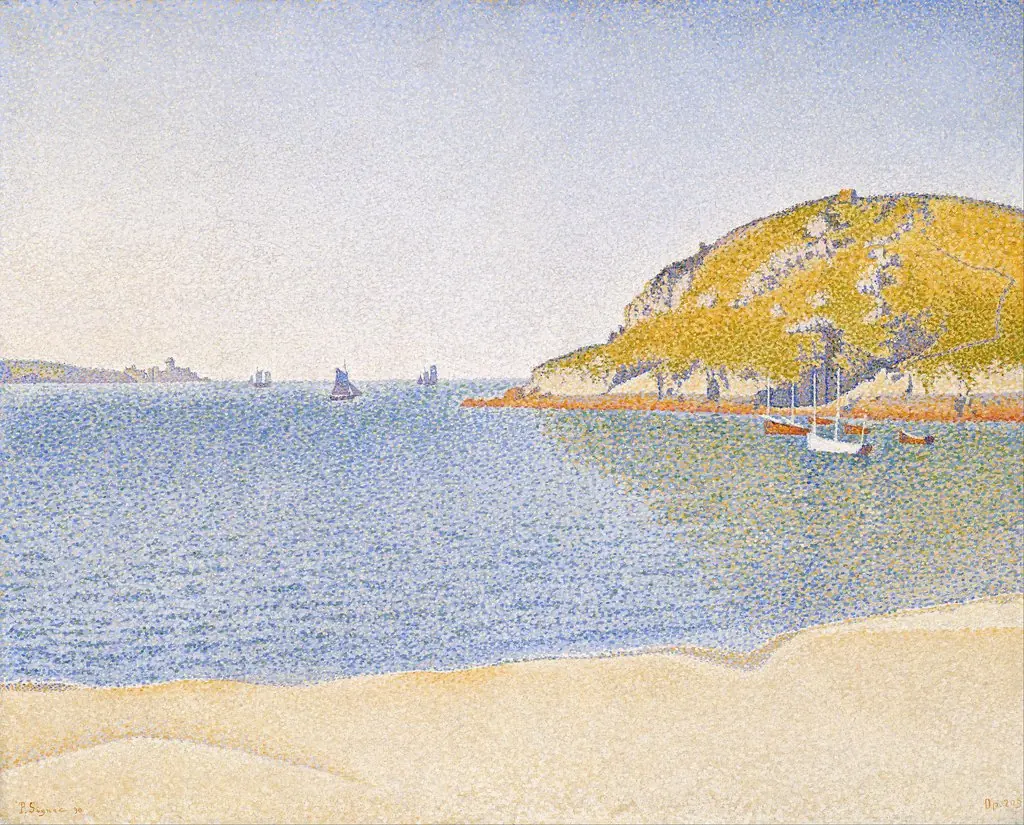
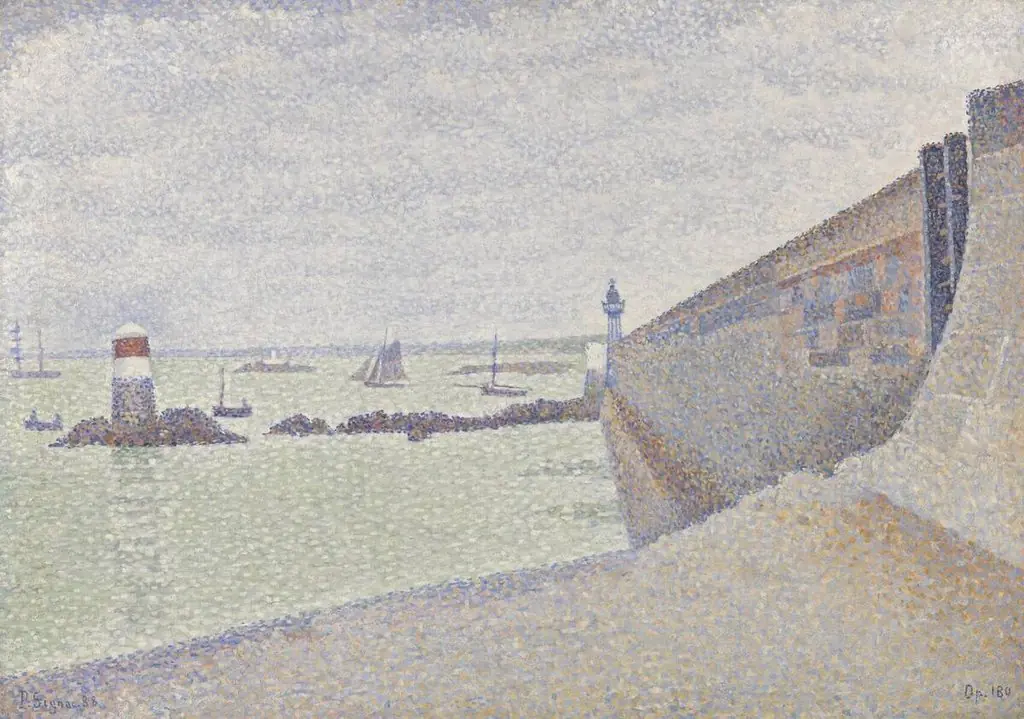
Signac executed this work in the Neo-Impressionist style, a method he adopted after encountering Georges Seurat. The canvas is meticulously covered with small, separate applications of pure, unmixed oil paint, a technique known as divisionism. When viewed from a slight distance, these individual marks optically merge in the viewer's eye, creating a vibrant, shimmering effect that renders the waves, stone structures, and town architecture with luminous intensity.
Own this work as a print
Artist & collection

Artist
Paul Victor Jules Signac ( seen-YAHK, French:; 11 November 1863 – 15 August 1935) was a French Neo-Impressionist painter who, with Georges Seurat, helped develop the artistic technique Pointillism.

 Studied in the Color & Light course