Corn Husking at Nantucket by Eastman Johnson
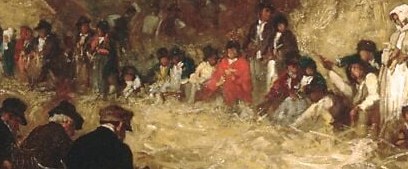
Eastman Johnson's *Corn Husking at Nantucket*, painted around 1875, offers a glimpse into a vital social event of 19th-century New England. This oil on canvas, housed in a prominent collection, captures the communal spirit and focused effort of an autumn tradition.
Look closely at the figures, particularly the woman in the white headdress and the man in the vibrant red shirt, as they engage in the shared task. Johnson masterfully renders the scene, transforming a routine agricultural chore into a moment of quiet dignity and human connection.
Johnson, an American painter and co-founder of the Metropolitan Museum of Art, was renowned for his genre scenes depicting everyday life. His study of 17th-century Dutch masters in the 1850s deeply influenced his intimate realism and his ability to elevate ordinary subjects. This work reflects his broader interest in documenting authentic American life.
Through his art, Johnson invites us to appreciate the beauty and significance found in shared human experiences and the rhythms of rural life.
Details
Transcript
This painter was known for scenes of everyday American life. Around 1875, he captured this communal corn husking. Corn husking was a vital social event in 19th-century New England. A woman in a white headdress presides over the activity. The scene highlights shared effort and focused concentration. It elevates a common task into a moment of human connection. The artist studied 17th-century Dutch masters, influencing his realism.