Paris Street; Rainy Day by Gustave Caillebotte
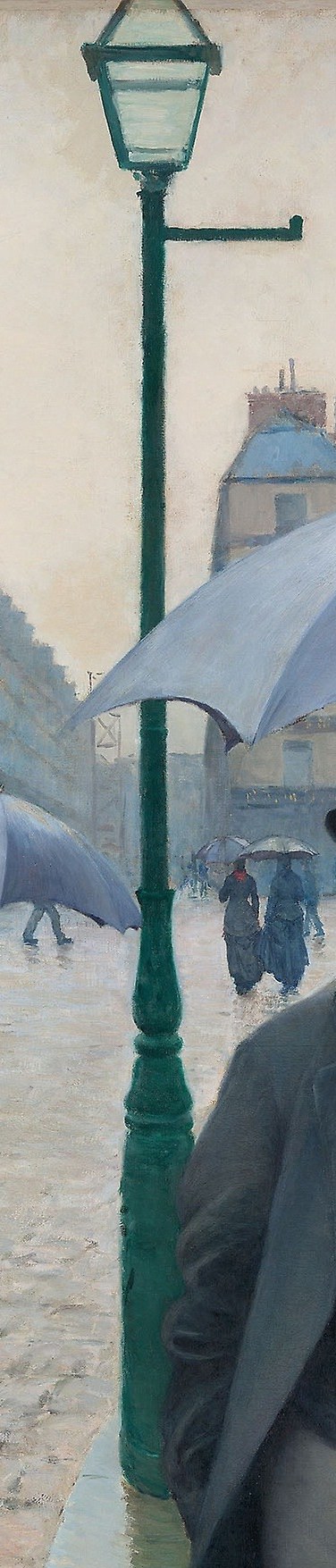
Gustave Caillebotte's "Paris Street; Rainy Day" (1877) is a large-scale oil painting capturing the essence of a modernized Parisian boulevard. The work is notable for its blend of Impressionist subject matter with a strikingly precise, almost photorealistic execution, reflecting the artist's engagement with modernity.
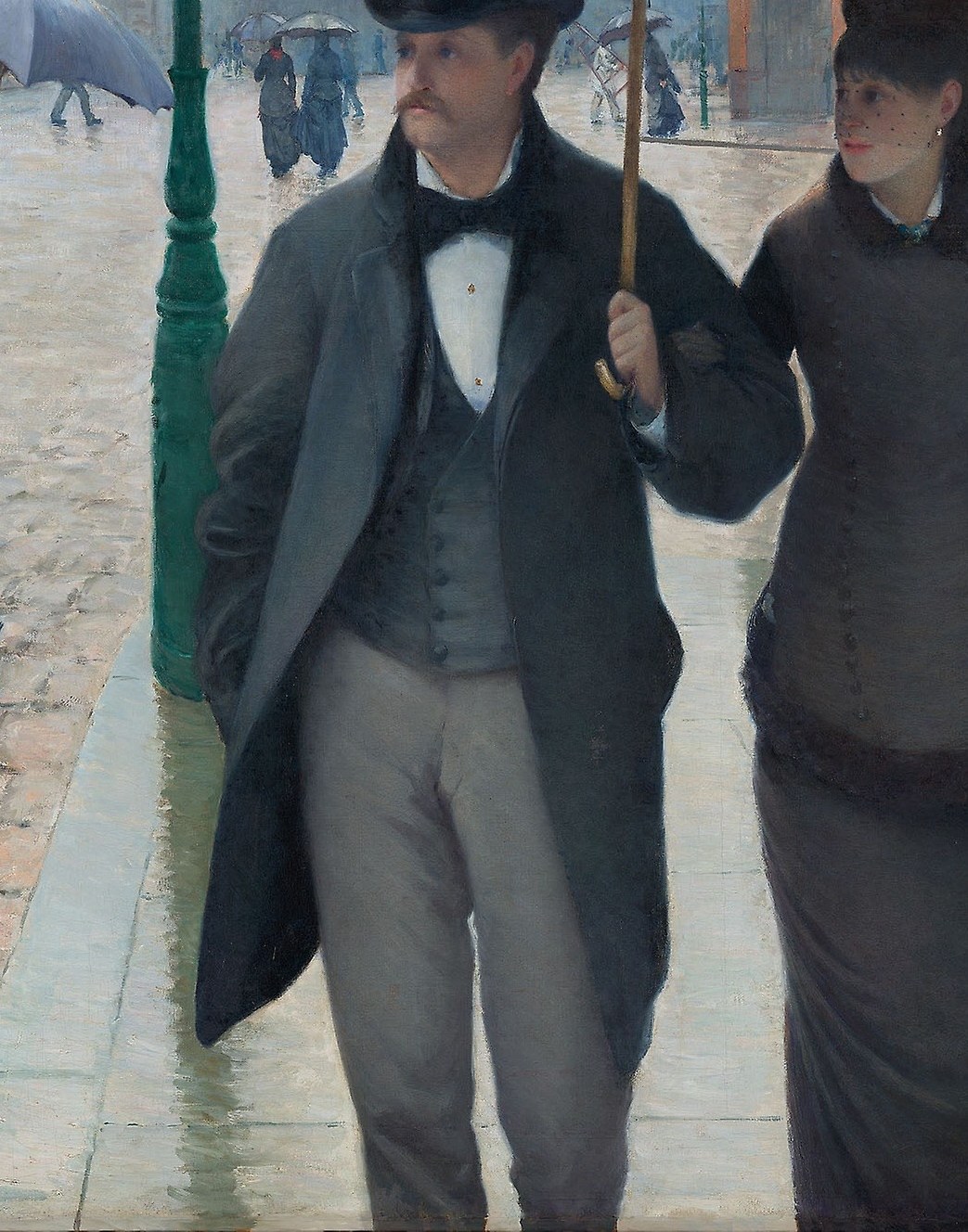
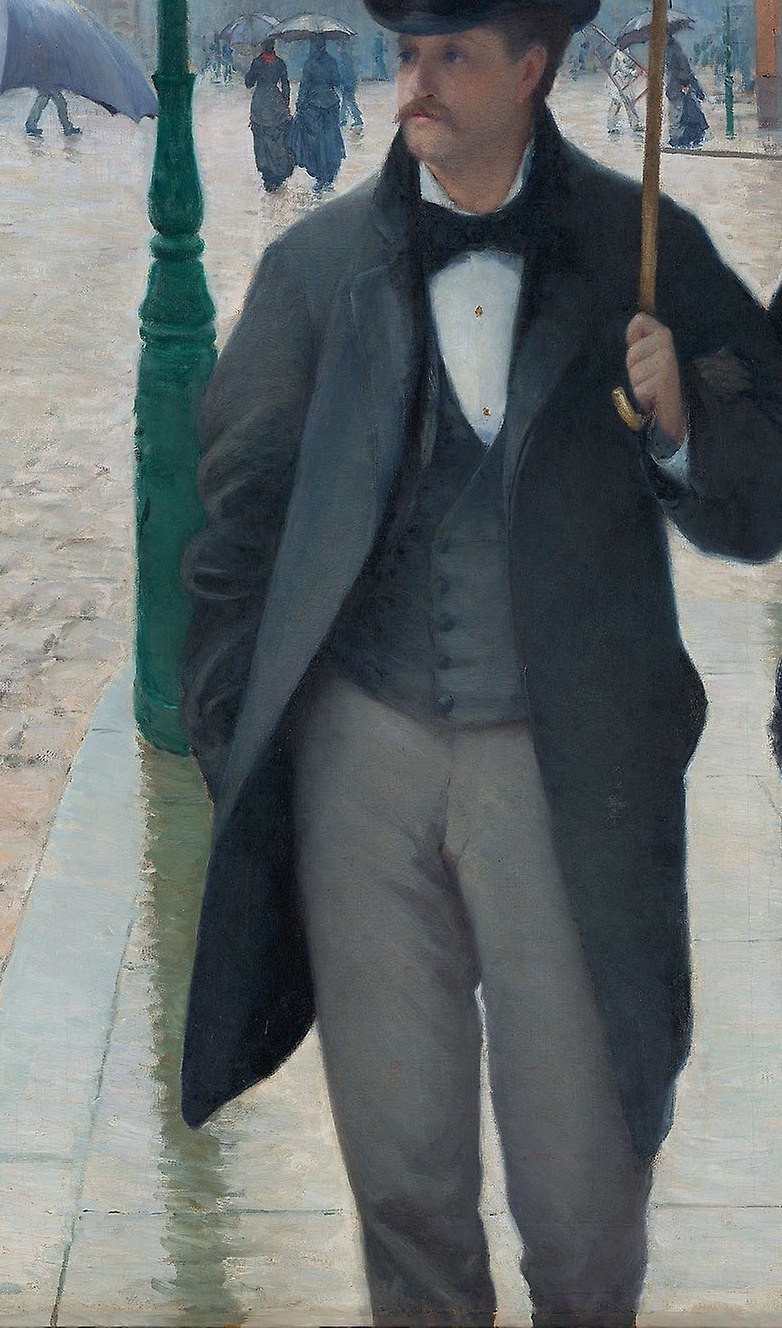
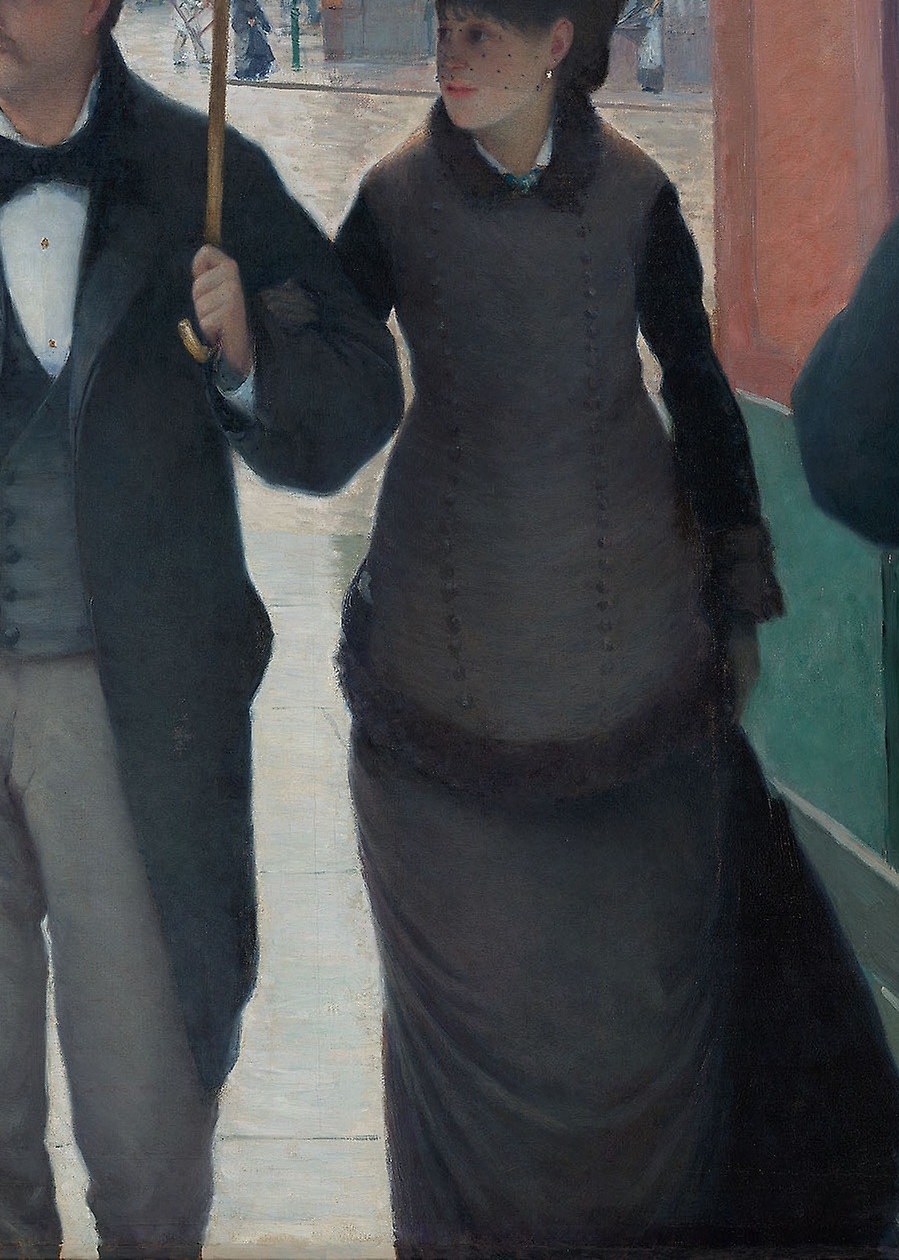
Observe the central couple beneath their umbrella. Their faces are deliberately turned away, creating an air of mystery and anonymity. Note the formal attire of both figures, his stern, top-hatted demeanor and her voluminous dark dress, suggesting a society bound by strict conventions, even in a private moment.
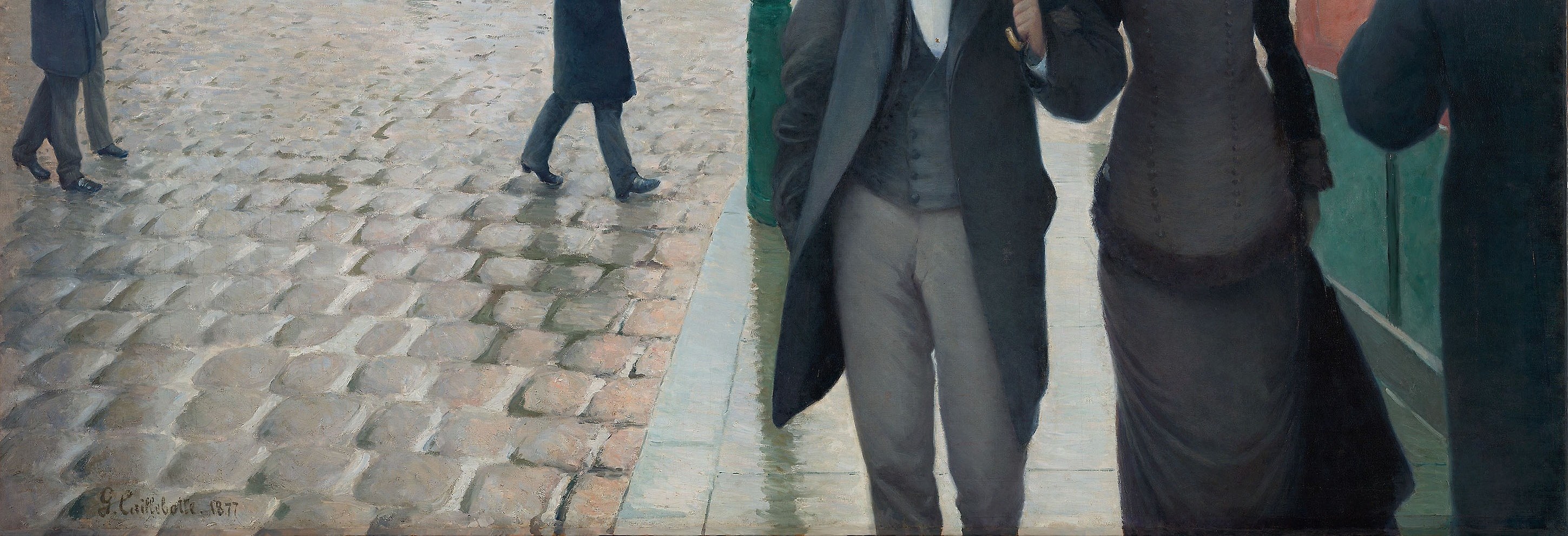
Completed during a period of significant urban transformation in Paris under Baron Haussmann, the painting reflects the city's new wide boulevards and grand architecture. Caillebotte, an early adopter of photography, employed techniques like two-point perspective to create a deep, illusionistic space, portraying the bustling yet often detached urban experience.
This iconic cityscape offers a glimpse into the social dynamics of 19th-century Paris, where individuals navigated their environment with a sense of both connection and isolation.
Details
Transcript
This is Paris. It is raining. People are busy. Look at the couple under the large umbrella. Their faces turn away, out of view. They seem formal, though they walk together. He wears the stiff top hat of the era. Her dress is dark and full of fabric. The painter chose a wet, dark street. This was Paris, remade by Baron Haussmann.