Encampment of Pawnee Indians at Sunset by Catlin, George
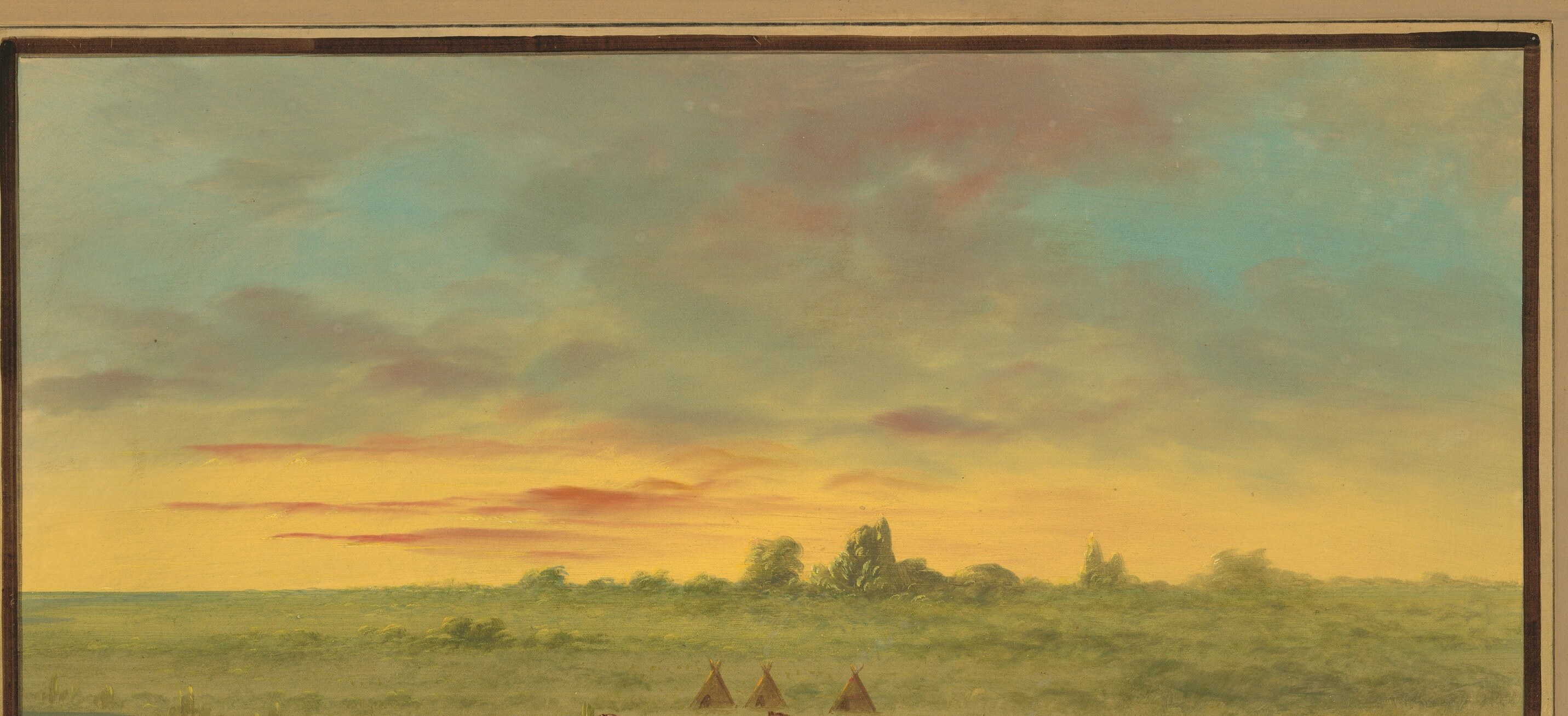
George Catlin's Encampment of Pawnee Indians at Sunset, painted between 1861 and 1869, captures a moment in the American West. This oil on card, now in a museum collection, is a testament to Catlin's dedication to documenting Native American life.
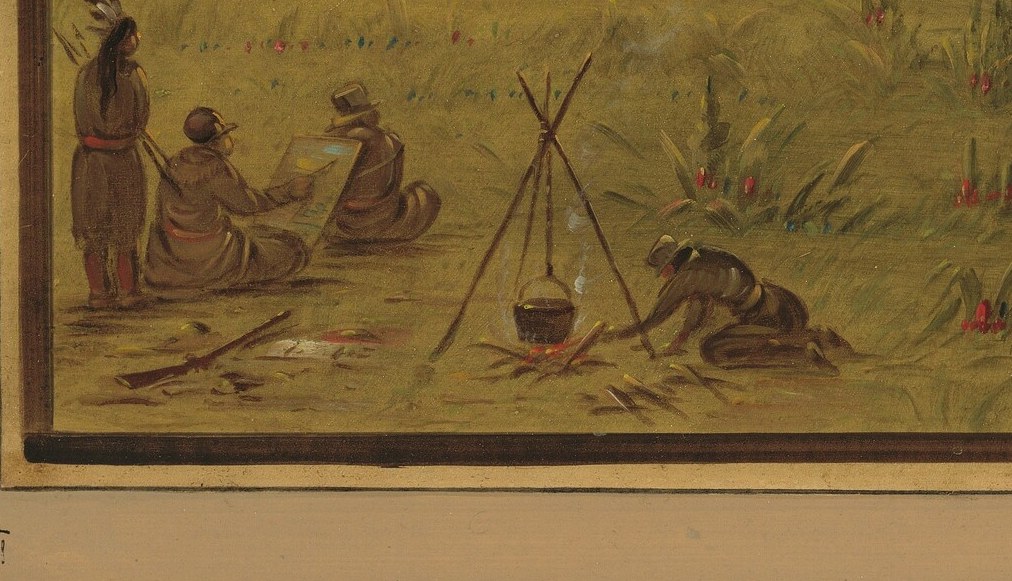
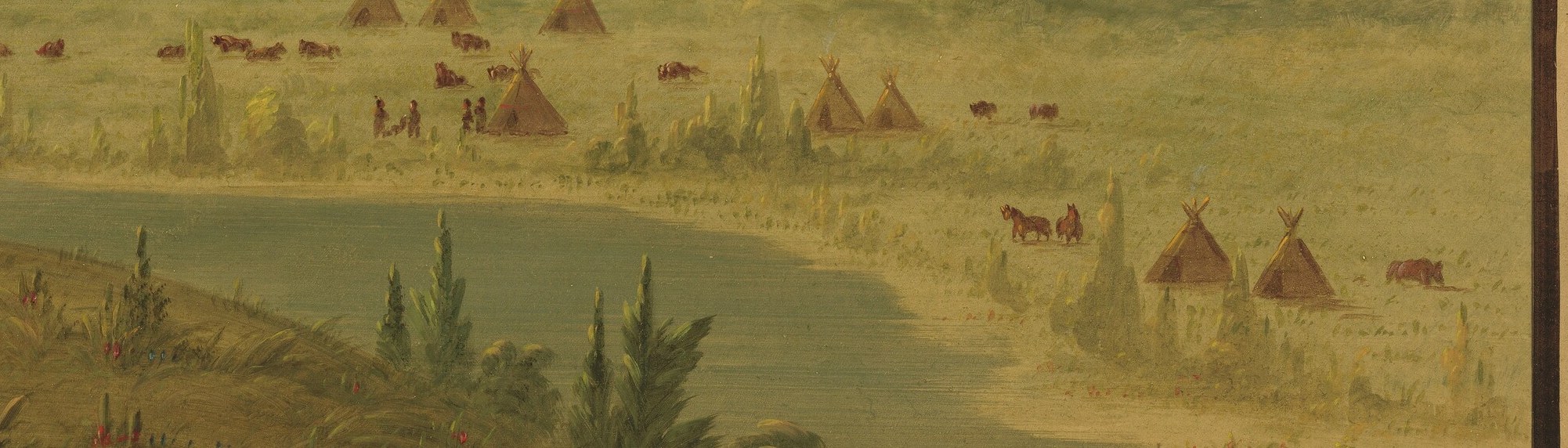
The painting depicts a Pawnee encampment with tipis along a winding river, all bathed in the warm glow of a setting sun. In the foreground, figures gather around a fire, while in the mid-ground, horses and cattle graze peacefully. Look closely at the distant figures near the tipis; they add a subtle layer of daily life to the scene.
Catlin, a lawyer turned painter, made five journeys through the American West in the 1830s. He aimed to create a visual record of Plains Indian life and landscapes, and later in his career, broadened his scope to include the frontier environment itself. This work, like many others, reflects his commitment to preserving these images.
What other details do you notice that tell a story about this moment in time?
Details
Transcript
This painter traveled the American West five times. He documented Native American life, like this Pawnee encampment. You see tipis along the river, and daily activity. But look closely at the distant figures near the tipis. The artist recorded these changing landscapes and cultures.