Decius Mus Addressing the Legions by Rubens, Peter Paul, Sir
Peter Paul Rubens's "Decius Mus Addressing the Legions," painted around 1616, was once valued at an astonishing 100,000 florins, an almost unprecedented sum for a work of art at the time. This oil painting, now housed in a museum, showcases Rubens's mastery of dramatic composition.
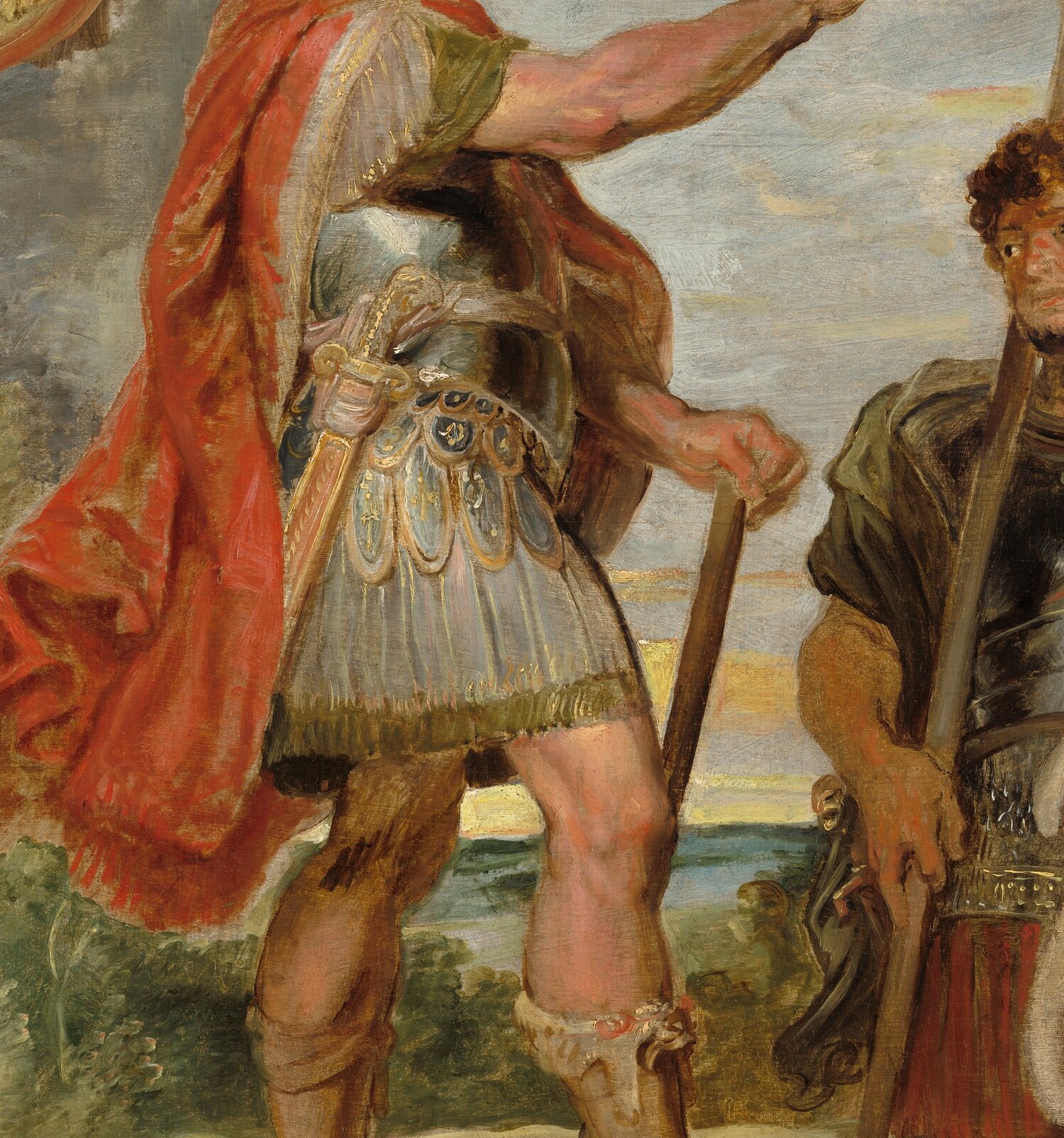
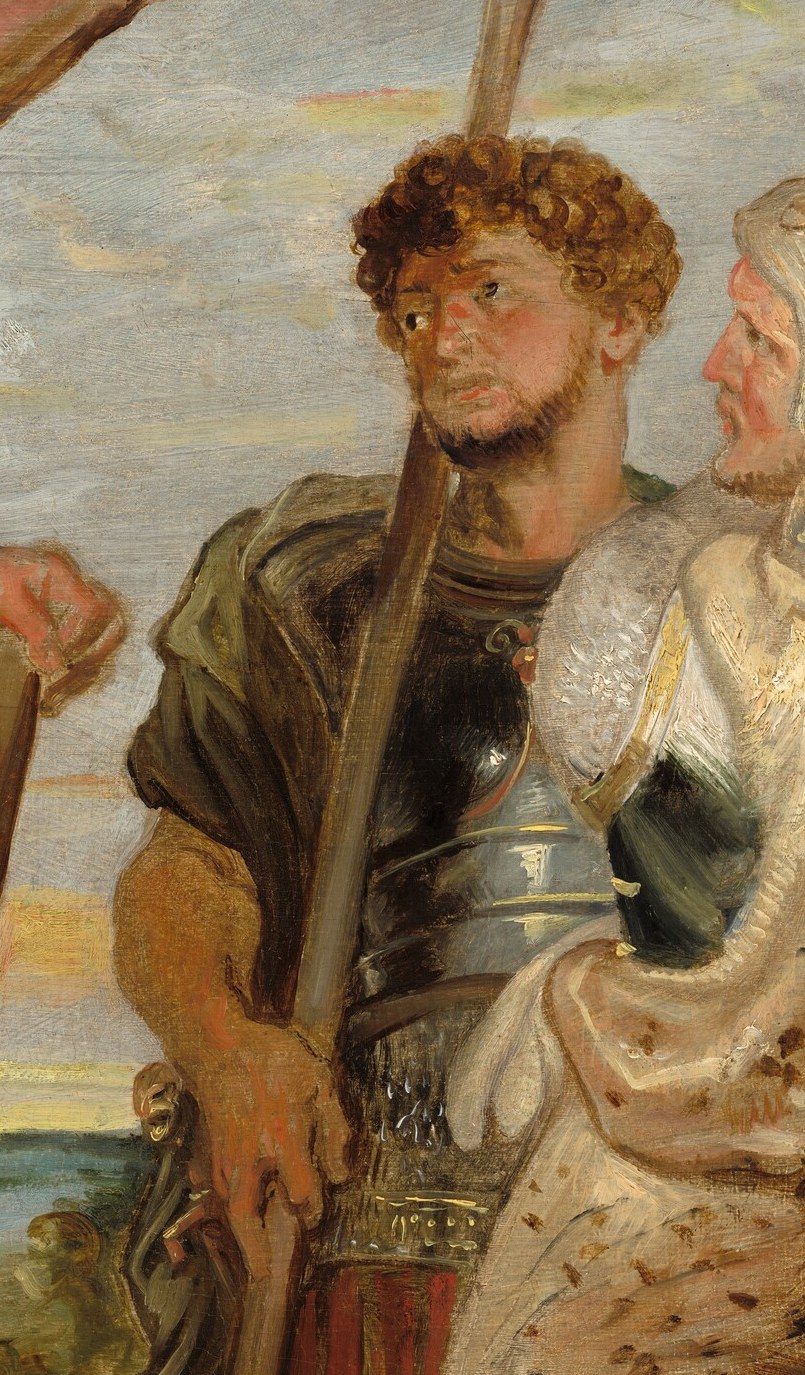
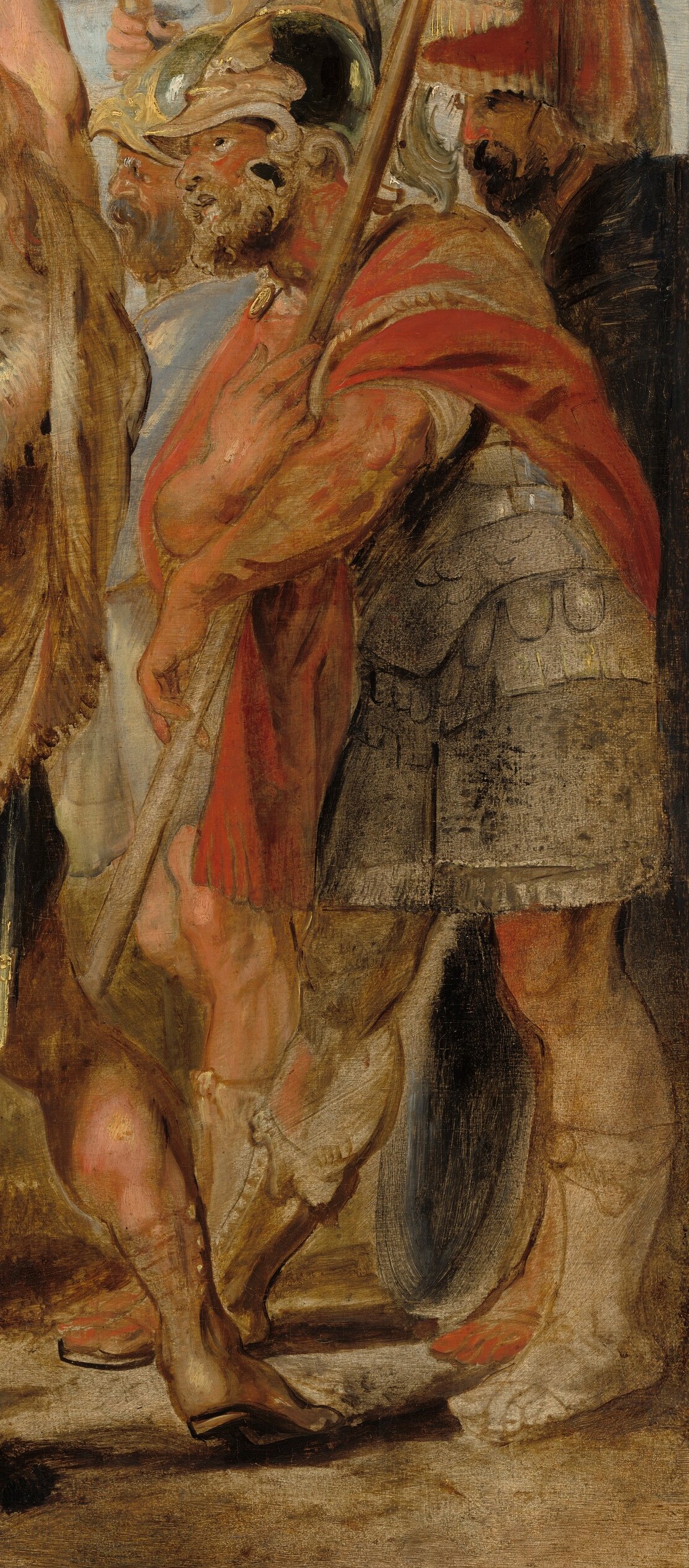
The painting centers on the Roman hero Decius Mus, depicted in a vivid red cloak, delivering an impassioned speech to his troops. Look closely at his determined face and gesturing hand, conveying the persuasive power of leadership. The turbulent sky above echoes the tension and high stakes of the moment, a signature of Rubens's Baroque style.
Rubens was deeply inspired by classical antiquity, transforming ancient narratives into dynamic visual experiences. His use of chiaroscuro, or the contrast between light and shadow, enhances the three-dimensionality of the figures, drawing the viewer into the dramatic scene. Originally painted on wood and canvas, this work underwent a transfer to a hardboard support, a common conservation practice.
This magnificent piece not only tells a story of duty and courage but also illustrates the immense value placed on art by patrons of the 17th century. What emotions does the scene evoke for you?
Details
Transcript
This painting was once valued at 100,000 florins. That was an enormous sum, almost unheard of for art. The central figure is Decius Mus, a Roman hero. He is rallying his legions with a powerful speech. The dramatic sky mirrors the high stakes of his words. Rubens uses light to highlight the drama of this moment. This painting exemplifies his fascination with classical tales.