Woman from Benningbroek by http://www.wikidata.org/.well-known/genid/ec8ba7b1c57639299bc1c5ec86249ad6
This painting, Woman from Benningbroek (c. 1550), is a masterclass in oil painting technique. The artist's remarkable skill makes the depicted fabrics astonishingly lifelike, blurring the line between paint and reality. The focus here is on the tactile illusion created by the artist.
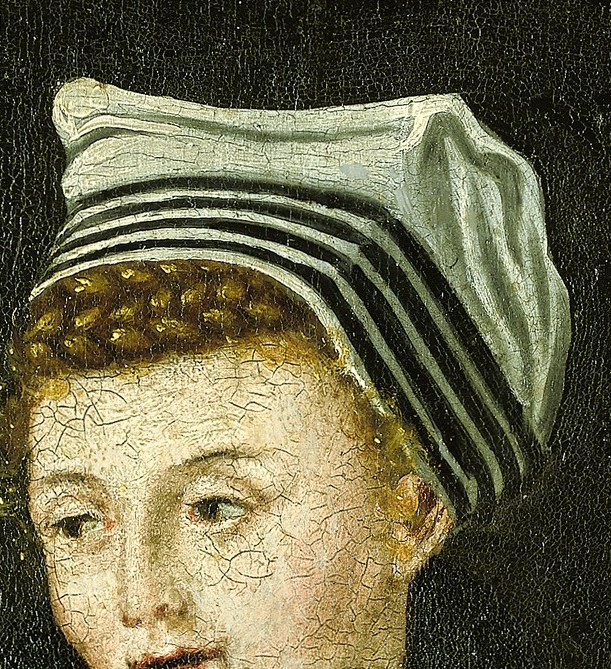
Pay close attention to the woman's striped cap. The painter has used oil paint to render its texture with incredible crispness and shading, making the fabric seem almost tangible. Notice the subtle glint of gold embroidery on her sleeve, which catches the light as if it were real metallic thread. Even the intricate pattern on her bodice appears to shift and breathe, demonstrating a sophisticated understanding of how light interacts with fabric.
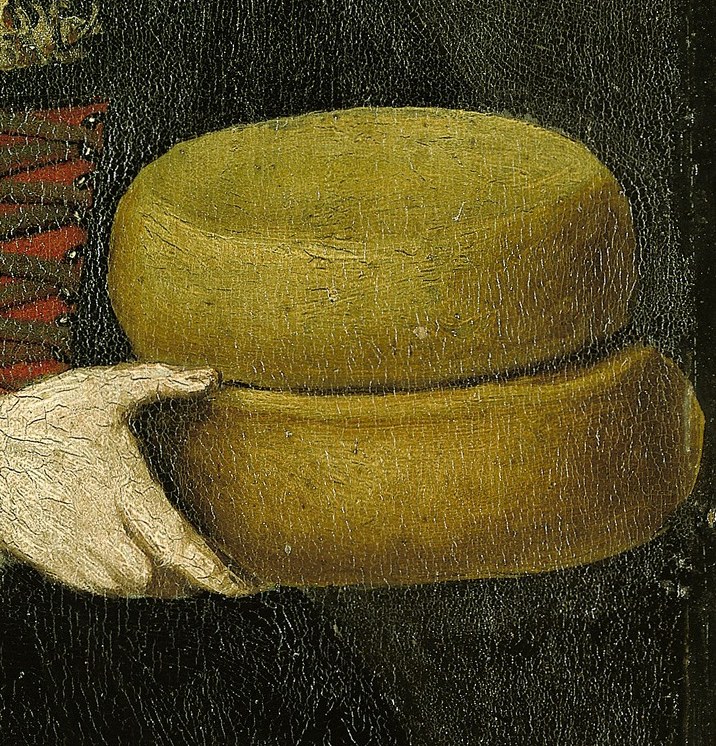
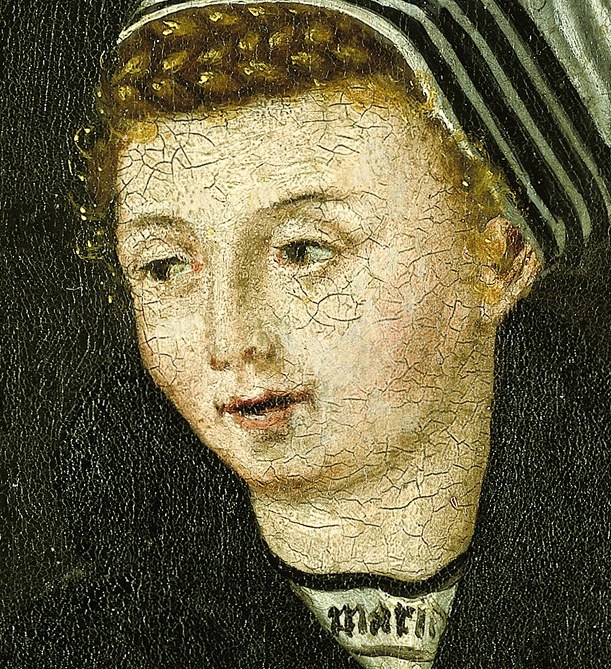
The historical context of this piece places it within a tradition of genre painting, yet its primary impact lies in its technical execution. It was likely created to celebrate local identity and agricultural life, as suggested by the cheese wheels she holds and the inscription 'Benningbroek'. However, the enduring fascination with this work is its demonstration of how an artist can create such convincing illusions of texture and materiality.
The painter's ability to render fabric so realistically in oil paint is the true subject here. It's a quiet but profound trick of the eye.
Details
Transcript
Look at the crisp stripes on her cap. The oil paint mimics fabric texture exactly. See the gold thread glinting on her sleeve. Even embroidery shouldn't look this metallic in paint. Her patterned bodice seems to shift and breathe. The painter captured a real three-dimensional form. This is Woman from Benningbroek, 1550.