Hunting from a Chariot, Tomb of Userhat by Charles Wilkinson
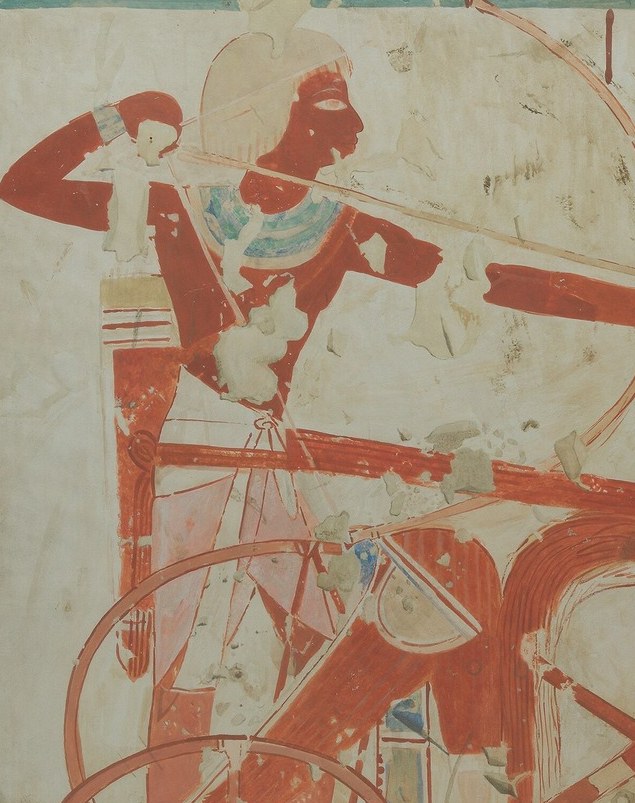
This is a facsimile painting of a wall scene from the Tomb of Userhat, made by Charles Wilkinson, recording a hunt scene that has decorated that Egyptian tomb for roughly 3,400 years. It now lives at the Metropolitan Museum of Art.
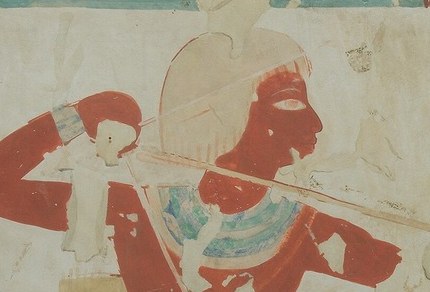
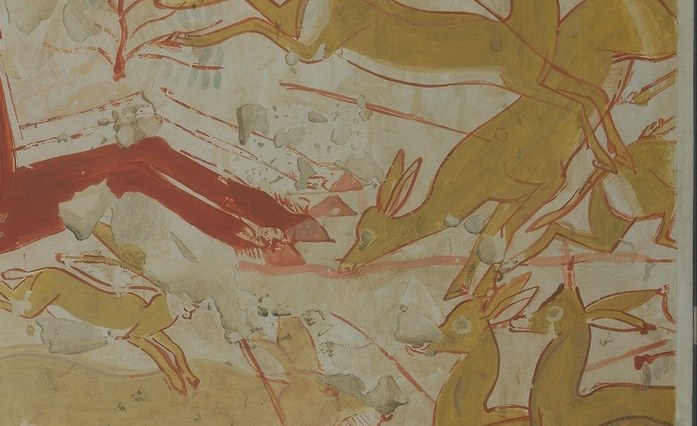
The action is furious: two chariots tear through a papyrus marsh, an archer at full draw, deer scattering in panic. But the real trick is in how the painter built the human figure itself. The archer's head is shown in profile, yet his eye is painted facing you; his shoulders are frontal, his legs are profile again. This is the Egyptian composite canon, and it is not error. It is a deliberate system that rotates each body part to its most informative single view. A naturalistic profile eye would read as a slit; the frontal eye reads instantly as an eye.
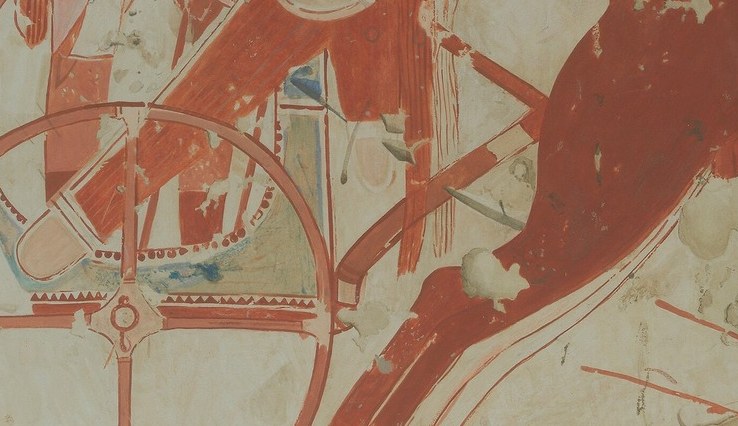
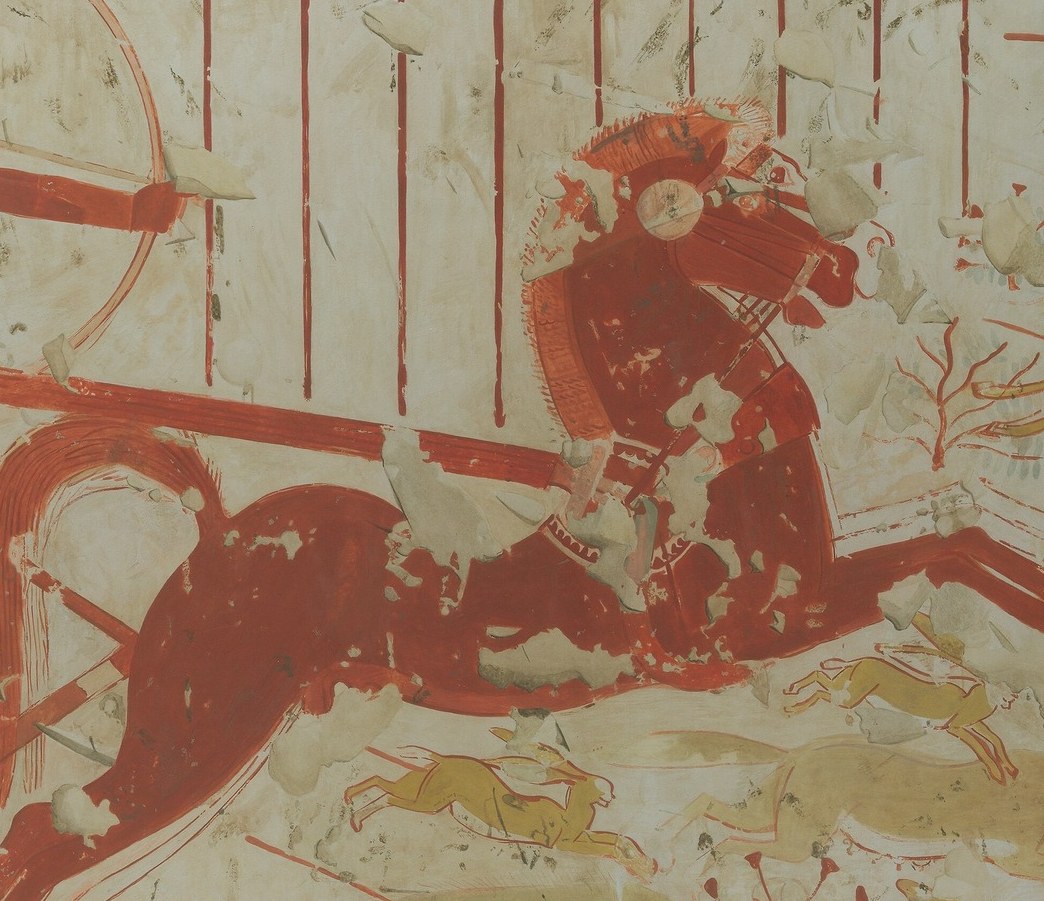
The chariot is more than a prestige symbol. Its lightweight wicker platform and spoked wheels are a true technical portrait of military hardware introduced by the Hyksos and adopted wholesale by the Egyptian elite. Userhat belonged to the chariot class, and his tomb declares it in paint. Even the inverted, splayed deer on the right is a piece of narrative technology: body orientation alone signals a kill.
Look at that flipped deer one more time. The whole story of the hunt before and after the arrow flies is right there, in a single angular silhouette. No shadows, no perspective, no problem.
Details
Transcript
An Egyptian hunting scene. Two chariots, a storm of deer. The archer's face is in profile. But his eye looks straight at us. This isn't a mistake. The Egyptian canon shows every part from its most recognizable angle. Profile head, frontal eye, frontal shoulders. Maximum information, not optical truth. The chariot body is flat and light. Real war technology made of wicker, not a symbol. The horses stack and overlap. That is how they show speed: frozen frenzy, no blur. And this deer, flipped upside down. The sign for a killing blow, read instantly. A complete visual language. It still works after 3,400 years.