Triptych with Adoration of the Magi by http://www.wikidata.org/.well-known/genid/8c3a85b53c5a461e10a19aa2597519f7
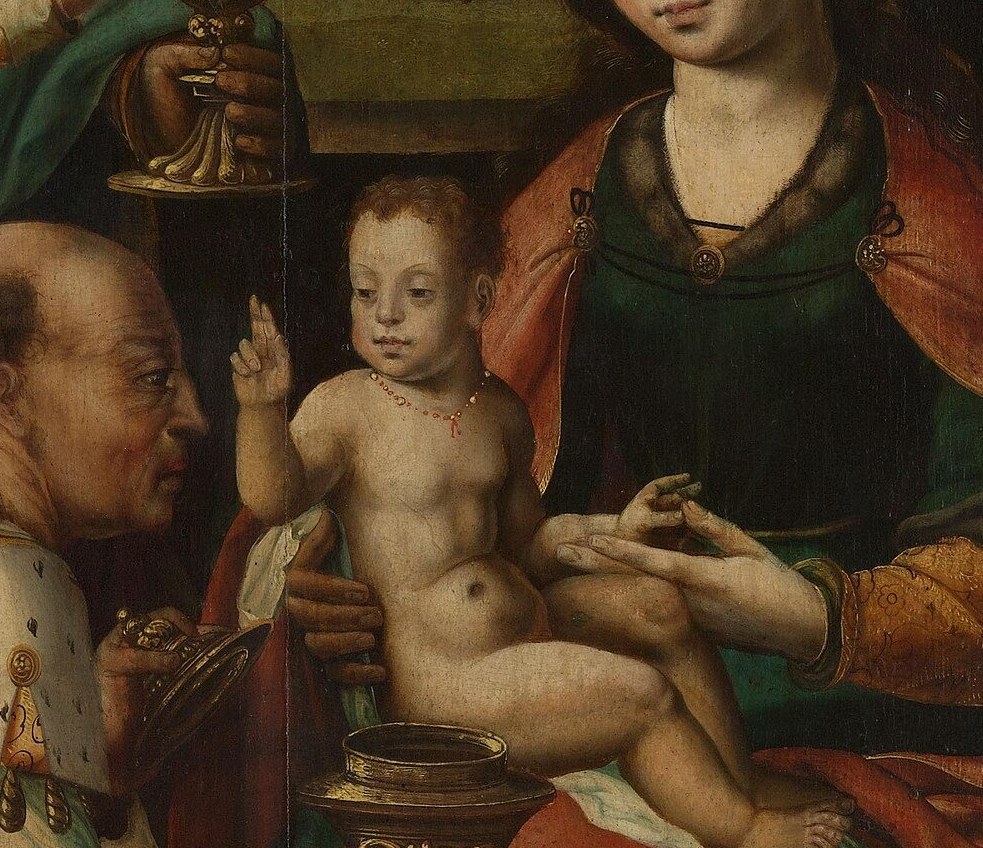
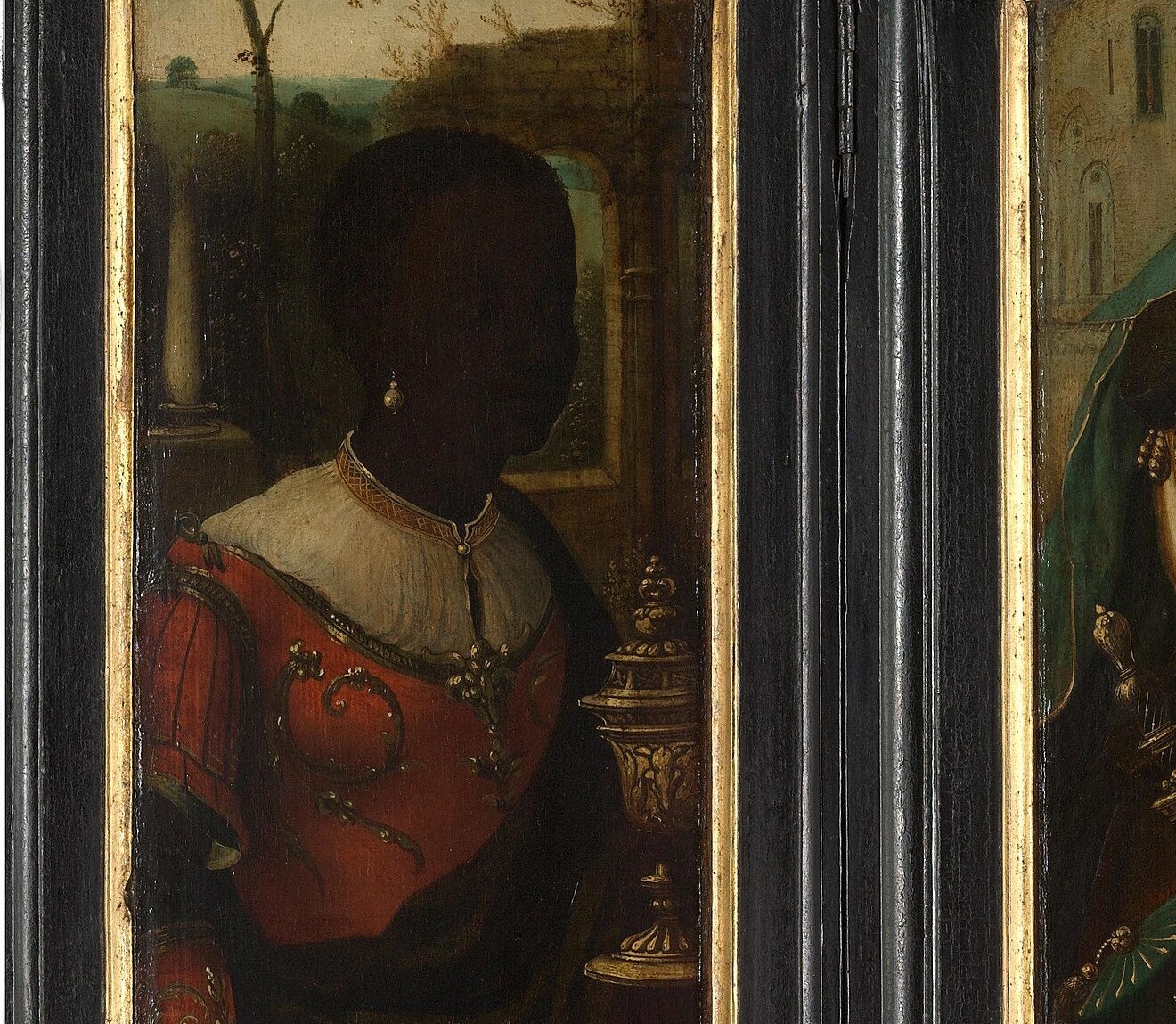
The Triptych with Adoration of the Magi, created around 1530 by the workshop of Flemish artist Pieter Coecke van Aelst, is a fascinating piece in the Rijksmuseum's collection. While the main scene depicts the reverence of the three kings presenting gifts to the infant Jesus, a closer look reveals subtle narrative details.
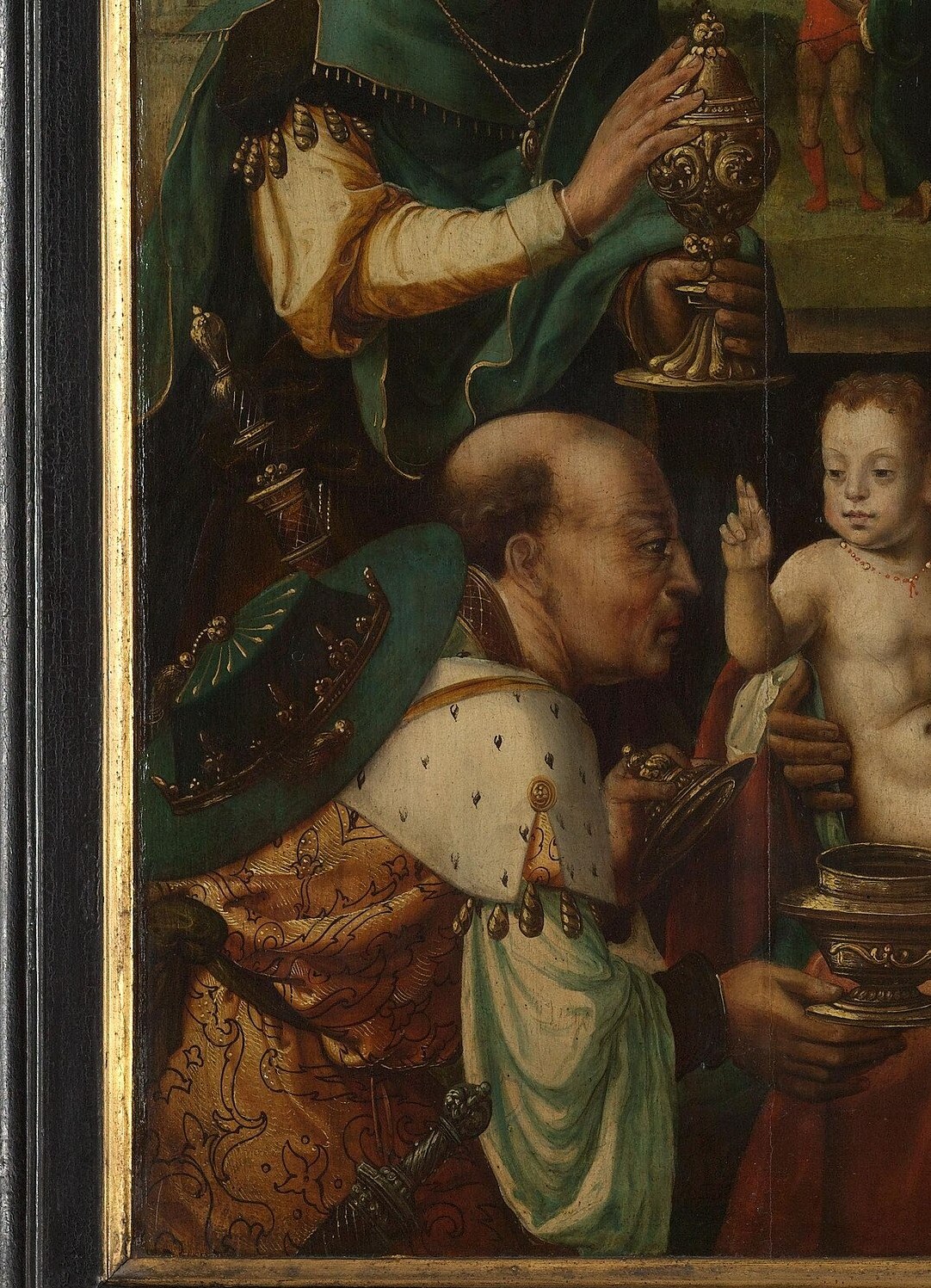
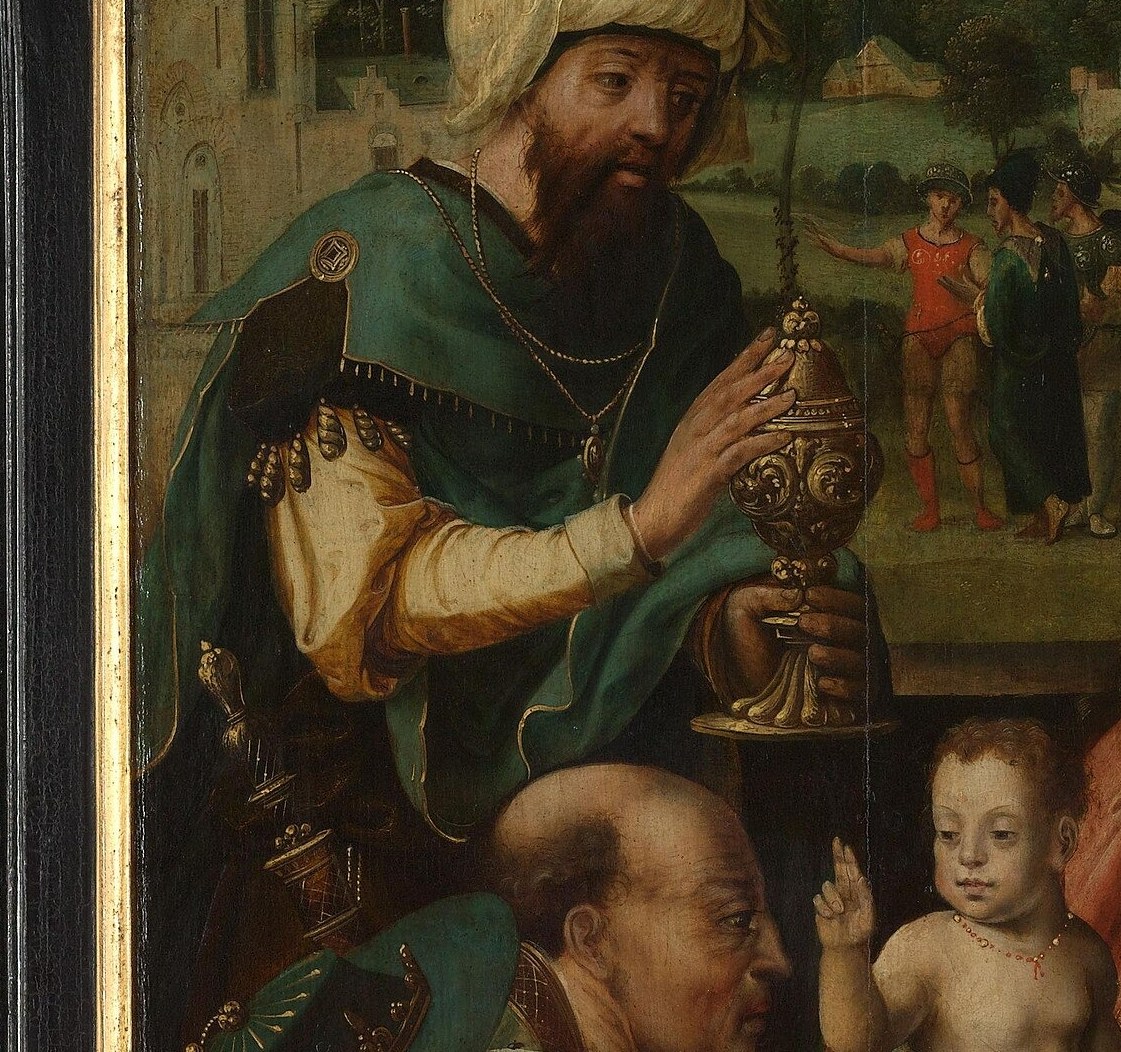
Observe the rich details of the kings' attire, like the jeweled crown of the standing king and the ornate golden vessel offered by the kneeling figure. The Virgin Mary's serene face and the infant's gesture convey divine purity and maternal love.
Yet, a careful eye will spot tiny figures working in the distant architectural background. These small, often overlooked elements add depth to the painting, suggesting a lively world continuing its daily routine beyond the sacred moment.
This collaborative work, common for significant commissions of its era, offers a glimpse into early 16th-century Northern European religious art. What other hidden stories do you see in the background?
Details
Transcript
This triptych by Pieter Coecke van Aelst dates to 1530. It shows the three kings presenting gifts to the infant Jesus. The kneeling king offers an ornate golden vessel. Another king wears a jeweled crown, emphasizing his high status. But look closely at the architecture behind them. Tiny figures are working in the distant background. These small details hint at a bustling world beyond the sacred scene.