Still Life with Fruit by Jan van Huysum
In *Still Life with Fruit*, Jan van Huysum, a master of Dutch still-life painting, makes the impossible look real with his virtuosic rendering of textures and light. Painted in 1730, this work exemplifies his ability to capture the delicate interplay of light and shadow, creating an illusion of depth and realism.
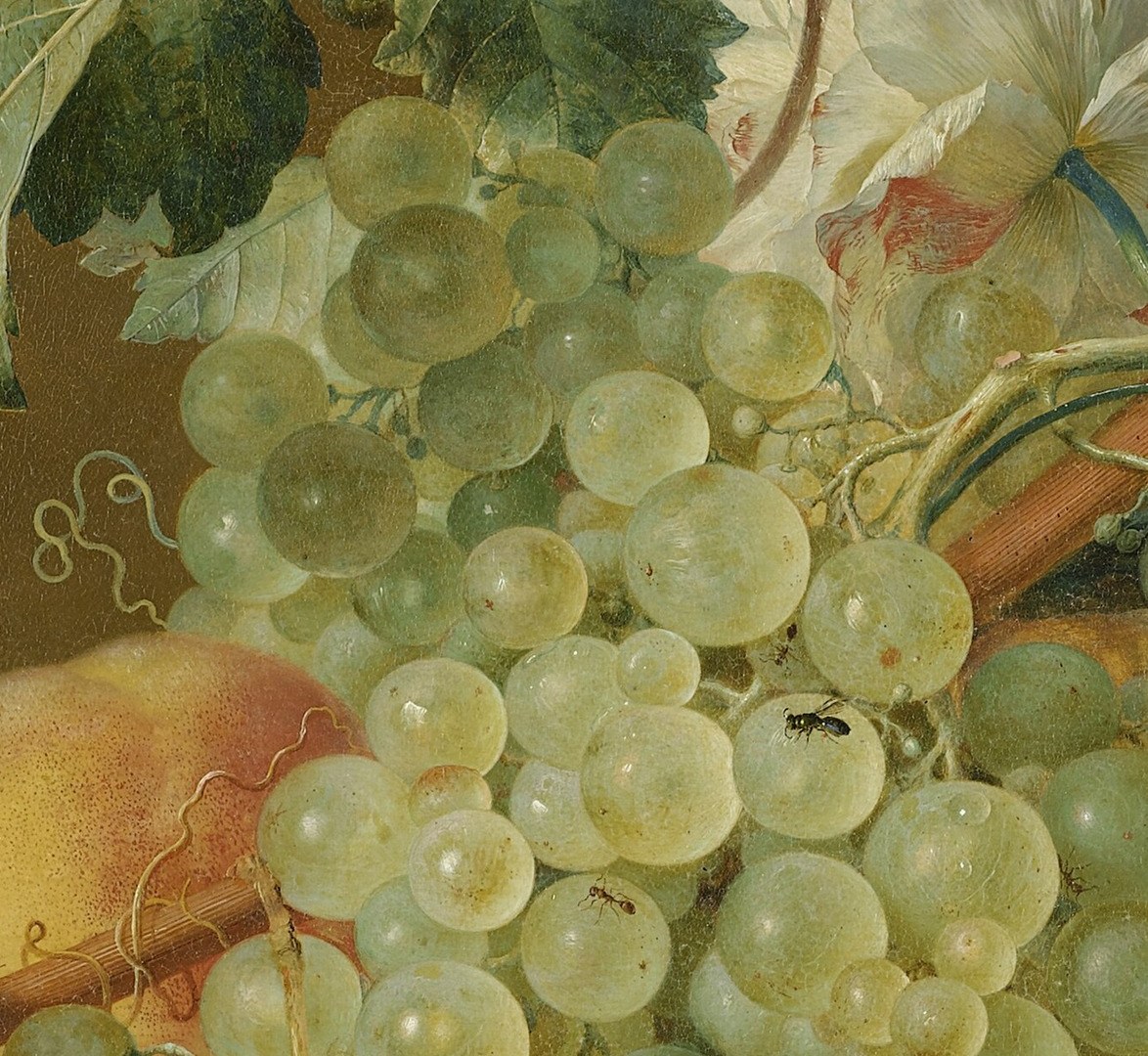
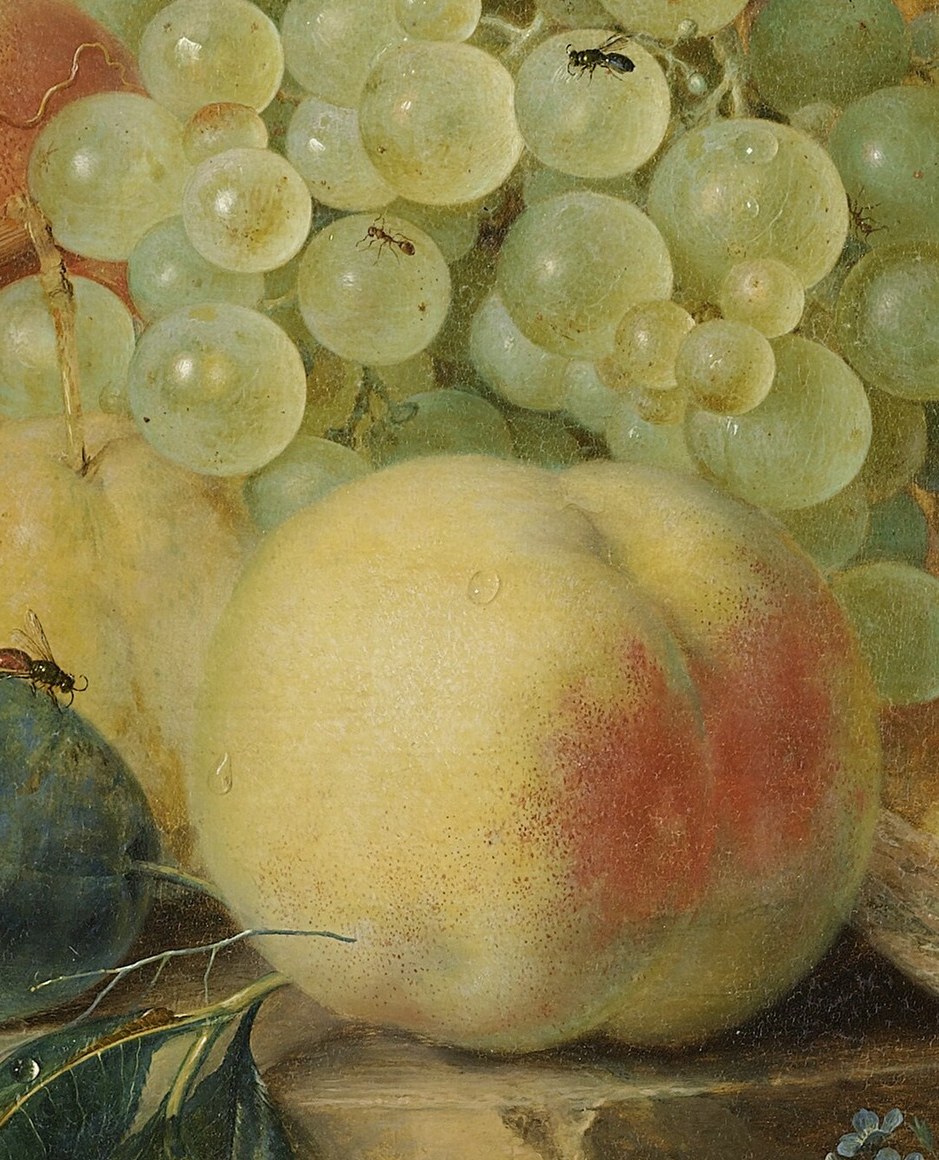
Notice the translucent quality of the green grapes, where light appears to shine through the skin. This effect was achieved by layering thin glazes of paint, a technique that gives the fruit a palpable sense of volume and glow. Observe the tiny, glistening water droplets on the leaves, each a meticulously placed speck of white paint designed to reflect ambient light, adding to the painting's incredible realism.
Van Huysum was known for his minute details, often including small insects like the ant seen crawling on a grape. These elements not only add a touch of life but also serve as a 'vanitas' symbol, reminding viewers of the fleeting nature of beauty. His signature, subtly inscribed on the stone, anchors this exquisite work.
This painting, housed at the Rijksmuseum, is a testament to van Huysum's refined technique and his lasting impact on the still-life genre. What other small details can you spot?
Details
Transcript
This painter was famous for making impossible things look real. Look at these grapes. Notice the way light shines through them. He layered paint thinly to create a true sense of transparency. Tiny, glistening water droplets appear to sit on the leaves. Every drop is a speck of white paint, reflecting light from above. Even a tiny ant crawls on one, a common van Huysum signature. The painter used the finest brushes to achieve such detail.