The Banks of the Marne in Winter by Pissarro, Camille
Camille Pissarro's *The Banks of the Marne in Winter*, painted in 1866, is a quiet masterpiece held at the Art Institute of Chicago. This early work showcases the artist's roots in Realism before his later embrace of Impressionism and Neo-Impressionism. It's a testament to his keen observation of ordinary life and the subtle beauty of nature.
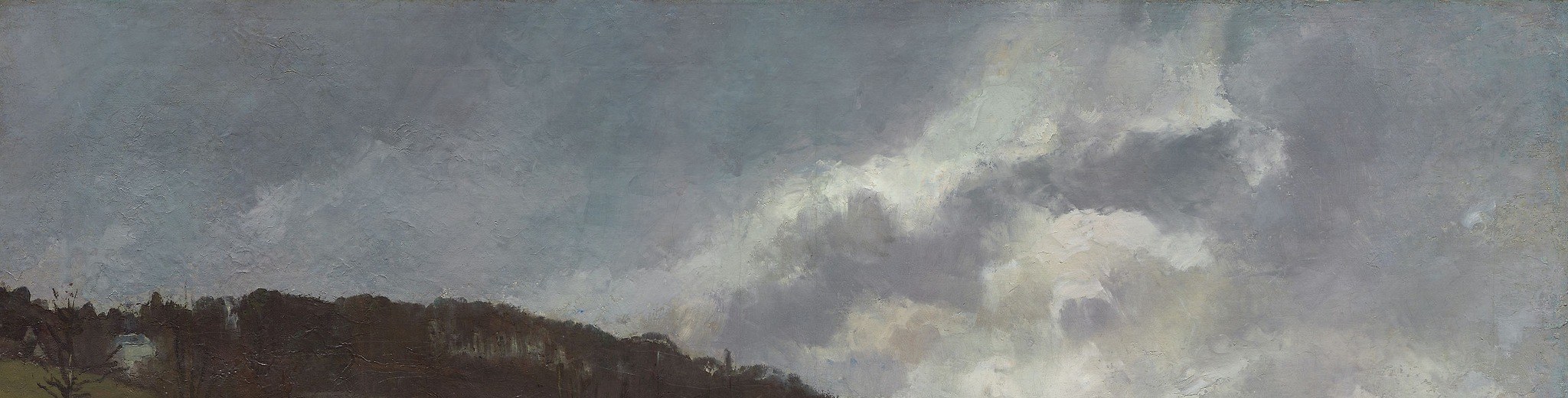
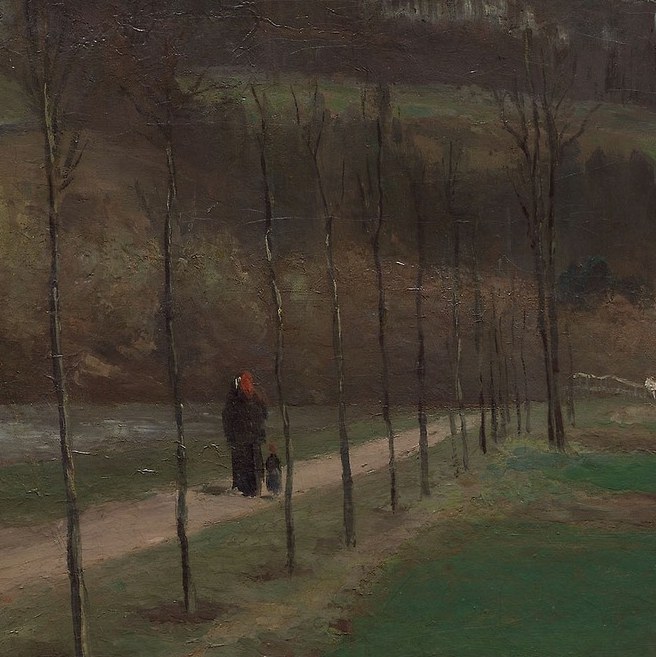
Notice the muted palette and the thick impasto technique, which give the painting a tangible texture, almost allowing you to feel the cold air. The solitary figure walking a winding path, accompanied by a small dog, draws your eye into the stillness of the winter day.
Pissarro, a Danish-French painter, trained under Gustave Courbet and Jean-Baptiste-Camille Corot. This piece reflects that early influence, focusing on depicting everyday rural scenes with fidelity. It shows his commitment to honest portrayal, a foundation upon which his revolutionary Impressionist style would later build.
What do you find most striking about this quiet winter landscape?
Details

Transcript
This painter was an early master of Impressionism. But his early works were often muted, like this winter scene. It captures the stillness of a cold, gray day. The heavy brushstrokes create a textured, tangible surface. He trained under Realist masters, observing ordinary life. Look closely at the lone figure, a small detail in a vast landscape.