The painter in his studio painting the portrait of a couple by Herman van Vollenhoven
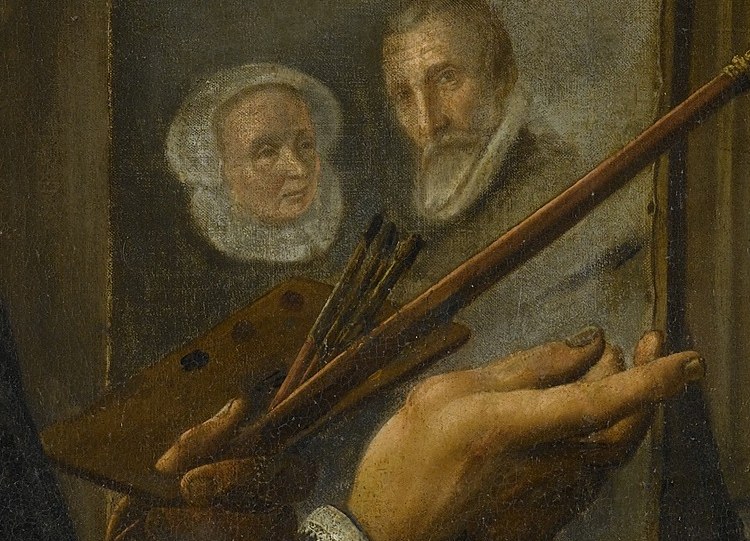
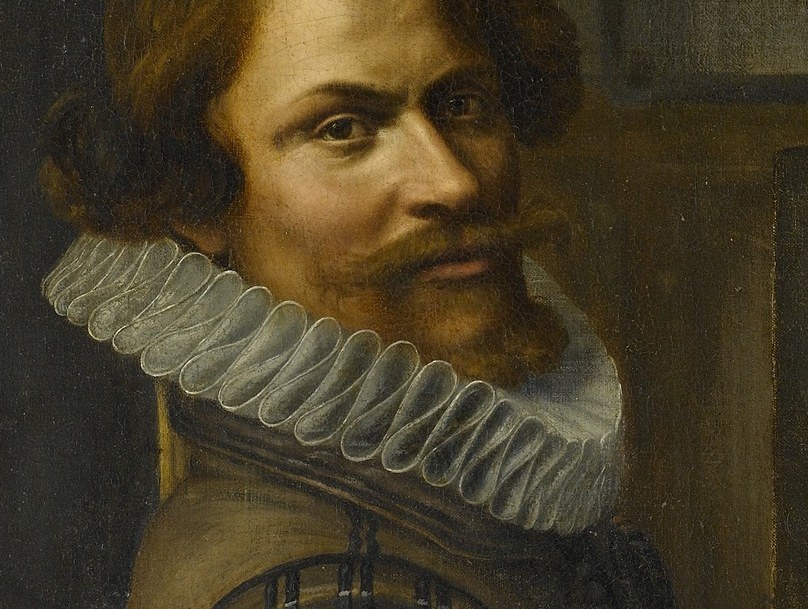
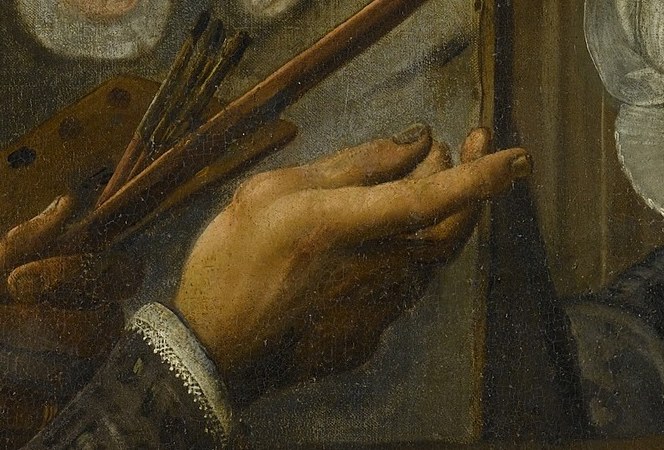
Herman van Vollenhoven's 1612 oil painting, *The Painter in His Studio Painting the Portrait of a Couple*, held at the Rijksmuseum, offers a glimpse into 17th-century Dutch studio practices and symbolic meaning. The artist depicts himself actively engaged in creating a portrait of a seated couple.
Look closely at the table in the foreground. A prominent skull serves as a 'memento mori,' a powerful reminder of mortality and the fleeting nature of life. This contrasts with the act of painting, which aims to create a lasting image.
Beside the skull, an inkwell and quill suggest documentation or the writing of wills, implying that the portrait itself might serve as a permanent record or remembrance after death. Van Vollenhoven beautifully intertwines the transient and the eternal in this intimate scene.
What other hidden meanings might this painter have included?
Details
Transcript
This painter shows himself at work, in 1612. He is painting the portrait of this couple. On the table, a skull is carefully placed. It is a memento mori: a reminder of death. Next to it, an inkwell and quill suggest writing. Perhaps the painter records his subjects' last will. The painting itself then becomes a lasting memory.