The Drummond Children by Henry Raeburn
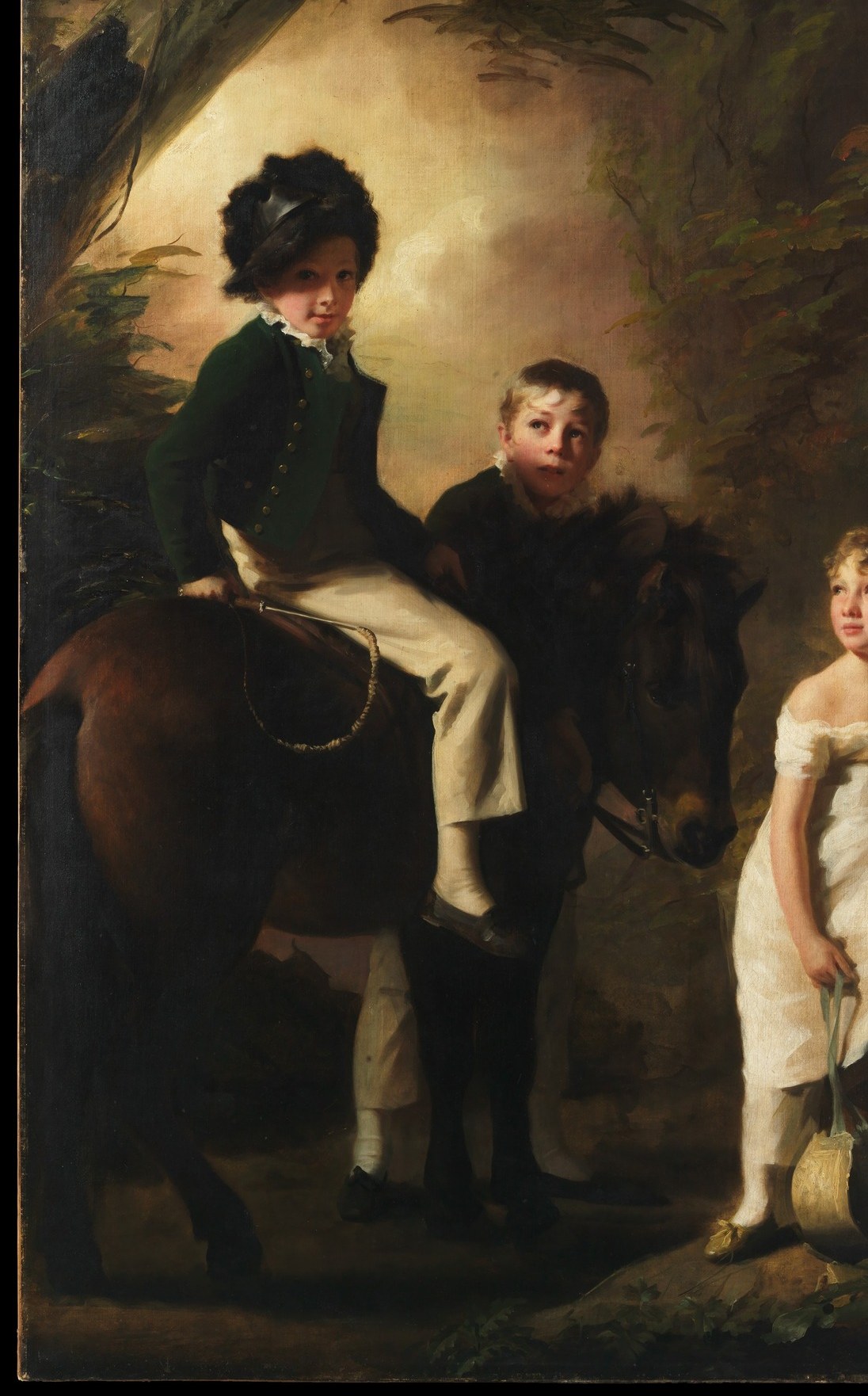
This is Henry Raeburn's 'The Drummond Children', painted in 1809. Three young siblings from an aristocratic Scottish family, posed with their horse in a dark wood. Raeburn was the most important portrait painter in Scotland, and he became the official Portrait Painter to King George IV.
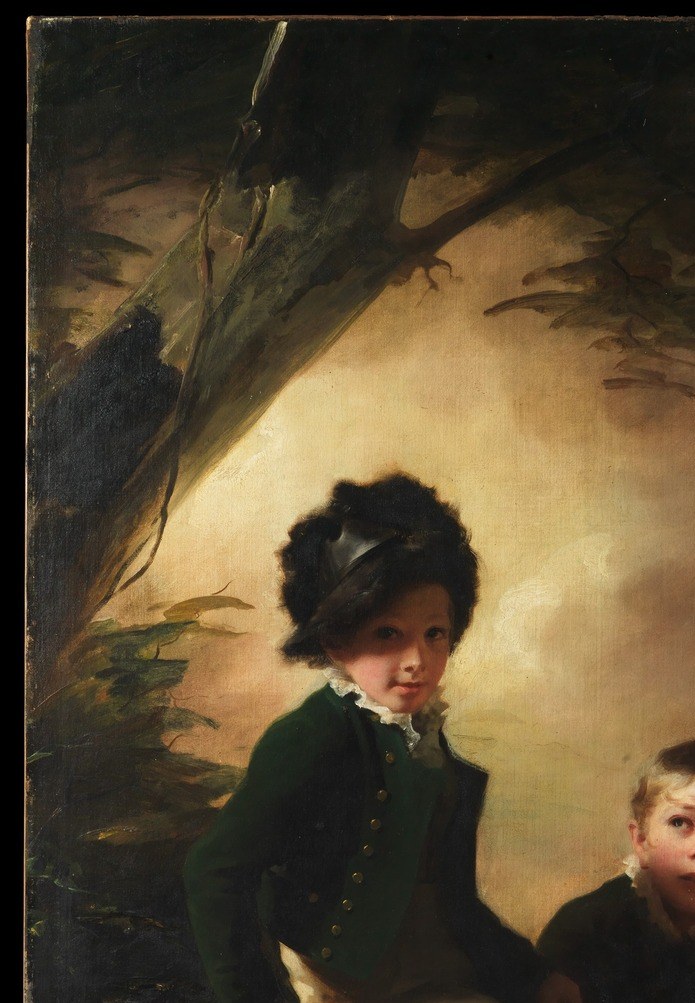
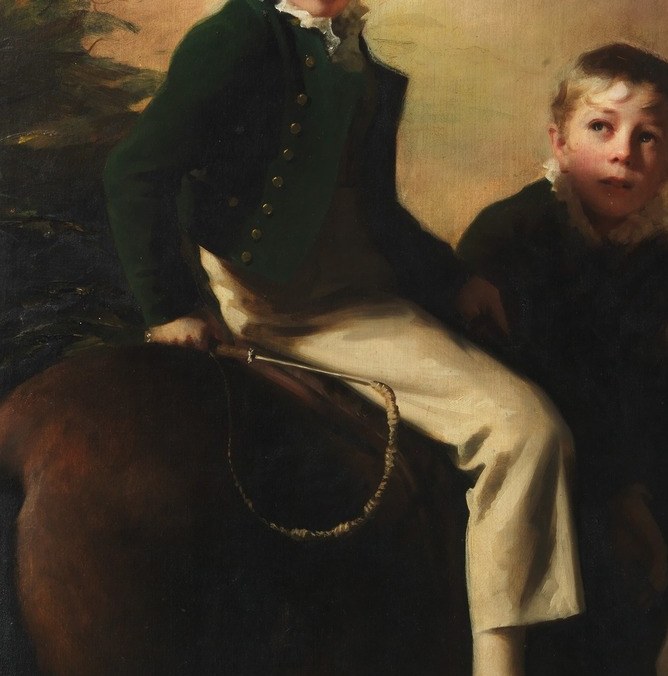
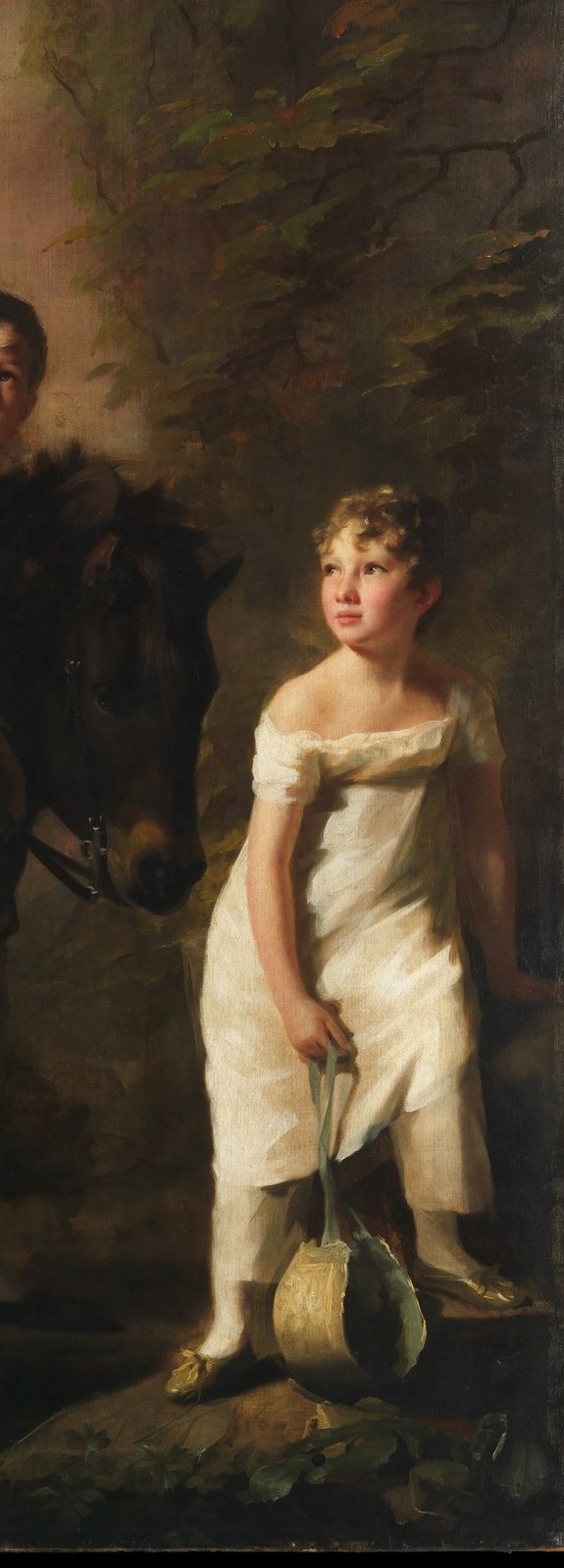
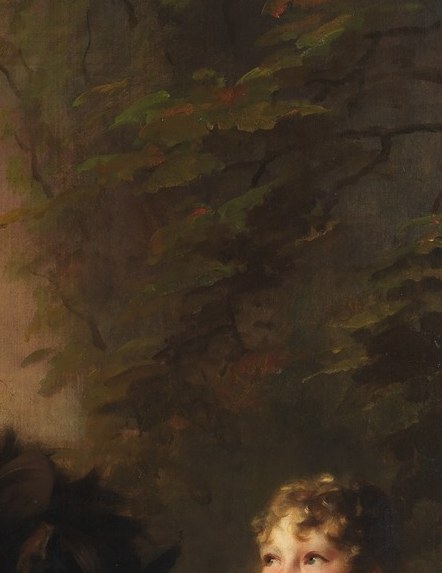
Look at how the painting actually works. The background trees are not real trees. They are a near-black void, barely differentiated from the horse's dark brown coat. Raeburn is using shadow as a structural device. The whole left and center of the canvas is a wall of darkness. Against it, the white dress and the rider's white trousers become almost electric. Take those same whites and put them against a light sky and they would look flat. The darkness is what makes them glow.
Raeburn's technique was built on this kind of high-contrast drama. He often placed his sitters against dark grounds, letting their faces and the brightest passages of clothing do all the work. The horse is not just a status symbol. It is a massive compositional tool, a dark mass that pushes light forward onto the children's faces and clothes. Only the girl's face is fully lit, and it becomes the anchor of the whole picture.
Next time you see a portrait where the subject seems to emerge from deep shadow, you are looking at a painter who understood the same thing Raeburn did. Light is nothing without a place to put it.
Details
Transcript
A horse, three children, and almost nothing else. The landscape behind them is barely painted. Trees exist only as a deep brown-black void. Raeburn knew light needs a wall of darkness to work. So he built that wall. The horse is a dark fortress of paint. And against it, he hung the brightest white he could make. The girl's dress does not glow on its own. It glows against shadow. Raeburn was Scotland's greatest portraitist. He painted this in 1809.