The Annunciation by Master of Budapest
A small apple sits on a stone ledge between the Angel Gabriel and the Virgin Mary. Most viewers scroll right past it. The painting is The Annunciation, made around 1500 by an artist known as the Master of Budapest, and it hangs in The Metropolitan Museum of Art.
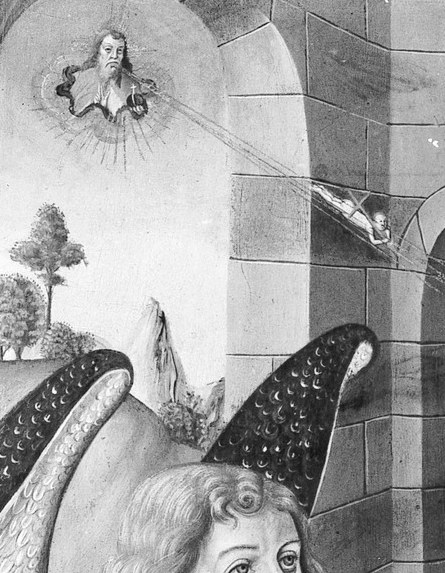
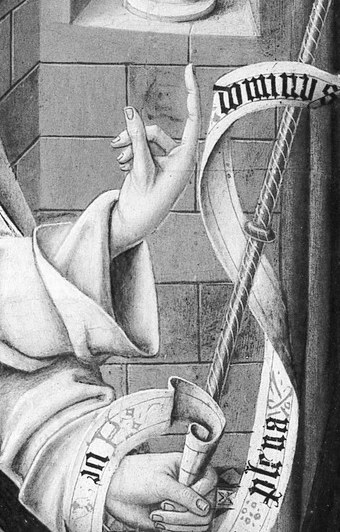
The composition works like a diagram of Christian theology. A central column splits the picture plane in two: Gabriel and the divine message on the left, Mary and her quiet acceptance on the right. But the real weight of the image sits in the gap between them, on that ledge.
In late-medieval iconography, the Virgin Mary was understood as the new Eve. Where the first Eve's disobedience brought the Fall, Mary's obedient yes to Gabriel brought redemption. The apple on the ledge makes that parallel visible. It is the fruit of Eden, placed here not as a still-life detail but as a theological hinge. One woman grasped the fruit; another let the fruit sit untouched.
The artist's real name is lost. Scholars named him after the city whose museum holds another of his panels. He worked at the very end of the Gothic tradition, just as Italian Renaissance ideas about perspective were reaching northern Europe. You can feel the transition happening inside this painting, in the tiled floor that tries to create depth and in the faces that still hold the older, softer Flemish gravity.
Next time you stand before an Annunciation, look for the apple. It is almost always there, small and silent, carrying the story backward into Genesis and forward into everything that follows.
Details

Transcript
An angel arrives with a message that will change the world. Between them, a column divides the divine from the human. Now look at the ledge below that column. A single apple sits alone in the gap. Eve's disobedience brought death. Mary's obedience brings life. The painter placed all of salvation history in one piece of fruit.