Luncheon by Édouard Vuillard
Édouard Vuillard's "Luncheon" (1901) is more than just a meal scene; it's a coded message about quiet domestic life. Vuillard, transitioning from the abstract Les Nabis group to a more realistic style, uses everyday objects to convey deeper meaning.
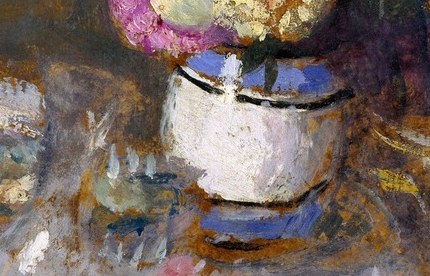
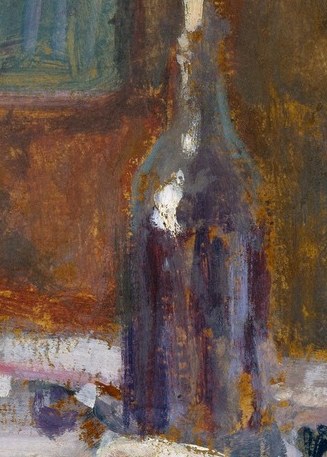
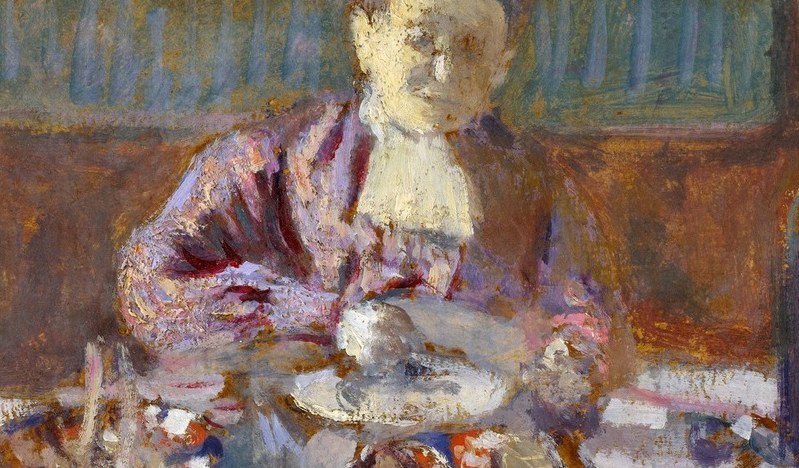
Observe the abundance on the table: the vibrant flowers symbolizing hope, the indulgent wine bottle, and the woman's hand, gently interacting with the meal, suggesting a tranquil existence. Notice the absence of traditional symbols like a dog, often representing loyalty, emphasizing a focus on the present moment.
Painted in 1901, this work marks Vuillard's shift towards realism after his time with Les Nabis. The subtle details and muted palette, punctuated by brighter hues in the flowers and dishes, capture the intimate atmosphere of a domestic interior. His thick, textured brushstrokes add a tactile quality, making the scene feel immediate and personal.
Vuillard masterfully decodes the everyday, transforming a simple luncheon into a profound statement on the beauty of ordinary life.
Details
Transcript
This scene feels like an everyday meal. But the painter hides a coded message. Look at the flowers. They symbolize hope. This full wine bottle means indulgence. A dog is often loyalty. No dog here. The woman’s hand signals a gentle life. Vuillard stopped using flat colors in 1901. His code spells quiet domestic realism.