English Landscape Capriccio with a Column by Canaletto
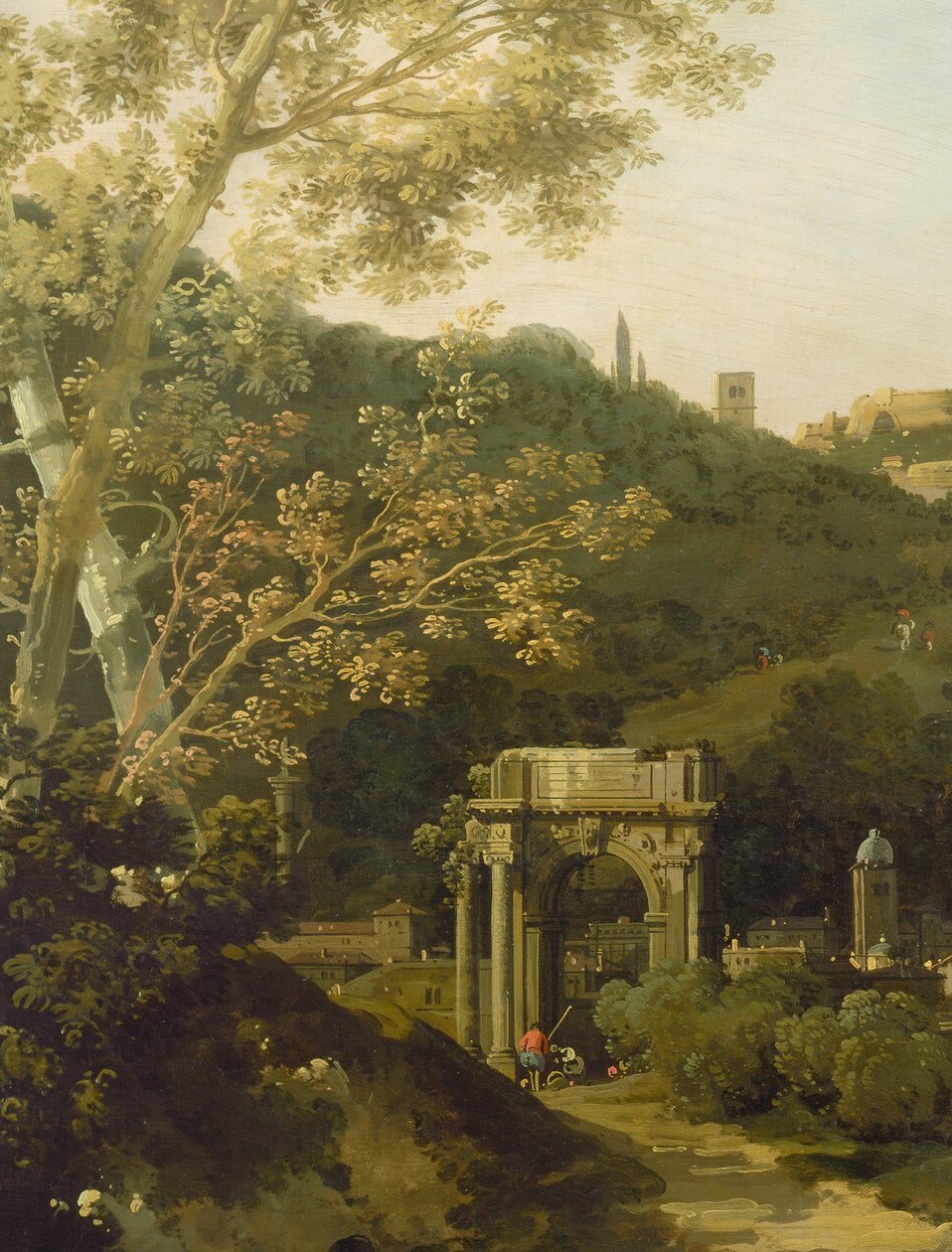
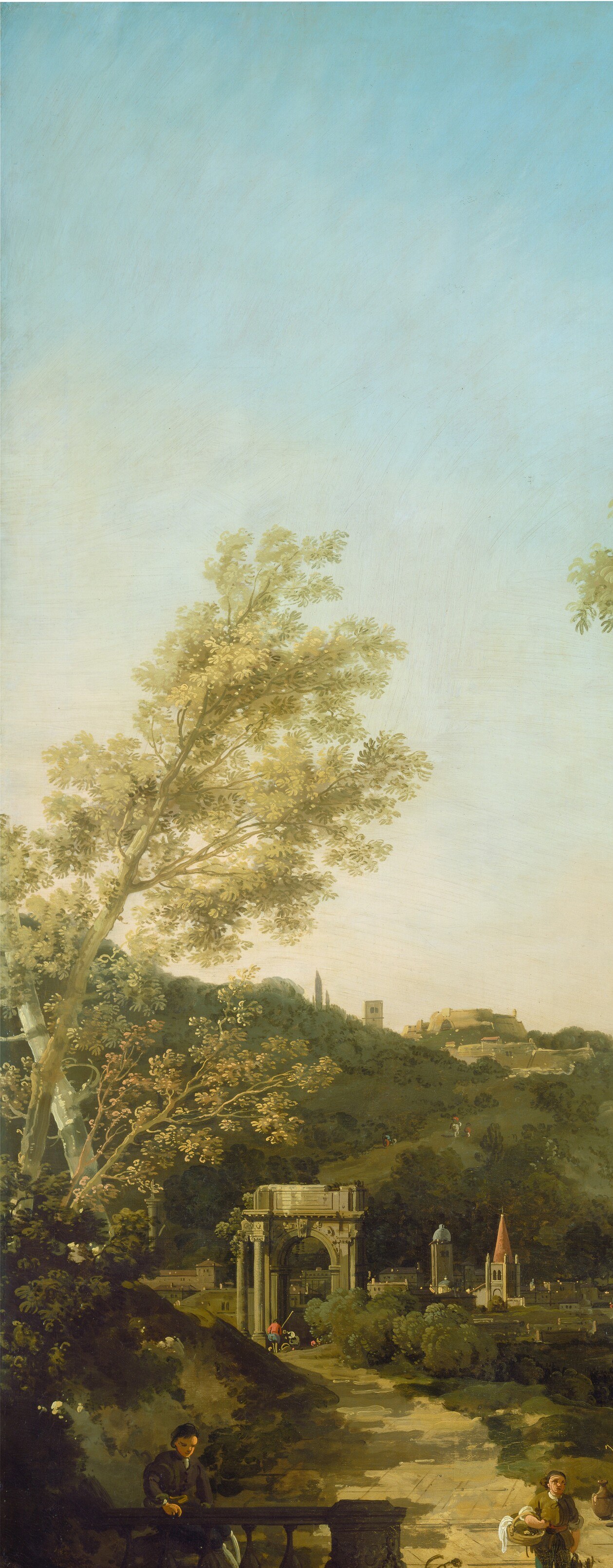
Canaletto packed a city into a single column. His 'English Landscape Capriccio with a Column' (c. 1754) is not a real place, though it looks like one. It is a capriccio, an architectural fantasy the Venetian painter composed during his ten years in England. The painting lives at the intersection of the Thames and an Italian daydream.
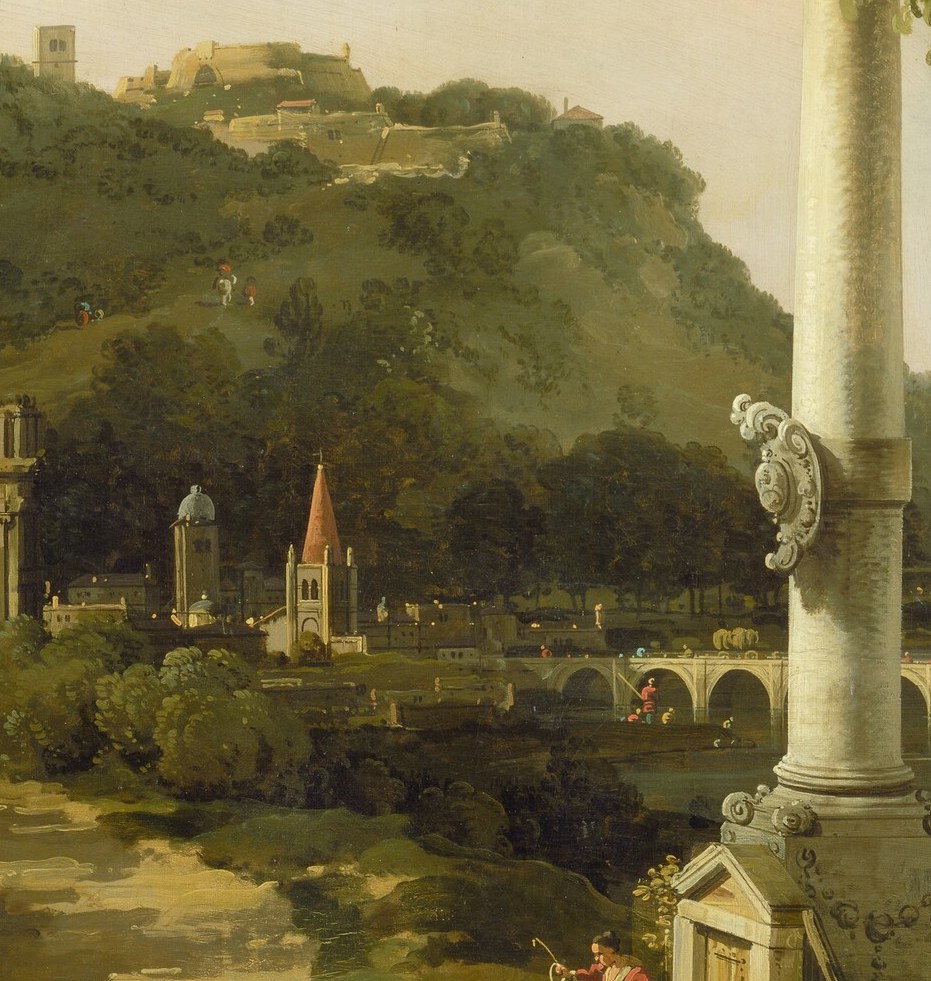
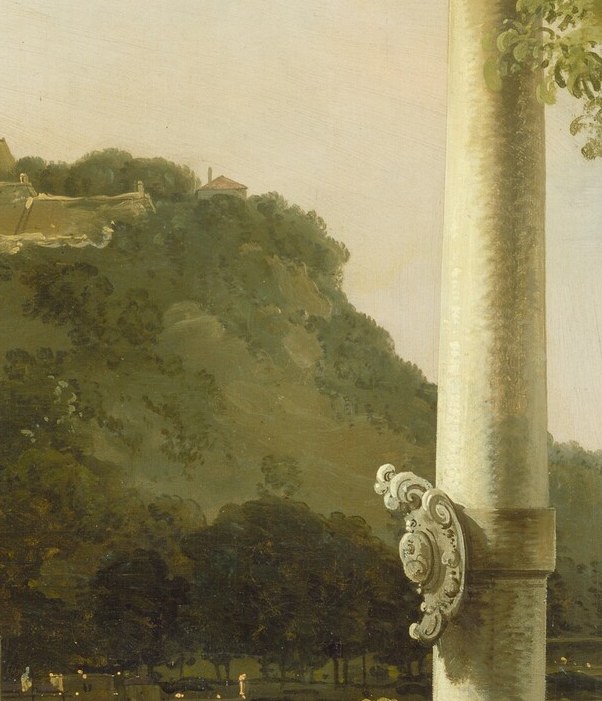
Look at the pedestal of that central column. At a glance it reads as weathered stone. Lean in and you will find a carved relief that does not belong on a Roman monument: a miniature London cityscape, complete with spires and a river vista, hidden in plain sight. Canaletto often buried identifying details in his capricci for a patron to discover.
The artist came to London in 1746 and stayed a decade, painting the city for English collectors who wanted both accurate views and poetic inventions. This canvas gave them both, a classical ruin dropped into the rolling Thames valley, with the city they knew tucked secretly into its base. It was a private joke in oil paint, and a demonstration that Canaletto could build worlds from memory.
What other London landmarks might be hiding in that distant tower or the crumbling ruins at the left edge?
Details

Transcript
A Roman victory column, standing in the English countryside. Canaletto painted this during his decade-long stay in London. The scene is a capriccio: a fantasy built from real places. He placed English visitors at the base to give it scale. But the real secret is carved into the stone beneath it. Hidden in the pedestal is the ghost of a London cityscape.