The Temptation of Saint Anthony by http://www.wikidata.org/.well-known/genid/3b8772b94d323b55c894065045869834
This captivating painting, 'The Temptation of Saint Anthony,' by Jan Mandijn, created around 1550, showcases a master of unsettling, fantastical imagery. For centuries, Mandijn's work was often misattributed, with many of his paintings mistakenly given to better-known artists like Hieronymus Bosch, whose style he emulated and expanded upon. It wasn't until later scholarship that his unique artistic fingerprint was rediscovered and recognized.
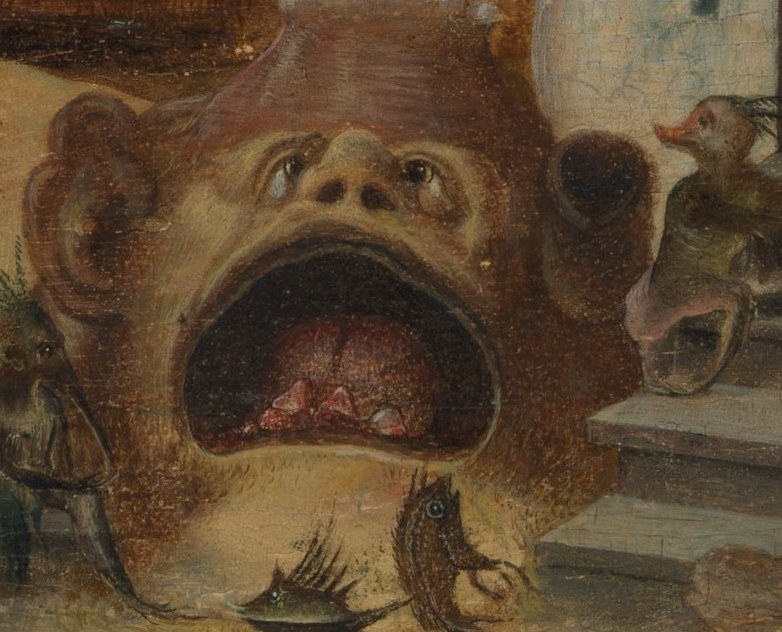
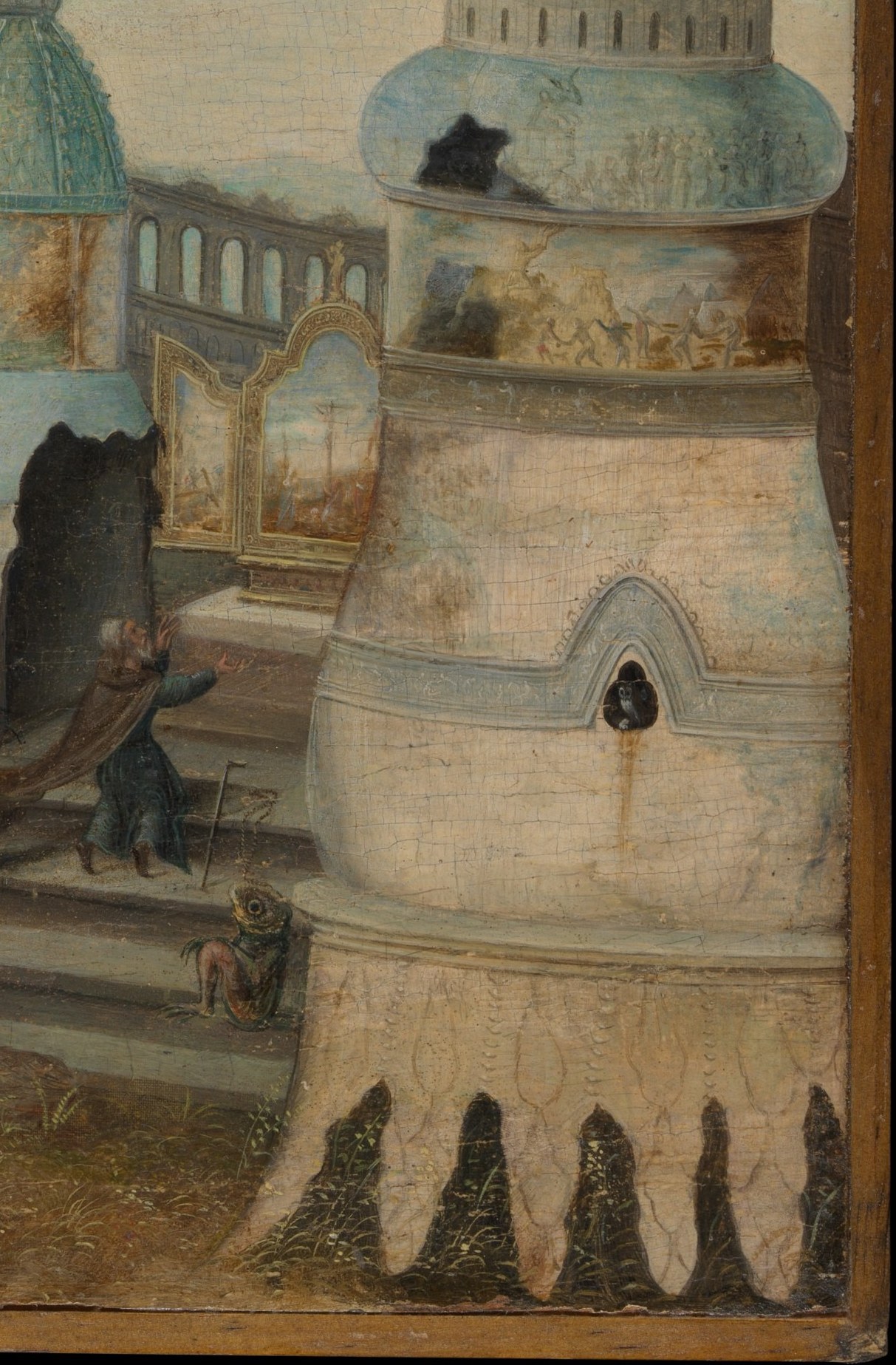
Look closely at the canvas's many bizarre details, such as the hybrid creature emerging from an egg or the grotesque giant mouth in the landscape. These intricate elements, full of symbolic torment, are characteristic of Mandijn's distinctive style. Notice the small, hidden figure in the window of the monstrous tower, a detail that reflects his meticulous and imaginative approach.
The painting depicts the biblical narrative of Saint Anthony the Great enduring spiritual and physical torments in the desert, a common theme in Northern Renaissance art. Mandijn's ability to create such a vivid and chaotic scene, rich with symbolic creatures and dissolving architecture, truly distinguishes his vision. His unique blend of the grotesque and the meticulously rendered has cemented his place in art history.
What other strange details can you spot in this disorienting landscape?
Details
Transcript
Look closely at this scene of chaos and strange creatures. For centuries, this painter was forgotten, his work attributed to others. Even this hybrid creature emerging from an egg was once misattributed. Art historians later identified him by his unique style. His signature touch is in these bizarre, disturbing details. Look at the small figure in this monstrous tower's window. This meticulous rendering became his visual fingerprint.