Four Arowak Indians by Catlin, George
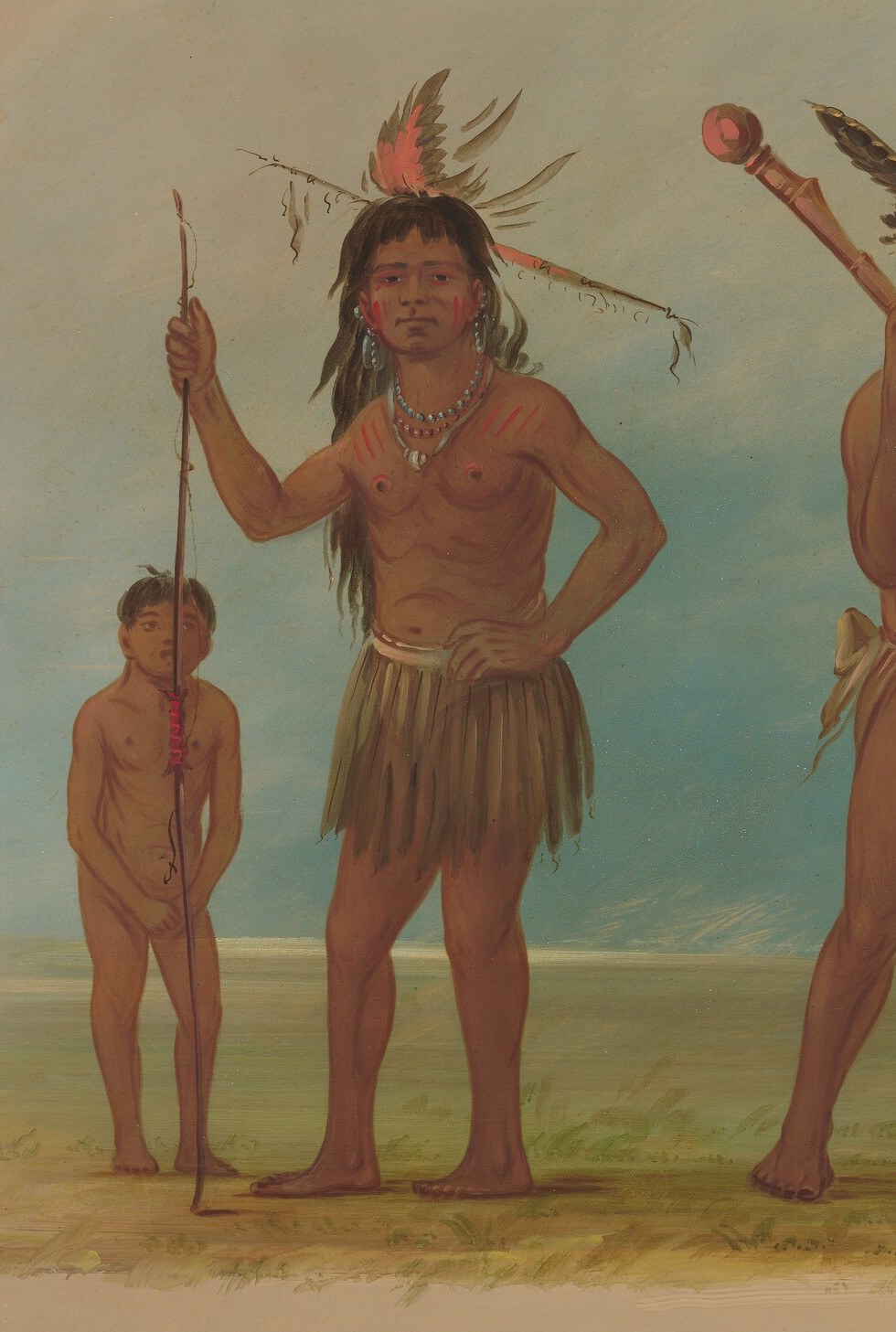
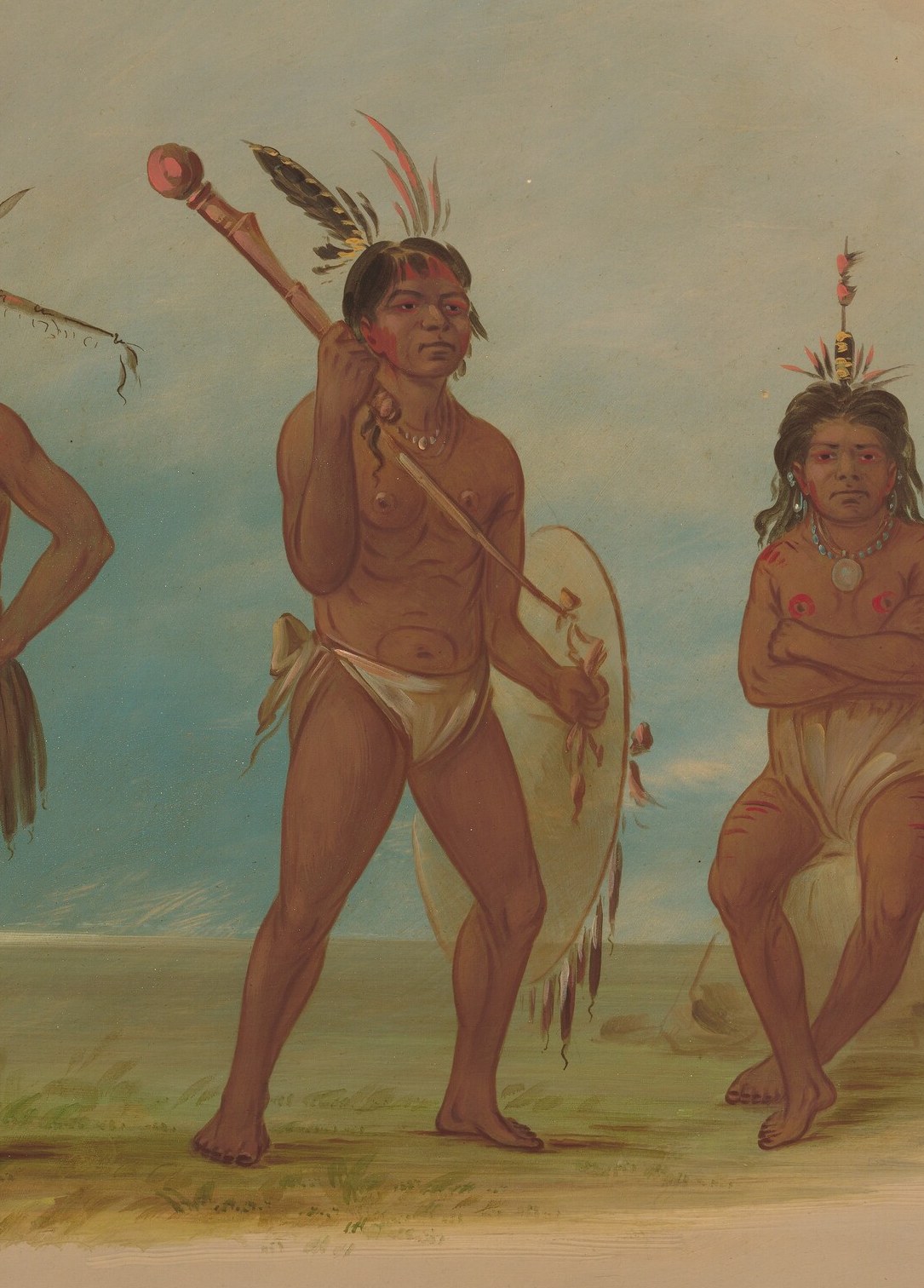
George Catlin, a lawyer-turned-painter, traveled extensively to document Native American life in the 19th century. This painting, "Four Arowak Indians," created in 1862, captures four Arowak individuals from a tribe historically located along the Gulf Coast.
Notice the detailed feathered headdresses worn by the men, suggesting their status or ceremonial roles, and the spears, essential tools for hunting or defense. The unclothed child on the right reflects common ethnographic portraiture of the period.
Catlin often revisited earlier sketches and field notes to create studio versions of his observations. This piece, rendered in oil on card, exemplifies his straightforward brushwork and focus on outlines, characteristic of American folk art. Take a moment to find the artist's subtle initial 'A' in the lower left corner.
His work provides a valuable visual record of Indigenous cultures, reflecting the ethnographic interests of the mid-nineteenth century. What details capture your eye in this historical portrait?
Details

Transcript
This painter was known for documenting Native American life. Here he depicts four Arowak individuals, two men, a woman, and a child. The figures wear feathered headdresses, suggesting status or ceremony. Each holds a spear, a tool for hunting or defense. Now, look closely in the lower left corner. The artist subtly signed his work with a faint 'A'.